


By Adem Kılıç, Political Scientist
It is now impossible to define the current state of the U.S.-Iran conflict as, in the classical sense, “a war between Iran and the U.S.”
The geography of the war has expanded from the Strait of Hormuz to Bab el-Mandeb, from the Red Sea to the Eastern Mediterranean following the attacks in Egypt, and finally to the Caspian Sea with the attack on Ukraine.
Three weeks ago, in my “World of Türkiye” column, I faced significant criticism following my analysis titled “It’s Now Time for a Regional War.” However, the current situation has clearly demonstrated—and continues to demonstrate—just how accurate my thesis was.
From Hormuz to Bab el-Mandeb
The Hormuz crisis represented the economic lifeline of the war.
Unable to directly counter U.S. military superiority, Iran sought to impose economic costs on the U.S. and its regional allies by restricting maritime traffic—and over the subsequent five-month period, it largely succeeded in doing so.
The U.S., meanwhile, sought to break this pressure through a naval blockade, airstrikes, and operations targeting Iran’s coastal infrastructure.
However, a very significant consequence emerged. Gulf countries, led by Saudi Arabia, began shifting a large portion of their oil exports to the Red Sea and the Yanbu pipeline as the Strait of Hormuz became too risky.
Consequently, from Iran’s perspective, the issue has evolved beyond merely closing the Strait of Hormuz; putting pressure on its alternative routes has become a strategic necessity.
It was at this very point that the Bab el-Mandeb Strait came into play.
On July 20, the Houthis’ declaration of a naval blockade against Saudi Arabia, followed by attacks on Saudi-linked commercial vessels, formed the war’s second strategic maritime front.
The Saudi-led coalition also announced that it would protect commercial vessels passing through Bab el-Mendeb and retaliate against Houthi attacks.
This development is extremely significant.
Because now, the Strait of Hormuz and Bab el-Mendeb are no longer two separate straits in the same war, but rather two pivotal points in the same strategic equation.
Are actors like Saudi Arabia moving to the center of the war?
Here, the position of regional actors—led by Saudi Arabia—is now shifting.
Saudi Arabia initially wanted to stay out of this war as much as possible. This is because Saudi Arabia’s priority was Vision 2030, economic transformation, foreign investment, and maintaining regional stability without directly fighting Iran under the U.S. security umbrella.
However, the closure of the Strait of Hormuz directly affected Saudi Arabia. As Saudi Arabia sought to reroute a significant portion of its oil through alternative routes, the fact that the Bab el-Mandeb Strait is now under threat has exposed the weakest point in Saudi Arabia’s strategy.
For this reason, a multinational maritime defense coalition led by Saudi Arabia was formed in recent days.
Following a meeting attended by representatives from 43 countries, it was announced that 14 countries had pledged their support for the initiative. These include countries such as Türkiye, Pakistan, Egypt, Sudan, Djibouti, Somalia, and Jordan.
It would be incorrect to expect this initiative to evolve into a NATO-like military alliance in the short term. However, its strategic significance is immense.
This is because, for the first time, Saudi Arabia is assessing Red Sea security through a broader security architecture that integrates its own national security with the security of global maritime trade.
If the consortium performs only escort duties, the Houthis can keep high-cost warships under constant pressure using low-cost unmanned systems. Conversely, if the coalition begins targeting launch systems, radars, command centers, and port infrastructure in Yemen, this will cease to be a maritime security operation and will directly mean the resumption of the war in Yemen.
Why is the Damietta attack significant?
Egypt has emerged as another critical front in the war.
For Egypt, which has sought to maintain a balanced policy regarding both the Gaza conflict and the war with Iran since the start of the conflict, the attack on the Port of Damietta stands out as an extremely significant development.
Egyptian authorities announced that the fire on two gas ships in Damietta was caused by a drone attack. The incident targeted the Energos Winter—a floating LNG storage and regasification unit in which the U.S. has an investment—and the vessel Gaslog Salem. At this stage, no actor has claimed responsibility for the attack.
It is important to make a key distinction here. It has not been confirmed that Iran was behind the attack. Therefore, it would be incorrect to directly characterize this as “Iran attacked Egypt.”
However, a more significant development has occurred from a strategic perspective.
Damietta is quite far from the Strait of Hormuz and the Bab el-Mandeb Strait. Moreover, it is one of the hubs of Egypt’s LNG infrastructure in the Eastern Mediterranean.
In other words, Damietta houses facilities critical to Egypt’s energy security, and Cairo views this infrastructure as a key component of its strategy to transform the country into a regional energy hub.
Consequently, the attack that took place here demonstrated that the logic of hybrid attacks targeting energy infrastructure has expanded geographically.
The strategic message conveyed by the Damietta attack, however, is far more significant.
The message conveyed was that if you flee from Hormuz, you face a chain of risks extending to the Red Sea; if you flee from the Red Sea, to the Suez Canal; and if you pass through the Suez Canal, all the way to the Eastern Mediterranean.
The Caspian Front and Europe
Another development as significant as the Dimyat incident in terms of the globalization of the war was Ukraine’s strike on an Iran-linked vessel in the Caspian Sea.
On July 25, an explosion occurred on an Iranian vessel sailing in the Caspian Sea. The main argument in Ukraine’s statements was that this was not an ordinary commercial vessel but part of a supply network transporting military equipment from Iran to Russia.
Iranian Foreign Minister Abbas Arakchi, however, stated that the attack would not go unanswered.
This is where, for the first time, a very concrete operational link emerged between the U.S.-Iran conflict and the Russia-Ukraine war.
According to Ukraine, if Iran is supplying weapons to Russia and those weapons are being used against Ukrainian cities, Ukraine may target Iran’s supply lines to Russia.
From Iran’s perspective, however, the implications are different.
Iran, which is already at war with the U.S. and Israel, now believes it is being directly targeted by Ukraine as well, and this signifies a new front.
For this reason, the Caspian Sea attack is not merely an attack on a single ship. It indicates the possibility that the Black Sea–Caspian Sea–Caucasus corridor is now becoming a strategic extension of the Middle East war.
How could the regional war escalate?
In my view, in the most dangerous scenario, the developments across all these fronts could unfold as a chain of events that trigger one another.
While U.S. attacks against Iran continue, Iran could increase pressure on U.S. military bases in the region, U.S. investments, the energy infrastructure of regional countries, and maritime traffic.
In parallel, the Houthis could target Saudi Arabia’s energy infrastructure and commercial ships along the Red Sea coast even more intensively.
At this point, Saudi Arabia—rather than remaining solely in a defensive posture—could launch a large-scale land, air, and sea operation against the Houthis in Yemen, thereby reopening the Yemeni front.
Iran’s response could take the form of directly targeting Saudi Arabia, or it could involve intensifying attacks on Saudi and American targets through pro-Iranian groups in Iraq.
Indeed, recent attacks by the U.S. and Saudi Arabia against Iran-linked groups in Iraq, and Iran’s retaliatory attacks on U.S. targets in the region, indicate that this mechanism has begun to function to a certain extent.
Following this, Egypt’s intervention could form the third phase of the war.
New attacks on energy and maritime infrastructure around Damietta or Suez if that happens, it will become increasingly difficult for Egypt to remain neutral.
Of course, I am not referring here to the possibility of Egypt directly entering a war against Iran.
However, it is inconceivable that Egypt would not increase its military engagement regarding the security of the Suez Canal and the protection of maritime traffic in the Red Sea.
Thus, a broader picture will emerge, shaped by the U.S.-Israel-Saudi Arabia-Egypt axis and supported at various levels by the countries in the Red Sea coalition established by Saudi Arabia.
At this point, it is unthinkable that Israel would remain completely on the sidelines.
For this reason, depending on Israel’s actions, simultaneous unrest in Lebanon, Syria, Iraq, Yemen, the Gulf, and the Red Sea may become inevitable.
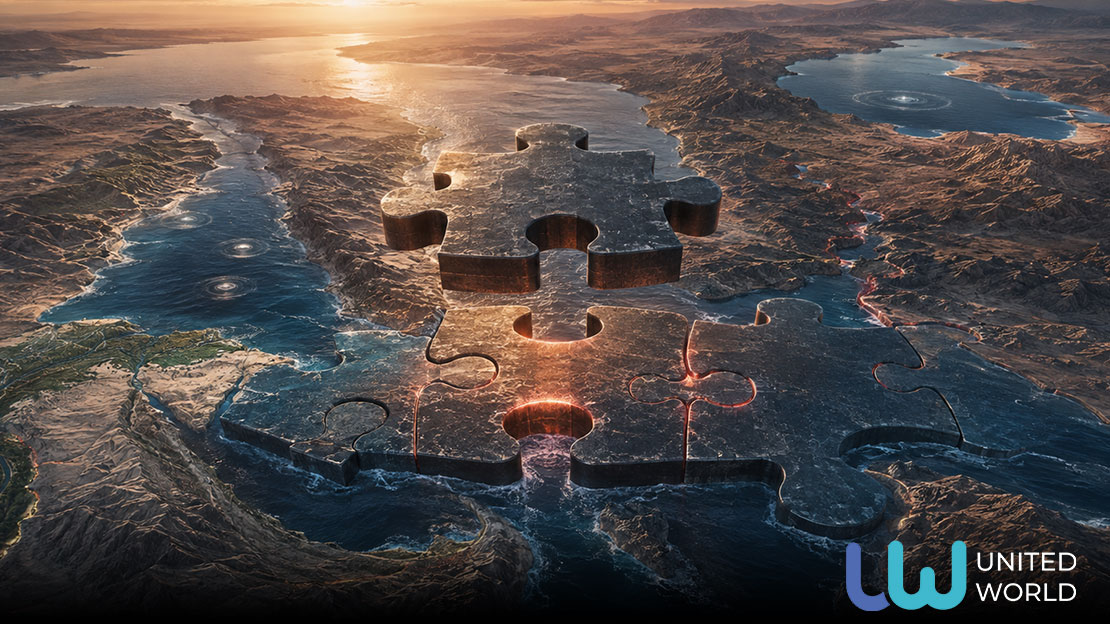
And in light of this entire equation, it will no longer be possible to contain the war to a single front.
Conclusion
The issue has now shifted from the question of “Will a regional war break out?” to the extent to which these different fronts will be linked and at what point they will bring the major powers into direct confrontation.
At present, there is not yet a single, unified regional war front. However, the process of linking these different components—which I have outlined in detail—has already begun.
Undoubtedly, the Strait of Hormuz remains the most critical threshold among all these points.
For the past five months have shown us that it does not appear possible to control the economic and strategic future of the war without establishing a lasting balance in the Strait of Hormuz.
As long as Iran continues to exert pressure through the Strait of Hormuz and the U.S. attempts to break this pressure with military force, the possibility of the war not spreading to all these points I have outlined separately will remain merely a hope.
Otherwise, a future awaits us in which we will observe developments regarding when these parts will come together.