


From Muscat / Oman
Climate change is no longer only an environmental challenge; it is reshaping energy security, economic priorities and geopolitics. For the Middle East, rising temperatures, water scarcity and growing electricity demand are making the energy transition unavoidable. Oman stands out because it combines abundant solar and wind resources with strategic ports, vast land and deep energy expertise. Its opportunity is to turn these advantages into renewable energy, green hydrogen, smart infrastructure and climate-resilient industries. The choices Oman makes today could help determine whether the region merely adapts to the new energy era—or helps shape it.
The most important message
The most important message emerging from Oman Climate Week 2026 is not another climate pledge. It is a much more consequential question: how can the world turn climate ambition into implementation?
That question has become increasingly urgent.
Governments have negotiated targets, signed agreements and announced transition strategies for years. Yet the gap between commitments and what is actually being delivered on the ground remains one of the defining challenges of global climate policy.
From Muscat, the message is increasingly clear: the next phase of climate action will be judged less by the number of commitments announced and more by the speed, scale and quality of implementation.
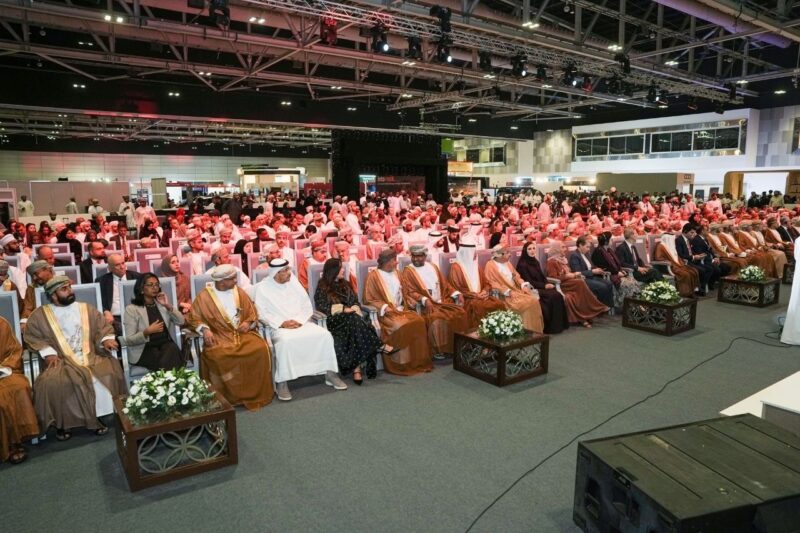
The second edition of Oman Climate Week, held from September 14 to 16, brought together more than 5,000 participants from over 50 countries, including policymakers, scientists, international organizations, business leaders, academics and environmental experts. With 400 speakers, more than 80 exhibitors, 20 training workshops and a wide-ranging programme covering energy, finance, hydrogen, circular economy, biodiversity, resilience and innovation, the event reflected a broader transformation in the climate debate.
Climate change is no longer being discussed simply as an environmental issue. It is increasingly being treated as an economic, technological, energy and security issue.
That shift is particularly significant for countries such as Oman.
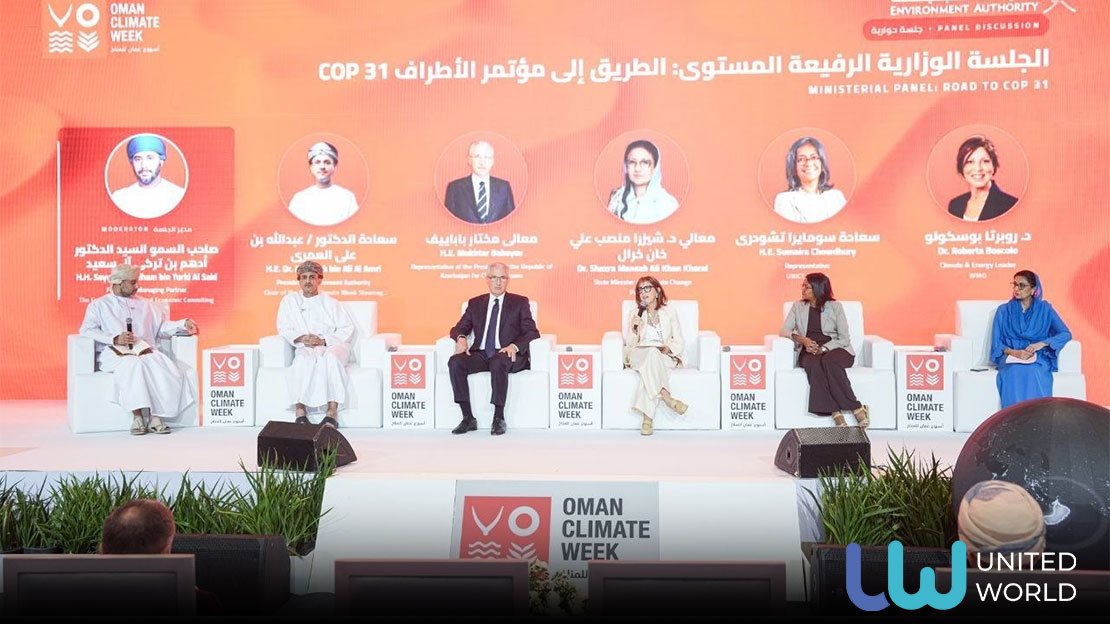
Dr. Abdullah bin Ali Al Amri, Chairman of Oman’s Environment Authority, captured this broader understanding when he said that the climate challenge is no longer separate from development, but has become integral to decisions concerning energy, water, food, investment and economic competitiveness.
This is perhaps the most important aspect of Oman’s approach. The country is not presenting climate action as a choice between environmental protection and economic development. Instead, it is seeking to connect the two.
Oman’s commitment to net-zero emissions by 2050 is being accompanied by efforts to develop green hydrogen, carbon projects, nature-based solutions, mangrove restoration, protected areas, ecotourism and a circular economy. Its updated Net Zero Strategy and national carbon-market framework are also intended to translate long-term objectives into practical mechanisms.
This approach reflects a reality facing much of the developing world: climate policy cannot succeed if it is detached from energy security, economic growth, employment and development.
The message from COP29 President Mukhtar Babayev was equally significant. Climate agreements, he argued, acquire their real value only when they produce tangible change, calling for a transition “from negotiating commitments to delivering results.”
That may well become the central test of international climate diplomacy in the years ahead.
The challenge is not simply reducing emissions. It is managing a profound transformation of energy systems and economies while protecting societies from the consequences of climate change that are already unfolding.
Australia’s Minister for Climate Change and Energy, Chris Bowen, added another important dimension. Exceeding the 1.5°C threshold, he argued, does not mean abandoning the goal. It changes the pathway, not the destination. His emphasis that “every fraction of a degree matters” reflects a growing recognition that climate policy cannot be reduced to a binary question of success or failure.
Every fraction of avoided warming has consequences for food security, water resources, infrastructure, public health and ecosystems.
But the climate challenge is also becoming a question of resilience.
Sir Jim Skea, Chair of the Intergovernmental Panel on Climate Change, pointed to the growing risks facing the Middle East, including extreme heat, drought, floods, declining agricultural and fisheries productivity and threats to coastal ecosystems.
For countries in the region, adaptation is therefore not a secondary issue. It is becoming an essential component of economic planning.
This is where climate science, technology and investment must increasingly converge.
The World Meteorological Organization’s emphasis on climate data and early-warning systems illustrates this point. Weather, water and climate information are becoming critical inputs for decisions about energy infrastructure, agriculture, cities and investment. As solar and wind power expand, the energy system itself becomes increasingly dependent on accurate climate and weather information.
The same logic applies to biodiversity
Astrid Schomaker, Executive Secretary of the Convention on Biological Diversity, highlighted the relationship between climate change and biodiversity loss, emphasizing nature-based solutions such as mangrove restoration and coastal ecosystems.
For Oman, with its extensive coastline and maritime heritage, such solutions are not simply environmental projects. They can become part of a wider economic strategy linking resilience, carbon storage, tourism, coastal protection and local livelihoods.
This is why the Omani experience deserves attention beyond the Gulf.
The country is attempting to position climate policy within a broader national transformation. Oman Vision 2040 provides a framework in which economic diversification, energy transition, technological innovation and environmental sustainability can reinforce one another.
Green hydrogen is one example. If developed successfully, it could connect Oman’s renewable-energy potential with new industrial value chains and international markets. Carbon markets, meanwhile, could create new mechanisms for financing emissions reductions and environmental restoration.
Yet the most interesting development may be the effort to build institutions around innovation
The proposed Environmental Innovation Center seeks to connect government institutions, the private sector, academia, incubators and entrepreneurs, helping move environmental solutions from ideas to implementation, financing and scale.
That is precisely the missing link in many climate strategies: the institutional capacity to turn knowledge into projects and projects into scalable solutions.
The global climate debate is therefore entering a different phase.
The age of announcing ambition is giving way to an age of delivery.
This does not make international agreements less important. On the contrary, agreements provide the framework. But their credibility will increasingly depend on investment, technology transfer, resilient infrastructure, functioning carbon markets, clean-energy deployment and measurable outcomes.
Climate finance will remain critical. So will fairness.
Developing countries cannot be expected to undertake an energy transformation while ignoring their legitimate development needs. Energy security, affordability, industrialization and employment must remain part of the transition equation.
This is why the call for an orderly and equitable transition coming from Muscat matters
Oman is not claiming to have solved the climate challenge. Its significance lies elsewhere: in trying to demonstrate how a country can integrate climate action into economic transformation while preserving energy security and national development priorities.
That may ultimately be the more realistic path toward global climate progress.
The world does not need another decade of ambitious declarations without delivery. It needs functioning institutions, investable projects, new technologies, reliable data and partnerships capable of producing measurable results.
From Muscat, the message is simple but consequential: the climate race is no longer about who can make the most ambitious promise. It is about who can turn ambition into reality—and do so fast enough to matter.
Make the opening more Oman-focused
Strengthen Oman’s economic case
Reduce repetitive climate framing.
Oman’s Strategic Moment: The World Sees an Opportunity
There are moments when geography ceases to be merely an advantage and becomes a strategic opportunity. Oman appears to be living through one of those moments today.
As the world redraws the map of energy, the Sultanate of Oman is not standing outside this transformation. It is seeking to position itself at its center. Abundant sunshine and wind, vast areas of land, a strategic location between Asian and European markets, modern ports and industrial zones, and decades of experience in oil and gas are coming together to offer Oman a rare opportunity: to move from being a conventional energy producer to becoming a significant player in the emerging low-carbon energy economy.
This is not simply an Omani vision of the future. International institutions and specialized research organizations are increasingly identifying Oman as a country with genuine competitive advantages in renewable energy and clean hydrogen.
Perhaps the clearest assessment has come from the International Energy Agency (IEA). Its landmark study on Oman concluded that the country’s high-quality solar and wind resources, combined with vast areas of available land, could make it a competitive producer and exporter of renewable hydrogen by the end of this decade.
IEA Executive Director Fatih Birol offered a particularly striking assessment, describing Oman as an oil and gas producer that is taking “an enlightened approach to its energy future”, while highlighting its enormous potential in solar, wind and renewable hydrogen.
This was not diplomatic praise. The IEA based its assessment on concrete advantages: globally competitive renewable resources, extensive land availability, existing infrastructure that can potentially be repurposed, a location along major trade routes between Europe and Asia, and Oman’s experience in handling and exporting LNG and ammonia.
That last point is particularly important.
Oman is not starting from zero in the hydrogen race. It is entering the future with decades of experience in energy production and exports, port management, logistics, industrial development and large-scale energy projects.
From Oil and Gas to a New Energy Economy
Oman’s transition is not simply about replacing oil and gas with solar panels and wind turbines. The more important story is the repurposing of existing capabilities to build a new energy system.
The IEA has emphasized that Oman’s assets, infrastructure and skills developed around the oil and gas industry can be redirected toward clean-energy value chains, particularly solar, wind and low-emissions hydrogen.
This gives Oman a distinctive model of energy transition.
Instead of treating the climate transition simply as a threat to an established economic model, Oman can use it as an opportunity to reshape that model.
This is where Oman Vision 2040 becomes particularly significant. Economic diversification, sustainability and new energy are not isolated policies; they are components of a broader transformation of the Omani economy. But what makes the current moment different is that the strategy is moving beyond plans and into the mobilization of capital.
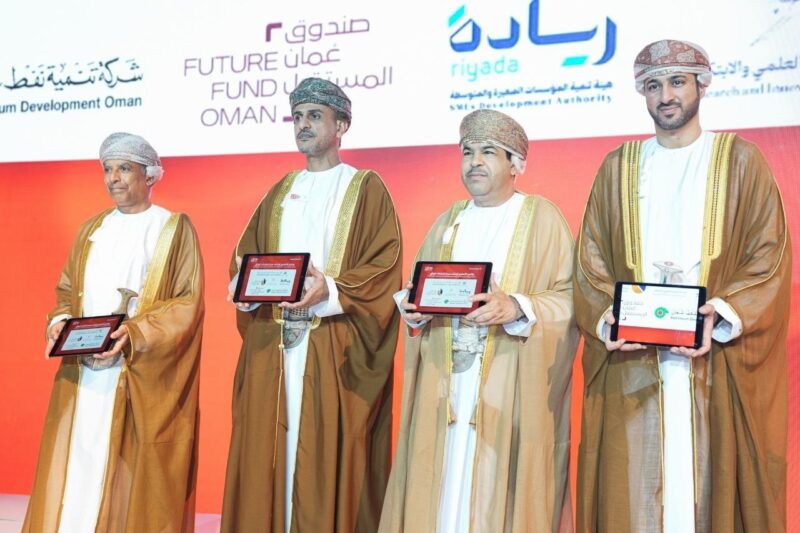
Hydrom, the government-backed entity responsible for developing and managing Oman’s green hydrogen sector, has been using competitive land allocation and auction mechanisms to build a project pipeline. International assessments indicate that the first major allocation round awarded eight projects with announced investment commitments of around $49 billion, supporting tens of gigawatts of renewable capacity.
These figures reveal something more important than their sheer size: the growing internationalization of Oman’s energy transition.
The projects involve international consortia bringing together companies from Europe, Asia, the Middle East and beyond. This diversity of investors places Oman within an emerging global hydrogen network rather than leaving it dependent on a single partner or market.
A $140 Billion Hydrogen Opportunity
The scale of Oman’s ambition becomes clearer in the long term. According to an OECD study based on Oman’s hydrogen strategy, the country aims to produce between 1 million and 1.25 million tons of renewable hydrogen annually by 2030, rising to between 3.25 million and 3.75 million tons by 2040, and 7.5–8.5 million tons by 2050.
The estimated cumulative investment required to achieve these ambitions is approximately $140 billion by 2050, in addition to the much larger investment needs associated with Oman’s wider transition toward net zero.
But the most important figure may not be the $140 billion itself. It is what this investment could generate across the wider economy.
Hydrogen is not simply about producing a clean gas. It requires solar and wind farms, electrolysers, desalination facilities, storage systems, ports, pipelines, ammonia plants, low-emissions steel and other industrial products, engineering services, logistics and financial services.
In other words, investment in hydrogen can become investment in an entire industrial ecosystem. That is where the economic significance of Oman’s strategy goes well beyond climate policy.
Sohar and Duqm: From Geography to New Energy Hubs
The transformation becomes even clearer when viewed on the map.
Places such as Duqm are not being developed merely as locations for individual energy projects. They are being positioned as industrial and logistics hubs capable of bringing together renewable energy, hydrogen and its derivatives, heavy industry and exports.
International studies identify Duqm, Dhofar and Al-Jazir as major areas for Oman’s emerging hydrogen economy, with extensive land allocated for long-term development. The OECD and World Bank assessments note that Oman has designated around 50,000 square kilometers for potential hydrogen development, creating the possibility of very large-scale production for European and Asian markets.
Here, geography becomes a decisive advantage.
Oman does not need to build a hydrogen economy far from global trade routes. It has a long coastline, major ports and a location close to some of the world’s most important energy markets.
Converting hydrogen into ammonia and other transportable derivatives can therefore provide a practical pathway to international markets. Oman’s existing experience in ammonia exports and LNG handling adds another layer of advantage. The IEA has specifically identified this combination of renewable resources, ports, trade routes and existing energy expertise as a major strength.
This is what makes Oman different from countries that may possess abundant solar and wind resources but lack the infrastructure, logistics or commercial geography needed to turn those resources into an export industry.
From Expectations to an Emerging Success Story
Yet it would be premature to describe every announced investment as a completed project.
Green hydrogen remains an emerging global industry. Its major challenges include production costs, financing, demand, long-term offtake agreements, infrastructure and the ability of projects to reach final investment decisions.
This distinction matters.
The real test is not the number of announcements, but whether projects move from agreements to financing, construction, production and exports.
Oman is attempting to address this challenge through a structured approach: competitive land allocation, long-term concessions, infrastructure planning and the creation of an institutional framework through Hydrom.
The importance of Hydrom therefore goes beyond the individual projects. Its role is to help transform natural resources into projects that can be financed, constructed, connected to infrastructure and ultimately linked to international markets.
Oman has also continued to expand its renewable-energy pipeline. The country’s energy strategy includes large-scale solar and wind projects, while the integration of storage is becoming increasingly important as renewable electricity expands. The IEA estimates that Oman can cost-effectively raise the share of renewables in its electricity mix to around 20% by 2030 and 39% by 2040.
The emerging story is therefore being built layer by layer: competitive natural resources, a national strategy, a specialized institution, international investors, renewable-energy projects, infrastructure and access to global markets.
The Real Test Starts Now
Yet the ultimate measure of success will not be the number of agreements signed.
The real test will be the transition from announced investments to final investment decisions, from projects to actual production, and from production to exports and domestic economic value.
That last element may prove the most important.
Oman’s success will ultimately be measured by how much of the value chain remains inside the country: manufacturing, engineering, logistics, skills, technology, services and new industries built around clean energy.
This is why Oman Climate Week 2026, scheduled to take place in Muscat from 14 to 16 September, comes at an important moment.
Its significance goes beyond discussions about climate change and renewable energy. It offers Oman an opportunity to present itself to the world as a practical laboratory for the transition from a traditional energy economy toward a more diversified and lower-emissions energy system.
The world is increasingly looking for locations that can produce clean energy at scale and competitive cost, move it efficiently to international markets, and convert it into industrial products.
Oman possesses many of these ingredients.
The question is therefore no longer whether the Sultanate has an opportunity in the new energy economy. International institutions and investors are already recognizing that opportunity.
The harder question is whether Oman can transform natural advantage into industrial advantage, and industrial advantage into sustainable economic success.
The signs are increasingly encouraging.
If Oman succeeds in bridging the gap between announced investment and completed projects, and between completed projects and domestic economic value, its story may become much larger than a success story in green hydrogen.
It could become a model for how a hydrocarbon-producing country can use the capabilities built during the age of oil and gas to establish a new position in the global energy economy. That, ultimately, is Oman’s strategic moment.
The Middle East and Energy Security: $5 Trillion a Year for a New Energy Era
Energy security is entering a fundamentally different era. For decades, the concept was largely associated with securing oil and gas supplies, protecting strategic reserves and ensuring that energy could reach global markets even during periods of geopolitical disruption. That equation is changing rapidly.
The world now faces several energy challenges at once: rapidly rising electricity demand, more intense heatwaves and droughts, growing water stress, disruptions to trade routes and supply chains, increasing competition for critical minerals and technologies, and mounting pressure to reduce emissions.
At the center of this transformation stands the Middle East
The region remains the heart of global oil and gas production, but it is also among the areas most exposed to rising temperatures and water scarcity. Its central energy question is therefore changing: how can the Middle East preserve energy security as the global energy system itself moves toward electricity, renewables and low-carbon technologies?
The scale of the transformation is enormous.
Estimates by the International Renewable Energy Agency indicate that a pathway consistent with limiting global warming to 1.5°C would require around $5.7 trillion in annual investment through 2030. The figure is not simply an environmental price tag. It represents the scale of a broader restructuring of the global economy, involving renewable energy, electricity grids, storage, efficiency, hydrogen and the infrastructure needed to connect them.
For the Middle East, this presents both a challenge and an extraordinary opportunity.
The Middle East Should Be a Center of the Transition
The region has traditionally been viewed as a supplier of conventional energy to the rest of the world. The emerging energy system creates an opportunity to become something more: a major center for the production, processing and export of several forms of energy and energy-intensive products.
The Middle East possesses some of the world’s strongest solar resources, extensive areas suitable for large-scale projects, important wind potential and strategic ports located close to European and Asian markets.
It also possesses something equally important: decades of experience in managing large-scale energy projects, infrastructure and international investment.
Combining these advantages could allow the region to move from being a traditional energy supplier toward a more diversified energy economy involving oil and gas, solar and wind power, hydrogen, electricity, energy services and climate technologies.
The implications go far beyond electricity generation
Cheap renewable power can support desalination, green hydrogen and ammonia production, energy-intensive industries, data centers and electric transport. Renewable energy can therefore become a tool for economic diversification rather than simply a mechanism for reducing emissions.
This is particularly important at a time when many Middle Eastern economies are seeking new sources of growth beyond hydrocarbons.
Electricity Grids May Decide Who Wins
Yet building solar and wind capacity alone will not be enough.
One of the greatest challenges of the new energy era will be the electricity grid.
A system increasingly dependent on variable sources such as solar and wind requires networks capable of moving electricity across regions, managing fluctuations in supply and demand, storing excess production and responding rapidly to changes.
This makes batteries, long-duration storage, regional interconnections, smart grids and artificial intelligence increasingly important.
The grid of the future will not simply transmit electricity. It will forecast demand, monitor generation, manage storage, identify disruptions and balance millions of sources of production and consumption.
For the Middle East, regional electricity interconnection could also become a strategic asset
An interconnected regional grid can reduce dependence on a single power plant or source, improve resilience and allow countries to exchange electricity according to differences in demand and peak consumption.
Energy security, in other words, could increasingly depend on connectivity rather than isolation.
Water Is Becoming Part of Energy Security
The relationship between energy and water makes the Middle Eastern challenge even more complex.
The Arab region is one of the world’s most water-stressed areas, while desalination requires significant amounts of energy. Rising temperatures and population growth are likely to increase both electricity and water demand.
This creates a potentially powerful strategic opportunity.
Cheap solar energy can help reduce the energy cost of desalination, while combining renewable generation with storage and efficient water systems could strengthen water security.
The traditional relationship between energy prices and the cost of water could therefore begin to change.
For the Middle East, turning abundant sunlight into both electricity and water could become one of the most important dimensions of the new energy economy.
Green Hydrogen: Opportunity or New Race?
Green hydrogen is another potentially transformative opportunity.
Countries with abundant solar and wind resources, available land and strategically located ports have an advantage in producing hydrogen and green ammonia for international markets.
But the competition will be intense.
Europe, Asia, Australia, Africa and Latin America are all developing large hydrogen projects. Possessing cheap renewable resources will not be sufficient on its own.
The Middle East will need export infrastructure, specialized ports, reliable electricity networks, access to water, international standards and long-term purchase agreements.
The region’s experience in developing major energy projects could provide an important advantage. But the objective should be to move beyond exporting a resource toward exporting energy and higher-value industrial products.
That distinction could determine whether the hydrogen economy creates a new generation of industries or simply becomes another commodity market.
The Geopolitics of Energy Is Changing
The energy transition will not eliminate energy geopolitics. It will reshape it.
The old competition revolved around oil, gas, pipelines, maritime routes and strategic reserves. The emerging competition increasingly involves lithium, copper, nickel, cobalt and rare-earth elements, alongside batteries, semiconductors and grid technologies.
Energy security is consequently becoming inseparable from supply-chain and technology security.
This could encourage Middle Eastern countries to develop regional manufacturing capabilities for renewable-energy equipment and other critical technologies rather than relying entirely on imports.
The strategic advantage will belong not only to countries that possess natural resources, but also to those capable of controlling more of the value chain.
Europe Offers an Early Warning
Europe provides an important lesson for the Middle East: energy security and climate resilience can no longer be treated as separate questions.
Drought and declining river levels can disrupt inland transport and increase the cost of moving fuel and raw materials. Heatwaves can put enormous pressure on electricity networks through rising demand for cooling. Extreme heat and water shortages can also affect power plants that depend on water for cooling.
The lesson for the Middle East is clear
Energy infrastructure designed for yesterday’s climate may become a strategic vulnerability in tomorrow’s climate.
New power plants, grids, desalination facilities and industrial projects therefore need to be designed around future climate conditions rather than historical averages.
Climate resilience must become part of energy security itself.
The Financial Challenge
Perhaps the greatest obstacle is not a lack of ideas but the amount of capital required.
The world needs trillions of dollars in annual energy investment, while the most ambitious climate pathway requires around $5.7 trillion a year through 2030.
Closing this investment gap will require more than government spending.
The Middle East will need to attract private capital, develop long-term financing markets, reduce project risks and provide stable regulatory frameworks.
This is particularly important for renewable-energy projects, where investors typically require predictable conditions over many years.
Policy stability can therefore be as important as sunshine, wind resources or access to land.
A More Complex Energy Security
The next decade will not simply witness a transition from oil to solar.
A more likely outcome is a much more diverse and complex energy system in which oil and gas remain important while solar, wind, nuclear power, hydrogen, storage and efficiency expand.
Energy security itself will become a broader concept, combining supply, affordability, water, climate resilience, technology, supply chains, cybersecurity and investment.
This is where the Middle East has an unusual opportunity.
The region can invest in solar, wind, hydrogen, desalination, electricity networks and advanced energy technologies while maintaining its role in global oil and gas markets during the transition.
The crucial point is that these investments should not be viewed merely as the cost of responding to climate change.
They can become investments in economic growth, industrial diversification, employment and strategic autonomy.
A Moment of Reshaping
The world is entering a decisive decade for energy. The roughly $5 trillion-plus annual investment requirement associated with the most ambitious energy-transition pathways illustrates the scale of the transformation underway. At the same time, clean-energy investment is already becoming the dominant destination for global energy capital.
For the Middle East, a region that has historically occupied the center of the conventional energy system, this is a moment of strategic choice.
The energy transition is no longer something that will eventually reach the region.
It has already arrived
The real question is whether the Middle East will turn its solar and wind resources, capital, ports, infrastructure and accumulated energy expertise into a new source of economic power—or simply adapt to a transformation designed elsewhere.Over the next decade, the answer will shape not only the future of energy markets, but also the economic resilience and geopolitical position of the Middle East.