


By Mehmet Enes Beşer
Cambodia’s newfound activism in its foreign affairs, including its rapprochement with the Western countries such as the United States, the European Union, and others, has sparked reflection on the possible foreign policy realignment of the Cambodian state. According to experts, increased support, the resumption of the highest levels of dialogue, and Phnom Penh’s receptivity to cooperation in such areas as the environment, education, and good governance indicate the existence of a subtle Western tilt in Cambodia’s foreign policy orientation. However, this alleged Western tilt has not been at the expense of the long-standing partnership with China, the historical benefactor of Cambodia.
On the contrary, the current Cambodian administration pursues a pragmatic and diversified foreign policy approach, where China is the centerpiece but there are alternative diplomatic and economic avenues as well. The perception that Cambodia should be persuaded to take sides with the East or the West represents a misunderstanding of how Southeast Asian small and medium-sized states conduct themselves during periods of great power rivalry. Diplomacy, in this case, is not a zero-sum game; it is a continuous practice of balancing interests, reducing vulnerabilities, and preserving sovereignty in an unstable regional environment.
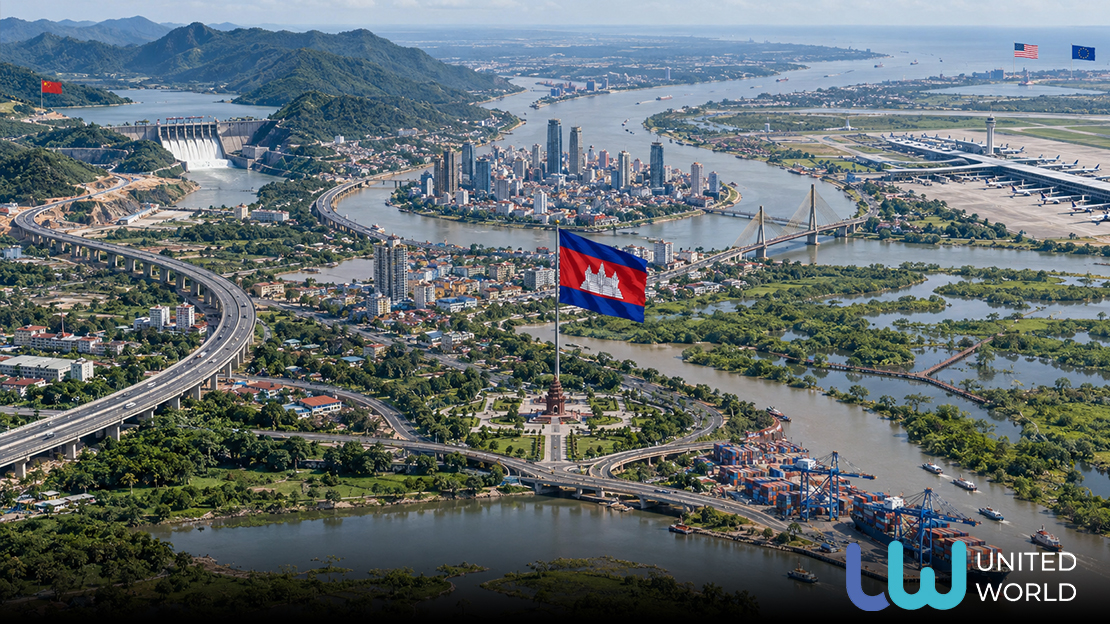
China has been Cambodia’s primary economic benefactor, having invested heavily in real estate, energy, and infrastructure projects. The Belt and Road Initiative, specifically, was vital in this regard, with several expressways, bridges, and hydroelectric dam projects completed by Beijing radically altering Cambodia’s economic landscape. China’s military and diplomatic backing has been evident too, especially at the times when Phnom Penh’s human rights record and elections were the cause of consternation for the West. Cambodia reciprocated by aligning with China on issues of political sensitivity, such as territorial claims in the South China Sea. More recent moves suggest a more refined diplomatic strategy.
Phnom Penh has made concerted efforts to diversify its alliances, accepting Japan’s and South Korea’s aid, expanding its trade links with the EU and Australia, and expressing interest in participating in regional free trade initiatives. Indeed, in 2023 and 2024, Phnom Penh has seen a series of visits from Western delegations, renewed discussions on human rights and education with the United States, and increased collaboration with the European Union on climate-related matters. None of these is a rejection of China, but an acknowledgement of the fact that single-handed dependence, particularly on one patron, can be constraining in a volatile international order. Meanwhile, the succession of old Prime Minister Hun Sen to his son Hun Manet has begun again. While the latter has vowed continuity in his country’s foreign policy, Western education and military training have raised expectations from the new leader, particularly of Western nations, for greater openness. The young Hun, however, has carefully drawn a line at this point, pledging Cambodia’s commitment to its existing alliance framework and declaring readiness to interact equally with all the world powers.
Such a foreign policy is consistent with the broader ASEAN approach.
Similarly neighboring countries, Cambodia is hedging-maximizing the gains from foreign interference and minimizing the risks of entanglement. In the age of conflicting world order, such flexibility is not only wise but essential. The Cambodian economy, like many in Southeast Asia, is export-oriented and investment-driven. For that reason, the country needs access to diverse markets, technology transfers, and funding for infrastructure development-all of which become riskier without diversified diplomatic relations and multiple partners. Critics would argue that Cambodia’s close ties with China compromise its sovereignty, particularly following the reports about Chinese military presence in the Ream Naval Base.
Yet, Phnom Penh has continued to reject permanent base deals, stressing that infrastructural development serves national interests, rather than foreign interests. Additionally, the more open attitude of the Cambodian leadership towards Western partners implies an effort to dispel doubts and present itself as a sovereign actor capable of managing its multiple relationships.
Conclusion
Cambodia’s diplomacy is not a tale of geopolitical flip-flopping or pragmatic diversification. In its loyalty to China despite reaching out once again to the West, Cambodia demonstrates the strategic position shared by most Southeast Asian states-a rejection of the two-option approach and a pursuit of national progress and agency.
Amidst an international environment characterized by increasing demand for alignment in great power rivalry, Cambodia’s response illustrates that little states are not passive actors of great power competition. They are active participants and can leverage their strategic ambiguity through skillful diplomacy. As great competitions intensify, Cambodia’s ability to maintain this balance may ultimately prove crucial to its future development prospects.