


How will the balance between hegemonic military power and asymmetric deterrence play out?
How will the balance between hegemonic military power and asymmetric deterrence play out?
By Adem Kılıç, Political Scientist
U.S. President Donald Trump’s political rhetoric—such as “mission accomplished,” “Iran has backed down,” and “victory has been achieved”—which he has been using since the early days of the war, has increasingly come into conflict with the military reality on the ground over the past four months or so.
Looking at the situation as of yesterday, a clear and significant gap has emerged between Washington’s political rhetoric and the strategic reality facing the Pentagon.
This is because none of the objectives announced at the start of the war have been achieved, and the Iranian regime—despite sustaining heavy damage—has managed to remain standing, at least in the Strait of Hormuz and at the negotiating table.
Iran’s nuclear program has not been completely eliminated.
Although Tehran’s ballistic missile capabilities and unmanned systems production infrastructure sustained heavy damage, they could not be completely neutralized.
More importantly, Iran has not lost its deterrence capabilities over the Persian Gulf and the Strait of Hormuz.
Therefore, the issue that should be discussed today is not who won the war, but which of the declared objectives were actually achieved.
This is precisely why Trump’s rhetoric of “victory” is viewed more as a political narrative aimed at domestic politics than as a military success.
Not Nuclear, but the Strait of Hormuz
In the initial phase of the conflict, the central debate centered on Iran’s nuclear activities.
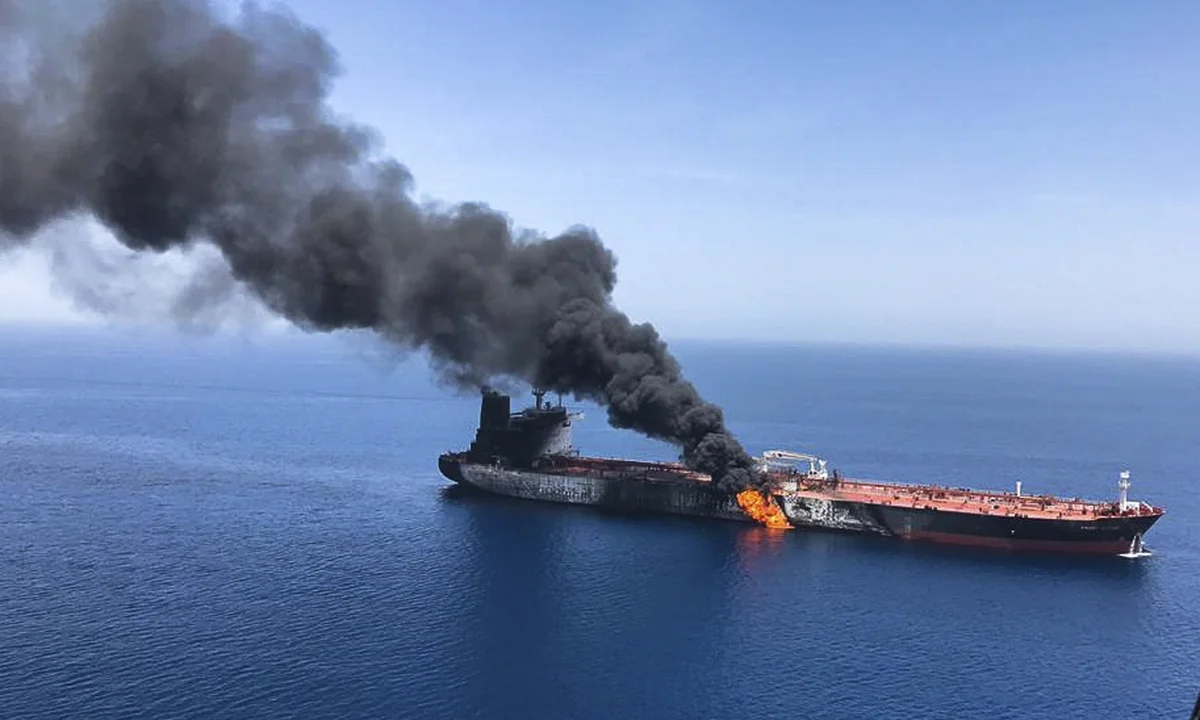
Now, however, the decisive factor has become Iran’s capacity to exert strategic pressure over the Strait of Hormuz, and the U.S.’s helplessness is growing by the day.
For Iran, the Strait of Hormuz is not merely a maritime passage.
It has also emerged as the most important geopolitical lever capable of simultaneously affecting energy markets, global inflation, maritime trade, and Western economies.
Precisely for this reason, it has become clear that striking nuclear facilities alone is not sufficient to claim that Iran has been truly defeated strategically at the end of the war, as the Strait of Hormuz has become an “existential” issue for both sides.
And as I have been writing in this column for months, it has become evident that the strategic outcome of the war will not be determined until the Hormuz issue is resolved.
This is because Iran still possesses the capacity to threaten global energy flows through its mines, shore-based anti-ship missiles, swarm drone concepts, high-speed boats, proxy forces, and a dispersed fire support network—and this structure does not require a large navy in the traditional sense.
On the contrary, it constitutes a low-cost yet highly effective asymmetric deterrence model.
The U.S. may possess the world’s most powerful navy.
However, in a narrow, dense, and multi-layered threat environment like the Strait of Hormuz, there is no guarantee that military superiority will automatically translate into strategic success.
Asymmetric warfare has shifted the balance of costs
One of the most significant outcomes of the war has been a shift in the understanding of modern warfare.
While the U.S. conducted operations using billions of dollars’ worth of air defense systems, precision munitions with long production lead times, and high-tech platforms;
Iran implemented a strategy of attrition using much lower-cost but mass-producible ballistic missiles, kamikaze drones, cruise missiles, electronic warfare methods, and a decentralized command network.
This situation has made it increasingly difficult for Washington to maintain a balance between cost and effectiveness.
The issue is no longer merely how many targets are struck; the focus has shifted to the global impact cost generated by each target struck.
This is precisely one of the most important debates from the Pentagon’s perspective.
For, at the same time, there is growing skepticism regarding whether the prolonged use of high-tech systems at the same intensity against low-cost asymmetric threats is sustainable, and the stance of the Gulf states has highlighted the limits of this approach.
Consequently, with Washington unable to secure the support of its allies from Europe to the Gulf in the Strait of Hormuz, its military options have become more limited than expected in light of all these factors.
Conclusion
The picture that has emerged at this stage indicates neither that Iran has been definitively defeated nor that the U.S.-Israel axis has fully achieved its declared objectives.
Iran has not completely abandoned its nuclear program, nor has it lost its deterrent capability over the Strait of Hormuz.
The U.S., meanwhile, must calculate that it cannot afford to abandon the Strait of Hormuz, and that a new and far more extensive operation in the Strait could have extremely severe consequences—ranging from global energy markets and maritime trade to regional stability and its own military costs.
For this reason, Washington currently finds itself caught between two difficult options.
That is: on the one hand, continuing the rhetoric of political “victory”; on the other, risking a much more dangerous military escalation—whose outcome cannot be guaranteed in advance—aimed at breaking Iran’s deterrence in the Strait of Hormuz.
Under current conditions, the Strait of Hormuz has emerged as the military and geopolitical epicenter of the conflict, and this impasse has now become an existential challenge not only for Iran but also for the United States!