


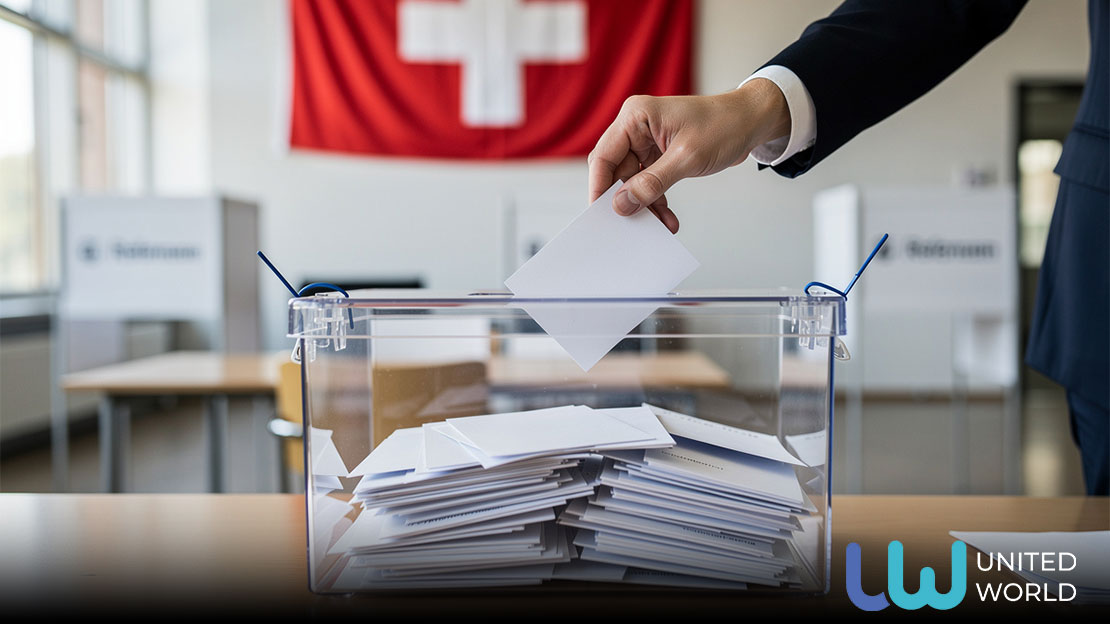
Switzerland is heading to the referendum. It is on September 27. It is about “neutrality”.
The “Neutrality Initiative” leads the campaign. Why and what is that? Katy Romy, a correspondent at the Federal Palace for SWI swissinfo.ch, tells us:
“Christoph Blocher, the former Swiss government minister who shaped the modern Swiss People’s Party (right-wing), is the man behind the neutrality initiative. The Zurich-based billionaire conceived it in response to Switzerland’s stance following Russia’s invasion of Ukraine. In his view, Switzerland abandoned its neutrality by adopting the European Union’s (EU) sanctions against Moscow.
(…)
The Swiss People’s Party supports the initiative put forward by Pro Suisse. The other governing parties oppose it, as do the government and Parliament. However, the initiative has won support among pacifists and anti-globalisation groups on the left. Several organizations, including the Workers Party (the Swiss communist party), have formed the Pacifist and Internationalist Committee for Neutrality, which is campaigning in favor of the initiative.”
The aim of the Neutrality Initiative
What is the aim of the Neutrality Initiative? In its website, it is defined as follows:
“The initiative calls for a stricter approach to neutrality and seeks to enshrine in the Constitution the provision that Switzerland’s neutrality is perpetual and armed. Switzerland should not join any military or defense alliance, nor should it cooperate with any such alliance – unless it is under military attack, or an attack is imminent. Furthermore, it must not take part in military conflicts between third countries, nor impose sanctions on belligerent states. Exceptions would include United Nations (UN) sanctions and measures designed to prevent the circumvention of sanctions. Lastly, Switzerland should use its neutrality to its advantage in its role as a mediator.”
The proposed amendment in the Federal Constitution
Switzerland’s neutrality has already been enshrined in the Federal Constitution since 1848. The Initiative’s calls for a “stricter approach to neutrality and seeks to enshrine in the Constitution the provision that Switzerland’s neutrality is perpetual and armed” amounts the following amendments in the Federal Constitution:
“Art. 54a Swiss Neutrality
1. Switzerland is neutral. Its neutrality is permanent and armed.
2. Switzerland shall not join any military or defense alliance. Cooperation with such alliances shall remain permissible in the event of a direct military attack on Switzerland or acts undertaken in preparation for such an attack.
3. Switzerland shall not participate in military conflicts between third states and shall not impose non-military coercive measures against states engaged in war. Obligations toward the United Nations (UN), as well as measures intended to prevent the circumvention of non-military coercive measures imposed by other states, shall remain reserved.
4. Switzerland shall use its permanent neutrality to prevent and resolve conflicts and shall make itself available as a mediator.”
No EU – No NATO Association’s call
Alberto Togni, a member of the Council of the Swiss Communist Party and the President of the “No EU – No NATO Association” published a short call for the brochure with the title “Why a YES to the Neutrality Initiative on September 27th”. Here is Togni’s call:
“The international situation is grave. Conflicts are multiplying, while Europe has embarked on a new arms race that amounts to increasing the escalation. Against this backdrop, Switzerland too is rapidly changing its position, as demonstrated by the numerous new forms of cooperation with NATO and the EU’s defense structures launched since 2022.
What may still seem unthinkable today could become reality within just a few years. Other European countries offer a clear warning. Finland, for example, moved in a remarkably short period of time from a long-standing tradition of neutrality to NATO membership. Today, countries that have taken this path face not only a military buildup and the growing militarization of their borders, but also the presence of US military bases on their territory and the prospect of hosting foreign nuclear weapons in the future. Recent developments in the Gulf states also show that such cooperation does not necessarily bring greater security: On the contrary, political decisions taken elsewhere have turned these countries into military targets.
These examples clearly demonstrate that there is no such thing as “flexible” or “cooperative” neutrality, contrary to the claims made by Cassis and the rest of the government. A country cannot be neutral only when it suits its interests, or only in times of peace. Neutrality must either be applied consistently and comprehensively, or it loses all meaning and credibility.
The Neutrality Initiative would not only put an end to this departure from Switzerland’s traditional position; it goes further by reaffirming a number of simple and clear principles: Switzerland must not join military alliances, become involved in conflicts between third countries, or impose unilateral sanctions that effectively turn it into a party to a conflict. Instead, it should use its neutrality as an instrument of mediation and peace.
Supporting the Initiative means strengthening our country’s political sovereignty in an increasingly unstable and dangerous international environment. It means ensuring that Switzerland’s decisions are not subordinated to the interests of NATO, the United States, or the European Union, and preserving our freedom to determine our own foreign policy and the role of our armed forces independently. It also means rejecting sanctions whose only tangible effect is to make workers, pensioners, and families poorer both in the countries targeted by them and in the countries imposing them.
A neutral Switzerland that remains outside opposing blocs, by contrast, could pursue greater diversification in its economic and trade relations, reduce its dependencies, and protect itself from pressure and political whims of Washington and Brussels.
Finally, a lasting and credible policy of neutrality would allow Switzerland to maintain dialogue with all sides and offer its Good Offices, acting as a bridge between conflicting parties and rival blocs and thereby making a serious contribution to reducing international tensions.”