


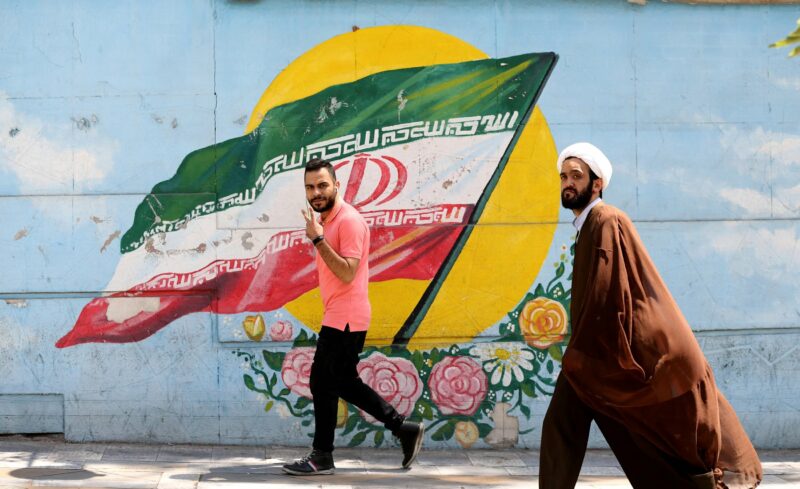
Notes from a roundtable discussion at the Center for Iranian Studies in Türkiye.
Notes from a roundtable discussion at the Center for Iranian Studies in Türkiye.
The war, which began with the US-Israeli attack on Iran on February 28, 2026, is currently in a period of ceasefire. What follows remains highly uncertain. A process full of fluctuations and contradictions continues to unfold.
What is certain, however, we are at a stage to be able to grasp what has happened so far and draw some conclusions.
The Center for Iranian Studies (İran Araştırmaları Merkezi – İRAM) in Türkiye is one of the institutions that has analyzed the issue well through its meetings and publications.
We will look at the evaluations made by two researchers from the institution, Emine Gözde Toprak and Dr. Rahim Farzan, during an online assessment meeting held by the center at the end of March.
Spiral of war since the early 2000s
Toprak frames the recent war, which began with the US-Israeli attack on Iran on February 28, 2026, as a continuation of the “spiral of war” that has persisted in the region since the early 2000s. According to Toprak, the cause of this “spiral of war” is the permanent attacks carried out by the US and Israel for illegitimate reasons.
While underlining that this war will yield no benefit to any country in the region, Toprak notes that there are visible efforts to somehow draw Türkiye into the conflict. According to Toprak, the statement made by President Erdoğan on March 26 put an end to the ongoing provocations in this regard.
On March 26, during a period when the Sunni-Shia issue was rising on the national agenda and certain individuals and circles were intensely bringing this matter into public debate, Erdoğan spoke at the AK Party Expanded Provincial Chairmen’s Meeting. Describing Israel as a “genocidal network blinded by hatred and malice,” he stated: “We reject all actions and debates that would deepen rifts between brotherly peoples, foster hostility, or provide logistical support to ‘divide, rule, and conquer’ plans.” He then continued as follows:
Ali, Murtaza, Umar, Zaynab, Hasan, Husayn
“I want to state this clearly: those who are ruthlessly killed, wherever they may be, are our brothers and sisters. The children who draw their last breaths in school desks are our own children. The women whose hearts are turned into Karbala with the grief of losing a child are our own mothers. The cities reduced to rubble by bombs are our own cities. The places destroyed, demolished, looted, and devastated are our own region. Look, I ask here with my heart bleeding: for Allah’s sake, what is the difference between the tears shed in Isfahan, Tabriz, and Tehran, and those shed in Erbil, Amman, Baghdad, Beirut, Sana’a, Doha, Riyadh, and other brotherly cities of our region? In the eyes of the massacre network, what difference does it make whether our name is Ali, Murtaza, or Umar; or whether it is Aisha, Zaynab, Hasan, or Husayn? Whether in Iran or the Gulf, is it not us who are harmed, struck, and bleeding with every missile fired?”
Iran’s “unbroken resilience”
Following this, Emine Gözde Toprak speaks of Iran’s “unbroken resilience in both operational and tactical terms” during the war. Acknowledging that her remarks might be perceived by some as “praise”, Toprak notes that her goal is simply a factual assessment.
Regarding Iran’s “unbroken resilience,” Toprak first points out that no internal fracture occurred within the country even after the assassination of Leader Ali Khamenei. According to Toprak, unlike the 12-day war, Iran was not caught off guard this time. This does not mean Iran did not suffer heavy losses; however, as long as Iran remained standing in what it considered an existential struggle, it managed to preserve its strategic objective.
Iran was also prepared for war in terms of its missile stockpile. Toprak states that despite a very high number of targets being hit within the country, Iran was able to maintain a steady tempo of missile responses.
Iran’s geopolitical leverages
Finally, Toprak highlights that Iran utilized its geopolitical leverages: targeting the infrastructure of Gulf countries, hitting US bases, and closing the Strait of Hormuz. These served Iran’s tactic of imposing costs on the opposing side.
Three factors behind US’ decision of war
Dr. Rahim Farzan begins his remarks by addressing the US’ decision to enter this war. According to Farzan, as time passed, the reasons and mechanisms behind the US decision to go to war have become much clearer. Farzan enumerates three primary factors:
– Trump was persuaded to believe in a victory similar to what was achieved in Venezuela, an easy victory.
– In parallel with this first factor, the US deemed it reasonable to launch this war even though its strategic objective remained highly ambiguous.
– Iran’s policy of “strategic patience,” which can be summarized as acting with caution to avoid a high-level conflict with the US, was perceived by the US as a sign of weakness. Particularly in the process that began with the assassination of Qasem Soleimani, Iran consistently delivered low-damage responses, as seen in Operation “True Promise”, which led the US to conclude that it could easily defeat Iran.
Consequently, in the war thus launched, Farzan argues that “no one understood or knew what the US statements and its declared goals actually meant.” Was it to eliminate Iran’s nuclear weapons production capacity? Regime change? What do US officials mean when they say, “we achieved success” or “we won a victory”? Furthermore, according to Farzan, the US told numerous lies regarding the course of the war in many of its official statements.
Israel’ clearer objectives
Farzan notes that Israel, on the other hand, entered the war with much clearer objectives: regime change. And Netanyahu “sold” this goal, along with the idea that it would be easy to achieve, to Trump. Indeed, it was even reflected in the press that Vance complained about how none of the predictions put forward by Israel turned out to be accurate.
Iran’s objective: “survival”
When looking at the Iranian side, Dr. Rahim Farzan notes the following: Iran’s primary goal was “survival.” This encompassed preventing the collapse of the command structure, preserving missile capacity, and maintaining the functioning of the state administration. According to Farzan, Iran was prepared for a US-Israeli attack, which ensured that no serious disruption occurred in state governance throughout the war and that its essential retaliatory munitions were not exhausted.
After survival, comes “war of attrition”
Once Iran achieved this primary goal of “survival”, it implemented a policy of war of attrition. Farzan states that this had two pillars: first, maintaining pressure on the opposing side by continuing missile and drone attacks at a certain tempo; and second, putting the global economy under pressure by closing the Strait of Hormuz and destabilizing the Gulf countries, thereby putting the Trump administration in a difficult position.
Breaking the “conflict-ceasefire cycle”
Iran’s strategic objective here was to “break the conflict-ceasefire cycle”. According to Farzan, Tehran believed that a rushed ceasefire without solid foundations would not prevent the next conflict.
Iran was aware that a “victory” in the conventional sense was not possible for itself. What Iran wanted, according to Farzan, was “not to return to the pre-conflict status quo,” but rather to establish a “new strategic balance”, a new reality in which the US and Israel could no longer attack Iran whenever they pleased.