


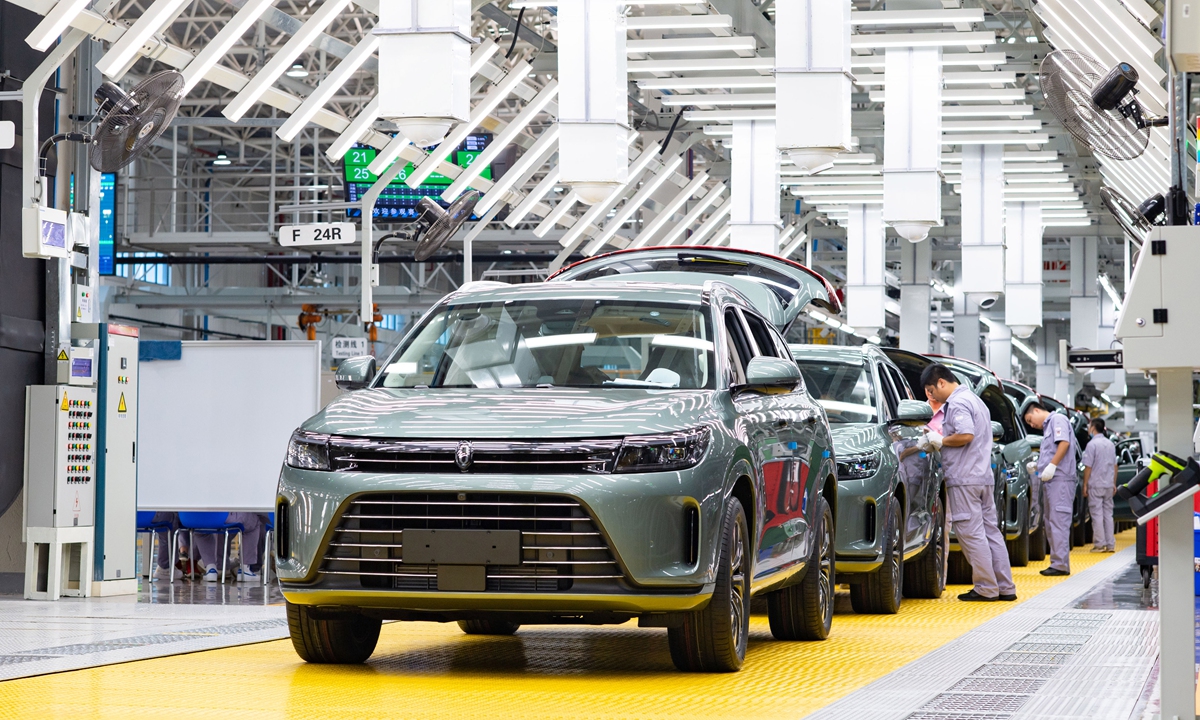
As the world is rushing towards carbon neutrality and embracing electrification of transportation, China’s NEV industry is no longer a follower but a pioneer.
As the world is rushing towards carbon neutrality and embracing electrification of transportation, China’s NEV industry is no longer a follower but a pioneer.
By Mehmet Enes Beşer
China’s abrupt emergence as a global player in new energy vehicle (NEV) exports is one of the most dramatic trends in the automobile industry today. No longer held to be the “world’s factory” for low-cost manufacture, China’s rise as an international player in the electric vehicle market is testament to deep-seated structural potential—first and foremost, its end-to-end industrial system, persistent innovation, and increasing worldwide appeal of its products. Export expansion in NEVs is more than a statistic; it is an indicator that China is truly becoming a global player in clean mobility.
The core of this accomplishment lies in China’s whole industrial chain advantage. From upstream battery manufacturing and raw material production to downstream vehicle assembly and software integration, Chinese companies operate within a very integrated, low-cost, technology-driven value chain. It has fast production cycles, tight quality controls, and prices many global competitors cannot match. Enterprises such as CATL are now world leaders in battery technology, and BYD, NIO, XPeng, and others are no longer regarded as followers or copycats, but trendsetters in design, performance, and eco-friendliness.
Unlike past industrial revivals that were mostly dependent on scale, China’s NEV export growth has roots of across-the-board competitiveness. Technology innovation is the main driving force. Chinese automakers are also investing heavily in autonomous driving tech, vehicle-to-grid communication, solid-state batteries, and smart cockpits. These technologies not only reflect cutting-edge standards but are also globally market-friendly, which proves to be an evidence of maturity in strategic dealing with global markets. Chinese NEVs are consequently gaining growing global acclaim and market share in Europe, Southeast Asia, Latin America, and the Middle East.
Product quality has also made a noticeable leap. Once dismissed as low-grade or unreliable, Chinese electric cars now earn respect for durability, safety standards, and ease of use. International customer feedback indicates growing admiration for sleek designs, low energy, and intuitive infotainment systems. Combined with cost-effectiveness—locally boosted by economies of scale and inexpensive R&D—Chinese NEVs offer competitive value propositions that cannot be overlooked.
No less important is China’s active global engagement. From establishing localized assembly plants in Europe to entering joint ventures and re-engineering automobiles to meet local regulations, Chinese NEV makers are now exporting not only cars but also confidence, infrastructure, and partnership in the long term. Regular recourse to free trade agreements, participation in foreign auto exhibitions, and widespread after-sales service infrastructure further strengthen their world-wide presence.
But China’s NEV industry prosperity is not challenge-free. Higher geopolitical scrutiny, over-subsidization allegations, and calls for protective tariffs in some markets could make growth more difficult globally. Additionally, breaking into mature car markets involves surmounting regulatory barriers and brand image challenges. But China’s automotive industry has shown to possess a capacity to transform, invest, and innovate quicker than most.
Conclusion
Chinese NEV exports’ growth is more than a question of quantity—it is an indication of the intersection of industrial depth, technological maturity, and market-aware strategy. From batteries to software, from affordability to aspirational design, Chinese automakers are demonstrating that they are not just catching up—they are setting the pace for the global green mobility revolution.
As the world is rushing towards carbon neutrality and embracing electrification of transportation, China’s NEV industry is no longer a follower but a pioneer. And it’s drive, fueled by the advantages of its entire industrial chain and overall competitiveness, is reshaping the future of the world’s transportation.