


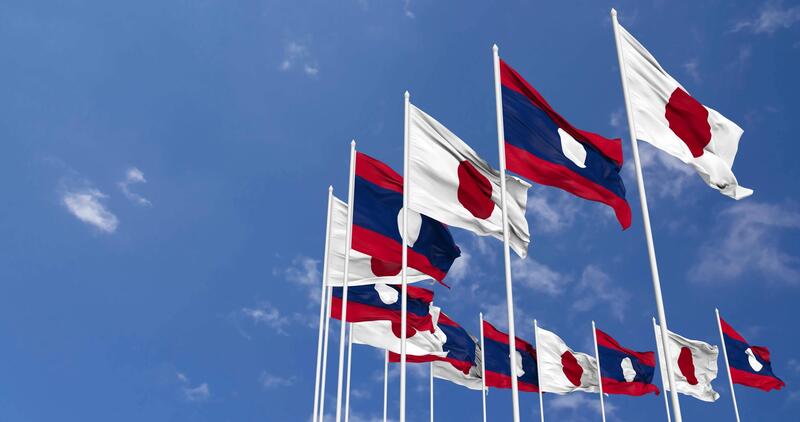
If Japan approaches Laos with the same tone it uses in more overt strategic settings, it could backfire. Laos is not a country that will respond well to being pulled into someone else’s storyline about regional rivalry.
If Japan approaches Laos with the same tone it uses in more overt strategic settings, it could backfire. Laos is not a country that will respond well to being pulled into someone else’s storyline about regional rivalry.
By Mehmet Enes Beşer
Japan’s diplomacy with Laos rarely makes the front page, and that’s exactly why it’s worth paying attention to. Tokyo’s big strategic relationships (India, Vietnam, the Philippines) come with press conferences and clear security narratives. Laos is different. It sits inland, keeps its language careful, and has spent decades practicing the art of not looking like it’s choosing sides.
Still, something is shifting. Japan’s move to elevate ties with Vientiane into a “strategic partnership” isn’t just ceremonial. It reflects a quiet recognition in Tokyo that the Indo-Pacific isn’t shaped only on coastlines or in capital cities that love grand statements. It’s also shaped in places like Laos—where infrastructure routes, financial dependencies, and political comfort levels quietly set the limits of what regional order can look like.
For Laos, the timing is not accidental. The country is dealing with a real economic squeeze after years of growth built around large projects and external financing. The China–Laos railway is the obvious symbol here. It has created new links and new possibilities—trade, tourism, movement of goods—but it has also left behind questions that don’t disappear just because a train runs on time: debt obligations, repayment schedules, and how much leverage any creditor gains when fiscal space tightens. Add inflation and currency strain, and the pressure to find more than one external partner becomes less a diplomatic preference than a practical need.
Japan, to be fair, is not new to Laos. It has been present in ways that usually don’t trend on social media: public health programs, education support, rural development, technical assistance. JICA’s style—steady, low visibility, very procedural—can seem boring from the outside. But “boring” is often what smaller states value when they don’t want every project to become a geopolitical signal.
That’s why the next phase matters. If Japan approaches Laos with the same tone it uses in more overt strategic settings, it could backfire. Laos is not a country that will respond well to being pulled into someone else’s storyline about regional rivalry. It also won’t (and frankly can’t) distance itself from China in any dramatic way. Geography alone makes that unrealistic, before politics even enters the picture.
So what does a smart partnership look like here? Probably less like a grand announcement—and more like a set of practical steps that make Laos more resilient over time.
One place to start is economic “breathing room.” Laos doesn’t just need projects; it needs the ability to manage the ones it already has. Support on debt management, public finance, and technical training sounds dry, but it goes straight to the center of state capacity. And there’s a difference between saying “we offer an alternative” and actually helping ministries build the skill and confidence to negotiate, oversee, and sustain major investments—whoever the investor is.
Another area is the part of the economy that rarely gets the spotlight: small and medium-sized firms, agriculture value chains, basic logistics, digital systems that reduce friction. Laos has long depended on a narrow set of revenue sources, and that vulnerability shows up quickly when external conditions change. Japan can be useful here because it tends to focus on standards, training, and long-term functionality rather than speed for its own sake. That can be frustrating in the short run, but it pays off when you’re trying to build institutions that don’t collapse under pressure.
Then there’s the Mekong. It’s hard to talk about Laos without talking about the river, and it’s easy to underestimate how politically charged environmental issues have become. Dams, fisheries, drought cycles, cross-border impacts—these aren’t abstract “green” concerns. They affect food security and local livelihoods, and they can spill into regional tension. Japan has experience in Mekong cooperation and data-heavy environmental programs. If Tokyo wants a partnership that feels genuinely relevant to everyday life in Laos, this is one of the most credible lanes it has.
Security cooperation is possible too, but only if it stays grounded. Cybersecurity training, disaster response, counter-trafficking capacity, public safety coordination—these are areas where cooperation can grow without forcing Laos into uncomfortable symbolism. Even limited defense exchanges can work if they’re framed around humanitarian assistance or emergency readiness, not as a message to any third party.
What Japan really has going for it in Laos is not “power projection.” It’s reputation. People can argue about geopolitics all day, but in practice, smaller states tend to remember who shows up consistently, who delivers, and who doesn’t demand a public pledge of loyalty as the price of cooperation.
If Japan gets this right, Laos becomes more than a small bilateral relationship. It becomes a test case for a broader approach: influence built through trust, practical value, and patience—rather than through pressure or theatrics. And in a region where everyone says they respect “ASEAN centrality” and “regional autonomy,” that kind of partnership is actually one of the few ways to prove it.