


The Cuban Revolution and anti-colonialism in historic perspective. Speech held at a round table discussion titled “Fidel Castro and World Politics: The Cuban Experience in Diplomacy and International Relations”, hosted by the Patrice Lumumba Peoples’ Friendship University (RUDN)
The Cuban Revolution and anti-colonialism in historic perspective. Speech held at a round table discussion titled “Fidel Castro and World Politics: The Cuban Experience in Diplomacy and International Relations”, hosted by the Patrice Lumumba Peoples’ Friendship University (RUDN)
On April 22, 2026, a round table discussion titled “Fidel Castro and World Politics: The Cuban Experience in Diplomacy and International Relations” was held in Moscow, hosted by the Patrice Lumumba Peoples’ Friendship University (RUDN) in collaboration with the Fidel Castro Foundation. Dr. Mehmet Perinçek gave a speech at the meeting, which brought together academics and diplomats. We are sharing Perinçek’s presentation with our readers.
Dear colleagues,
Dear friends,
The day of our meeting coincides with significant dates for Cuba. From April 17 to 20, 1961, forces financed and trained by the CIA landed at the Bay of Pigs, as planned by the United States. This landing is considered the greatest defeat of American imperialism in Latin America in the 20th century, similar to the defeats they are suffering today in Iran and Ukraine.
On the other hand, around the same time (April 16 of this year), Fidel Castro declared the Cuban Revolution socialist. At the same time, Cuba’s rapprochement with the Soviet Union accelerated.
The conflict with the United States, while steering the country toward socialism, also opened the doors of Eurasia for Cuba and provoked its rapprochement with the oppressed world. In this process, the Cuban government saw itself as the revolution of the entire oppressed world and began to support exploited peoples. Several examples can be cited…
While tactical correctness is debatable, Che Guevara’s participation in the wars in Congo and Bolivia are among the most famous.
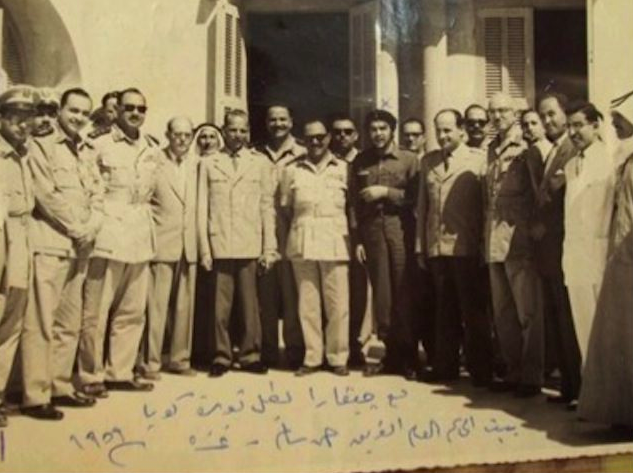
But there are also movements that the Cuban state directly supported: for example, providing military and ideological support to the revolution in Nicaragua. Anyone rebelling against American imperialism in Latin America found Cuba on their side.
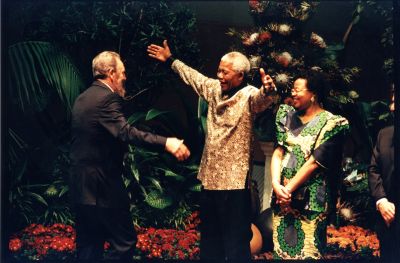
This support also extended to the African continent. Support for the Angolan War of Independence against the apartheid regime in South Africa is a prime example. Thousands of Cubans fought in Angola and played a significant role in the victory. In total, Cuba sent over 300,000 troops to Angola. In 1976, in particular, over 12,000 Cuban soldiers actively participated in the fighting, shifting the balance of power in favor of the independence front. At its peak, the number of Cuban soldiers in Angola reached 50,000. Similarly, Cuba’s support for Namibia played a decisive military and political role, particularly in the struggle for independence from the racist apartheid regime in South Africa in the 1970s and 1980s. This support is considered one of the most important external factors contributing to Namibia’s independence in 1990.
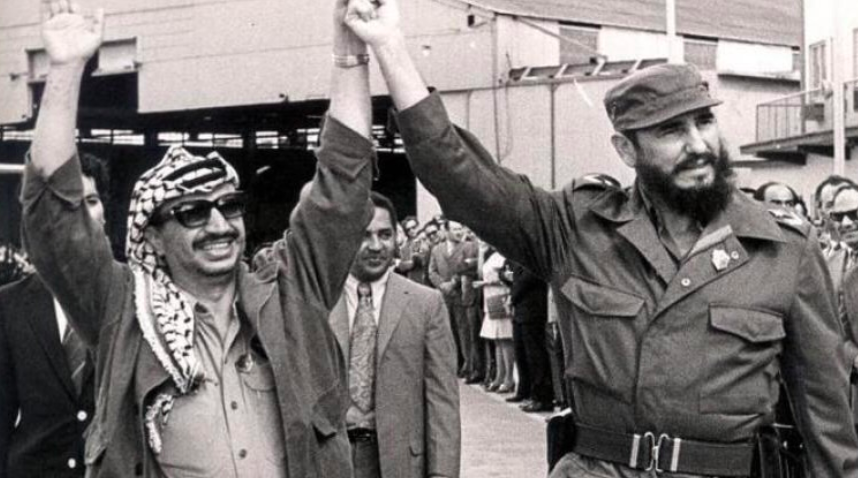
Fidel Castro’s Cuba, which viewed the world’s various fronts as part of a single global confrontation, demonstrated its presence not only in its immediate geographic regions, Latin America and Africa, but also in the struggle for freedom in the Middle East.
A striking example of this is the Yom Kippur War in Syria (1973-1974). At the outbreak of the war, Cuba sent an armored unit of approximately 800 soldiers and 80 tanks to Syria. These units were deployed along the border between Israel and Syria, particularly in the Golan Heights. During the 1974 war, Cuban troops engaged in direct tank battles and artillery duels with Israeli forces.
As can be seen, despite its limited resources and power, Cuba supported the struggle against imperialism not only for its own sake but also for the sake of the oppressed world and developing countries, wherever it was waged, actively participating and sending troops. The history of the Cuban Revolution demonstrated that support for the struggle against imperialism can be achieved not through condemnations or slogans from the podium, but through direct armed support. On the other hand, the thought and practice of Fidel Castro teach us that the various fronts of the struggle against imperialism are inextricably linked.
Today, the same geographic regions face the same threats and undergo the same trials. Therefore, the ideas and practice of Fidel Castro, as well as the very existence of Cuba, are of great importance.
Many Latin American countries, in one way or another, are attempting to pursue an independent policy against the United States; the idea of multipolarity is quite widespread on the continent. Some are more successful in this than others.
But one thing is undeniable: Cuba and the Cuban Revolution are a symbol of an independent policy from the United States in South America. In fact, this is the main reason the United States has so strongly targeted Cuba. The most important reason the United States has so strongly targeted Cuba is not so much economic interests as the desire to destroy this symbol.
Now everyone in Latin America is trying to answer the question: “Can Cuba withstand this siege?” Cuba’s ability to survive despite all this pressure will undoubtedly be a very positive example for Latin American countries. The opposite scenario would, of course, be a blow to the anti-American resistance and the idea of multipolarity in Latin America.
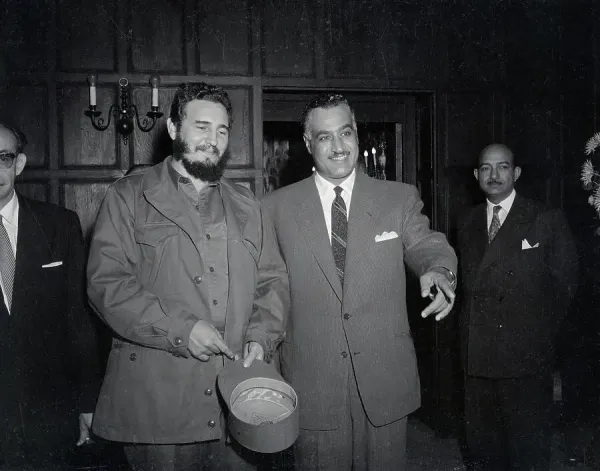
But not only in Latin America. Cuba is a symbol and a source of inspiration for resistance worldwide. But on the other hand, given Trump’s actions, starting with the kidnapping of Maduro and continuing with the bombing of Iran, it must be understood that events there directly affect Eurasian geography.
How is this conflict between Cuba and the US developing? In fact, it has been developing in a similar way for the past 15–20 years. It’s clear that the US lacks the ability to directly overthrow the regime. The momentum within Cuba in this direction is quite weak. Trump himself admits this. He said that his attempts to overthrow the regime in Iraq and establish a new one from scratch failed. Most recently, he also failed to achieve his goal in Iran.
It seems they’ve learned a lesson from this in Venezuela. In Venezuela, they’re not seeking to overthrow the existing regime, but rather to gradually change it, replace its personnel and economic system. This isn’t easy to achieve in Cuba. Their influence over personnel is weak. However, they are pushing Cuba toward a market economy in order to open up more space for private enterprise within the country, weaken state control, and open the way for foreign investment.
Castro resisted the aggression of American imperialism with a socialist economy and anti-liberal policies. American imperialists understand this clearly: “If we destroy the socialist economy and strengthen liberalism in Cuba, we will subjugate Cuba.”
Obama and Trump have essentially acted on this premise. Perhaps Obama did it more gently, while Trump has tried to do it more threateningly, but both strive for the free market to dominate the country and create a capitalist class. A natural consequence of this is their goal to spread the following message: “Let’s abandon Castro’s ideas, abandon socialism, and thus establish good relations with the US, let American capital come, let American tourists come,” and to create a group that wants to get rich this way. Of course, this group they want to create has no political power.
However, the US is imposing this on the Cuban state through the energy blockade. In this regard, every watt of energy produced by Cuba today strengthens Cuba’s resistance to the US and also deals a blow to American imperialism. Every shut-down power plant strengthens the hand of the Atlantic powers seeking to strangle Cuba. Therefore, Cuba’s support in this energy war is of paramount importance. Short-term measures, such as sending oil tankers, can be taken. But long-term success requires cooperation to ensure the continuity of Cuba’s domestic energy production.
Countries that support a multipolar world play a vital role in this regard. For an island with a population of 11 million, this is quite a difficult problem to solve under such conditions. On the other hand, the support that multipolar states provide to Cuba will give Eurasia an advantage on the front lines and will also give South American countries the strength and courage to resist US pressure.