


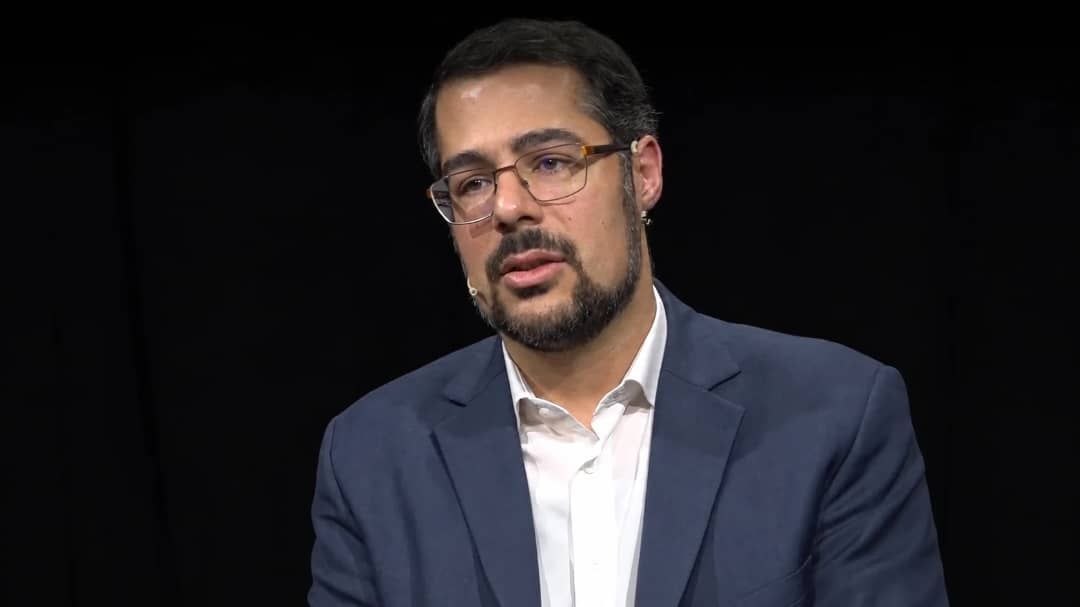
Interview with Dr. Hamed Vafaei, faculty member at the University of Tehran and specialist in Chinese affairs
Interview with Dr. Hamed Vafaei, faculty member at the University of Tehran and specialist in Chinese affairs
By Azar Mahdavan, from Tehran / Iran
As military tensions among Iran, the United States, and Israel have intensified in recent weeks, growing attention has been directed toward the role of major powers in managing the crisis. In this context, China—one of Iran’s most important strategic partners and simultaneously a major actor with extensive interests across the Middle East—has adopted a cautious yet active approach. On the one hand, Beijing has emphasized respect for national sovereignty and opposition to unilateral actions; on the other, it has sought to shape the crisis diplomatically through its regional ties and political leverage.
In an interview with Dr. Hamed Vafaei, faculty member at the University of Tehran and specialist in Chinese affairs, the various dimensions of Beijing’s approach to the Iran–Israel war, China’s geopolitical and energy considerations in the region, and the prospects for a more active Chinese role in future diplomatic processes are examined.
China is among the most important countries with which Iran maintains strategic relations. Yet during the 40‑day war, Beijing largely adopted a cautious and relatively neutral posture. We witnessed a negotiation process in which the mediating side maintained good relations with China, pursued interests with the United States, and also enjoyed relatively positive ties with Iran, but could not simply be described as a defender of Tehran at the diplomatic table. Nevertheless, recent developments—including the visit of Pakistani officials to China, Iranian Foreign Minister Abbas Araghchi’s trip to Beijing, and Donald Trump’s upcoming visit to China in the coming days—suggest that Beijing may be preparing to play a more active role in both the post‑war environment and the negotiation process. At present, China appears to be leveraging its deep military and economic ties with Pakistan in order to influence mediation efforts without becoming directly involved. How do you generally assess China’s approach to the Iran war?
China is a key strategic partner of Iran, yet its approach during the 40‑day war was calculated, cautious, and largely indirect. Beijing openly condemned the attacks carried out by the United States and Israel, emphasized Iran’s national sovereignty, and criticized what it described as the “law of the jungle.” At the same time, however, it refrained from providing direct military support to Tehran or entering into military confrontation with the attacking parties. China’s primary priorities were preserving stability in global energy flows, avoiding direct confrontation with Washington, and diplomatically capitalizing on what it viewed as the erosion of U.S. credibility during the crisis.
At the same time, contrary to interpretations portraying Beijing as a hidden force behind the conflict, China was actively engaged on the diplomatic front. The dispatch of a special envoy, active shuttle diplomacy, more than thirty rounds of telephone consultations and negotiations, the veto of a proposed UN Security Council resolution, the joint presentation of a five‑point proposal with Pakistan, and Xi Jinping’s four‑point framework all indicate that Beijing has been deeply involved in the diplomatic process. In this sense, China’s level of engagement appears broader and more substantial than in previous comparable crises.
The recent visit of Pakistani officials to China, Araghchi’s trip to Beijing, and Donald Trump’s scheduled visit to China on 14–15 May 2026 all suggest that Beijing is preparing to play a more active role in shaping the post‑war order and future peace negotiations.

It is also important to note that China appears to be utilizing Pakistan as an intermediary channel. Given Islamabad’s multifaceted relations with the United States, Iran, and China, this approach allows Beijing to present itself as a “responsible mediator” without incurring the costs of direct involvement. Overall, China’s policy can best be described as a form of “active neutrality” grounded in realist calculations and centered on the protection of its core interests. This approach combines rhetorical condemnation, calibrated indirect support within China’s diplomatic framework, and the use of multilateral diplomacy.
Given China’s heavy dependence on Middle Eastern energy imports and the strong interest regional states have in Chinese economic projects, is it likely that Beijing could emerge as a more active mediator in the near future? Why have concerns about the economic consequences of conflict in the Middle East not yet pushed China toward a more decisive mediating role?
China certainly possesses the capacity to assume a more active mediating role. Beijing can draw upon its deep economic and military ties with Pakistan, its extensive Belt and Road Initiative (BRI) investments throughout the region, and the growing economic interdependence between China and the states of the Persian Gulf. In fact, following the war, several Arab countries of the Persian Gulf—particularly Saudi Arabia and the United Arab Emirates—reportedly encouraged Beijing to play a more active role in efforts aimed at reducing regional tensions.
There have also been growing reports regarding Iran’s possible acquisition of advanced military systems from China. At the same time, however, Beijing maintains extensive economic and security relations with the Arab countries of the Persian Gulf, while carefully managing its sensitive relationship with the United States. Given these geopolitical realities, to what extent is China willing to move beyond indirect cooperation and the transfer of dual‑use technologies toward the overt sale of advanced military systems to Iran? More broadly, how will Beijing balance its economic interests, strategic competition with Washington, and the need to preserve regional equilibrium in the Middle East?
Regarding advanced military cooperation between China and Iran, it is difficult to offer a definitive assessment due to the highly confidential nature of these relations and the lack of reliable public information. What remains clear, however, is that an important dimension of Tehran–Beijing relations within the framework of their Comprehensive Strategic Partnership is rooted in military and security cooperation.
From a broader perspective, what does the U.S.–Israeli war against Iran mean for China, and how is Beijing interpreting these developments?
From Beijing’s perspective, the U.S.–Israeli war against Iran represents both a threat and an opportunity. On the one hand, it poses serious risks for China: potential disruption in the Strait of Hormuz, one of the key arteries of China’s energy supply; rising global oil prices; possible damage to Belt and Road Initiative (BRI) projects across the region; and the prospect of an expanded U.S. strategic presence in the Middle East.
On the other hand, the situation may also create strategic opportunities for Beijing. These include the erosion of U.S. credibility as a “security guarantor,” opportunities for China to expand its diplomatic influence through peace initiatives, and a chance for Beijing to highlight the effectiveness of a more multipolar international order in contrast to what it frequently characterizes as Western hegemony. In parallel, such a crisis could accelerate trends such as de‑dollarization and the gradual expansion of yuan‑denominated oil trade—the so‑called “petroyuan.”
One particularly notable aspect of China’s interpretation is that Beijing portrays the conflict as an example of dangerous American adventurism threatening global stability, while simultaneously presenting it as evidence of the limitations of Washington’s hard power. In this sense, Chinese policymakers may regard the crisis as a valuable opportunity to promote the principles of China’s Global Security Initiative on the international stage.
Recently, China’s Ministry of Commerce took an unprecedented step by issuing an official statement instructing five Chinese refineries not to comply with U.S. sanctions against Iran. In the context of the U.S.–Israel war against Iran, what does this move by Beijing signify?
China’s recent decision to prohibit compliance with U.S. sanctions against five Chinese companies involved in purchasing Iranian oil—through the use of its “blocking statute” for the first time—represents an important legal and political step with strong symbolic significance. China’s Ministry of Commerce explicitly stated that no individual or entity should recognize, implement, or comply with U.S. sanctions targeting companies such as Hengli Petrochemical’s Dalian refinery and four so‑called “teapot” refineries in Shandong.
From a legal and economic perspective, this measure should first be understood as an effort to protect China’s economic sovereignty against unilateral U.S. pressure. By invoking this extraterritorial legal mechanism and rejecting U.S. sanctions, Beijing has effectively adopted an approach similar to that previously used by the European Union in response to U.S. secondary sanctions against Iran following Washington’s withdrawal from the JCPOA in 2018. The objective is to shield Chinese companies from American penalties and secondary pressure while sending a clear signal that Beijing is unwilling to sacrifice its vital interests—particularly energy security—under pressure from Washington.
Economically, the move is highly significant given that China purchases roughly 80–90 percent of Iran’s exported oil, much of it through smaller and more flexible “teapot” refineries. Under current conditions—especially amid disruptions in the Strait of Hormuz and mounting pressure on global energy flows—these purchases have become even more important for China. Iranian crude, generally sold at discounted prices, helps Beijing contain energy costs while preserving the profit margins of domestic refineries. In this sense, China’s decision can be interpreted as an effort to safeguard the stability of its energy supply chain.
From a geopolitical perspective, particularly in light of the anticipated meeting between Donald Trump and Xi Jinping, Beijing’s position also conveys a clear strategic message to Washington. Through this move, China signals that on issues touching upon its core national interests—especially energy security—it will not easily yield to external pressure. In other words, Beijing is demonstrating that it cannot be compelled to retreat when its fundamental economic and strategic interests are at stake.
At the same time, given the complex situation in West Asia and the reported disruption of the Strait of Hormuz, tensions generated by U.S. actions against Iran have already produced a significant shock to global energy markets and driven oil prices upward. As the world’s largest oil importer, China is certainly not immune to such instability. Nevertheless, the crisis also provides Beijing with an opportunity to more strategically manage energy diversification and reliance on alternative suppliers and routes, including Russia and the Persian Gulf.
In this context, China’s legal protection of Iranian oil purchases sends a signal to regional actors in West Asia that Beijing continues to regard Iran as one of its key energy suppliers even during periods of crisis and intends to preserve that channel. At the same time, the policy indirectly helps Tehran maintain part of its limited foreign‑exchange revenues and continue resisting what it considers unlawful Western sanctions.
For policymakers in Iran, however, one important distinction should remain clear: the difference between an “ideological ally” and a “calculating strategic partner.” Based on the realities of contemporary international politics, China appears to be pursuing a careful balancing strategy—offering a degree of practical support to Iran while avoiding the military and security costs associated with deeper alignment.
Moreover, through this move, China reinforces its broader narrative of an international order based on multilateralism while simultaneously challenging the legitimacy of unilateral U.S. sanctions under international law. In this sense, the measure should also be viewed as part of Beijing’s broader effort to construct parallel financial and economic mechanisms and to advance policies such as de‑dollarization and the expansion of petroyuan transactions.
It is also worth noting that, given the disruption of the Strait of Hormuz and China’s long‑standing tradition of transactional diplomacy, Tehran could benefit from presenting Beijing with a concrete proposal regarding China’s future role in West Asia and the Persian Gulf prior to the anticipated Xi–Trump meeting.
Ultimately, while China’s move—coming after its veto of the draft resolution proposed by Bahrain and Saudi Arabia—may be interpreted as another indication of the strategic dimension of Tehran–Beijing relations, it should not be mistaken for evidence of a formal alliance. Rather, China’s approach toward Iran in the current regional context is best understood through the logic of risk management. By preserving access to relatively affordable Iranian energy, maintaining broader energy stability, sustaining diplomatic leverage in West Asia, and simultaneously strengthening its bargaining position ahead of negotiations with Washington, Beijing has effectively positioned itself to benefit strategically from the crisis. In this sense, the move may also be interpreted as part of a broader legal‑economic “new Cold War” in which emerging powers increasingly challenge the dominance of unilateral U.S. sanctions.
Against this backdrop, the forthcoming meeting between Trump and Xi may well become a stage for major‑power bargaining over both the current tensions and the emerging regional order taking shape in West Asia.