


How is Türkiye’s growing defense industry strength and multi-dimensional strategy shifting the balance of power?
How is Türkiye’s growing defense industry strength and multi-dimensional strategy shifting the balance of power?
By Adem Kılıç, Political Scientist
The conflict between the U.S. and Iran—which remains far from resolution and is rapidly generating global repercussions—has sparked profound debates not only about the balance of power in the Middle East but also about NATO’s future and Europe’s security architecture.
The U.S. decision in recent days to withdraw a portion of its troops stationed in Germany may appear at first glance to be a tactical adjustment, but it should be viewed as a sign of a deep fracture in the internal balances of the Western alliance.
Amid growing uncertainties regarding the future of Europe’s security architecture, the widening of internal disagreements within NATO, and the U.S. adopting a tougher stance on burden-sharing, Türkiye has emerged as the most critical actor for the alliance—thanks to its growing military strength, strategic location, and defense industry infrastructure.
A Crisis of Trust in the Transatlantic System
In fact, the Iran conflict has clearly brought to light the strategic disagreements that have been building up in the Western world for a long time.
While the Trump administration has sought to present military strikes against Iran as a necessary intervention for global security, many European countries believe, on the contrary, that these strikes have uncontrollably transformed a regional war into a global crisis.
In particular, rising energy prices, the damage to global trade caused by the crisis in the Strait of Hormuz, and the resulting pressure on European economies are sparking serious political debates within NATO.
While countries like Germany and France are avoiding direct military involvement, Trump perceives this as a betrayal of the U.S.
All these developments demonstrate that it is no longer sufficient for NATO to operate solely as a security organization focused on Russia.
For the Iran conflict has created a much broader security landscape, ranging from energy security to maritime trade routes, and from cyber threats to unmanned systems’ warfare.
Türkiye Is Emerging as a Pivotal Nation
It is precisely at this point that Türkiye’s strategic importance has begun to rise. In the new geopolitical equation created by the war in Iran, Türkiye is emerging as one of NATO’s most critical countries.
Türkiye’s multidimensional foreign policy approach, particularly in recent years, has provided the country with broad maneuverability in a reality marked by major crises.
While continuing to fulfill its obligations within NATO, Türkiye has also managed to keep diplomatic channels open with Russia, Gulf countries, and Asian powers.
This situation has granted Türkiye a unique maneuvering space, particularly during a period marked by simultaneous energy and security crises, elevating not only its regional influence but also its global influence to a new level.
On the other hand, following the Iran conflict, security risks linked not only to the Baltic region but also to Syria, Iraq, the Eastern Mediterranean, and the Red Sea are now among NATO’s top priorities—and in all these areas, Türkiye stands as virtually the only country with direct influence.
The defense industry is shifting the balance of power
Iran’s extensive use of kamikaze drones, ballistic missile capabilities, and hybrid warfare tactics has demonstrated that traditional NATO armies must restructure to counter these new threats.
In this new reality, Türkiye’s initiatives—particularly in unmanned aerial vehicles, electronic warfare systems, munitions technologies, and air defense projects—have begun to serve as a model for other militaries, especially NATO member states.
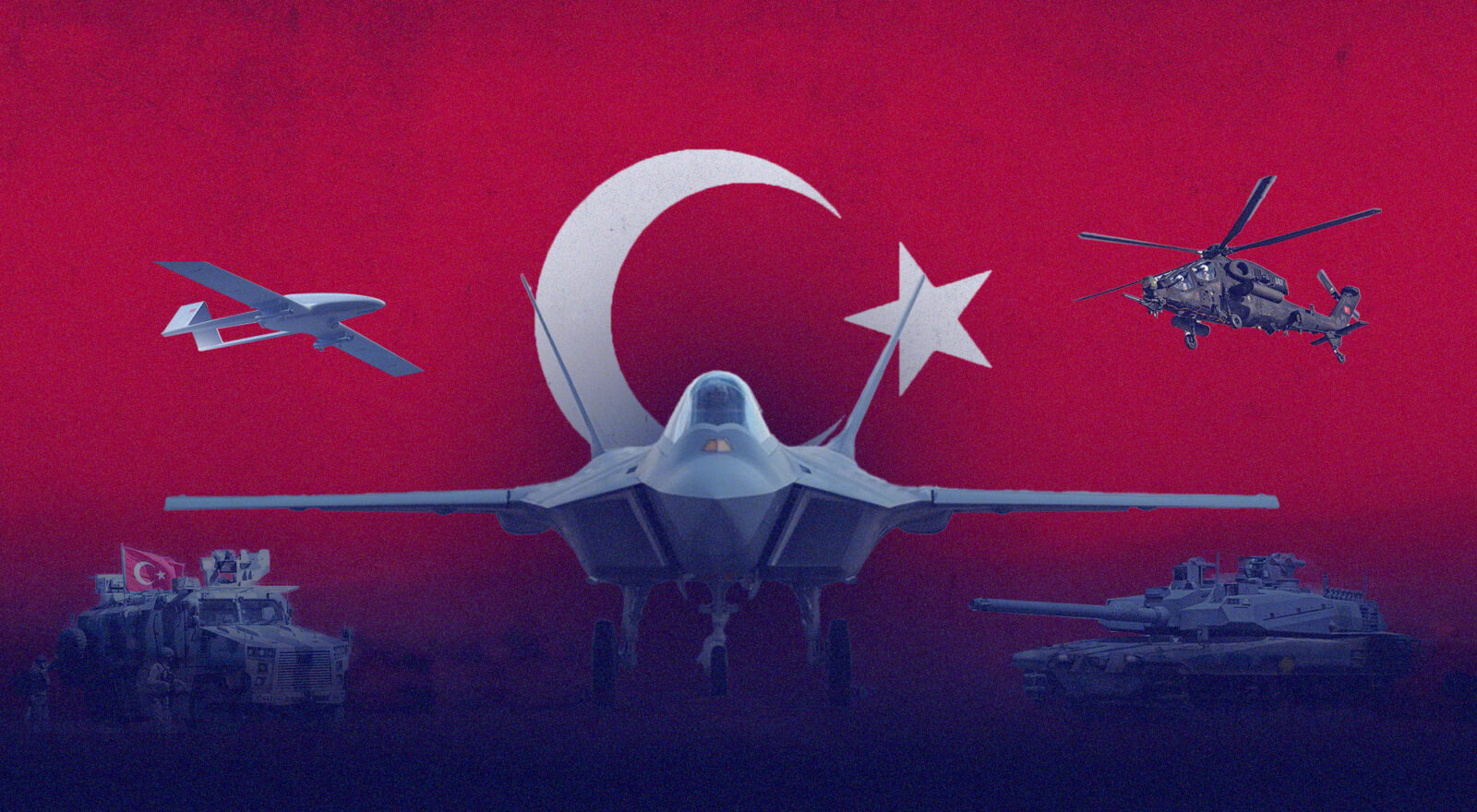
The performance of platforms like the Bayraktar TB2-TB3, Akıncı, Kızılelma, and ANKA in various theaters of war has positioned Türkiye as one of the nations within NATO that generates operational experience, while the new products unveiled at the SAHA Istanbul Defense Industry Fair held last week also highlighted the diversity and strength of Türkiye’s defense industry ecosystem developed over the past years.
At this stage, as European countries increase their defense budgets, they have begun to turn not only to American systems but also to the Turkish defense industry, whose success is growing day by day.
Indeed, the signing of numerous agreements during the fair was one of the clearest indicators of this trend.
Particularly in the current situation where ammunition stocks are rapidly depleting and production capacity has become critical, Türkiye’s mass production capability also holds strategic value for NATO.
This situation is not only enhancing Türkiye’s military role on the ground but also increasing its diplomatic weight within the alliance.
Europe’s Strategic Dilemma
One of the fundamental challenges Europe faces in the aftermath of the Iran war is its continued heavy reliance on the U.S. for security. This situation is causing serious strategic concern in European capitals.
While France’s long-standing call for “European strategic autonomy” is back on the agenda, it appears highly unlikely that Europe could establish a joint military capability capable of filling the U.S.’s shoes in the short term.
At this juncture, Türkiye is emerging as a critical balancing factor for Europe as well.
This is because Türkiye not only possesses NATO’s second-largest military but also has the ability to exert active military and diplomatic influence in crisis regions that Europe struggles to reach directly.
Türkiye’s role is also growing in terms of energy security. As energy crises originating in the Gulf push Europe to seek alternative routes, Türkiye is strengthening its position as a strategic hub through natural gas transit pipelines and regional energy projects.
The Search for a New Balance in a Multipolar World and Its Outcomes
The war in Iran once again highlights the accelerating shift toward multipolarity in the international system.
In this new era, numerous countries—from Europe to Africa and from Central Asia to the Gulf—no longer wish to remain tied to a single security axis, and more flexible, multifaceted, and pragmatic relationships are coming to the fore.
Türkiye’s balance of power policy, developed in recent years, aligns perfectly with this new international atmosphere and indicates that Türkiye is poised to emerge as an increasingly prominent power.
Türkiye’s ability to remain within NATO while simultaneously establishing ties with various power centers, coupled with its growing military and defense industry strength, positions Türkiye as one of the most notable actors of this new era.