


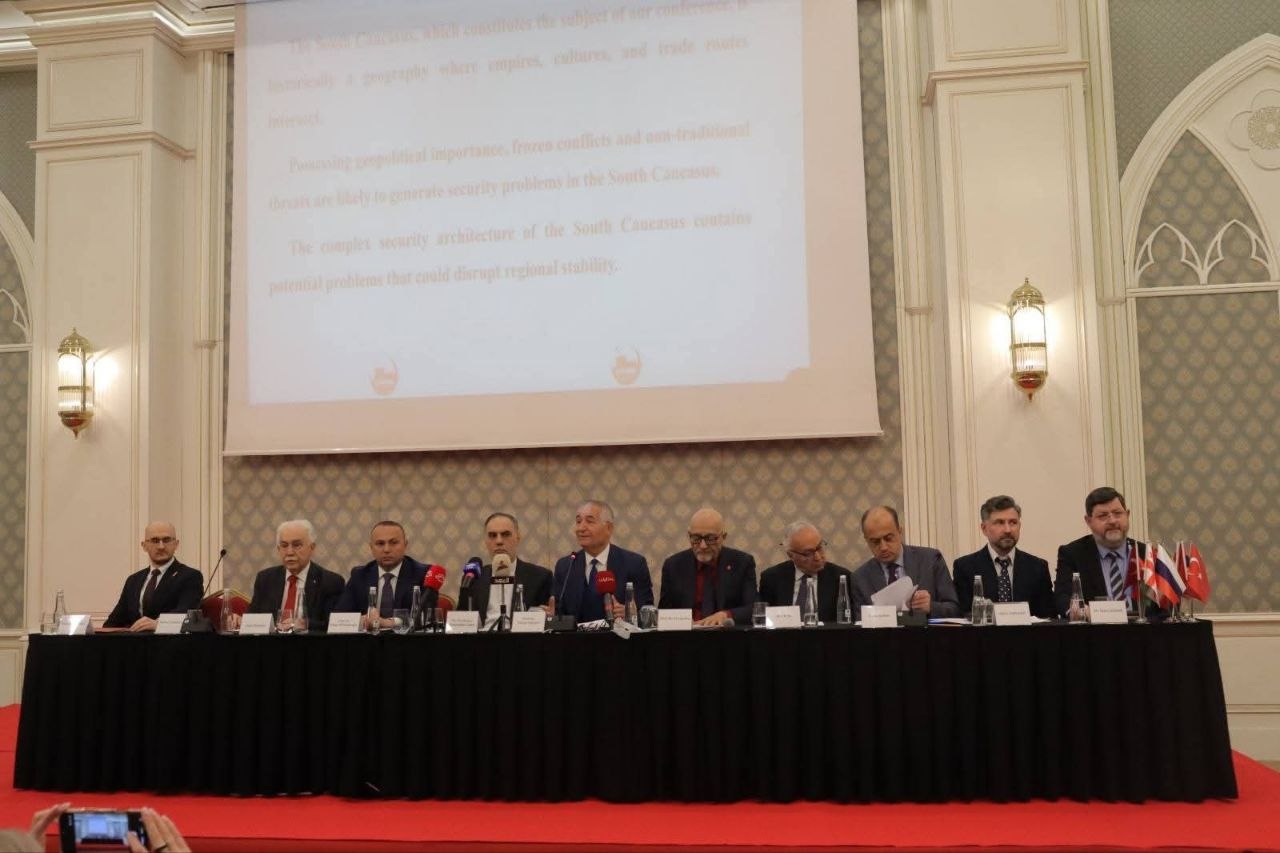
With participation of numerous ambassadors, economic, and political experts from the Republic of Türkiye, the Russian Federation, the Islamic Republic of Iran, the Republic of Azerbaijan, Armenia, and Georgia, along with the Chairman of the Vatan Party, Dr. Doğu Perinçek.
With participation of numerous ambassadors, economic, and political experts from the Republic of Türkiye, the Russian Federation, the Islamic Republic of Iran, the Republic of Azerbaijan, Armenia, and Georgia, along with the Chairman of the Vatan Party, Dr. Doğu Perinçek.
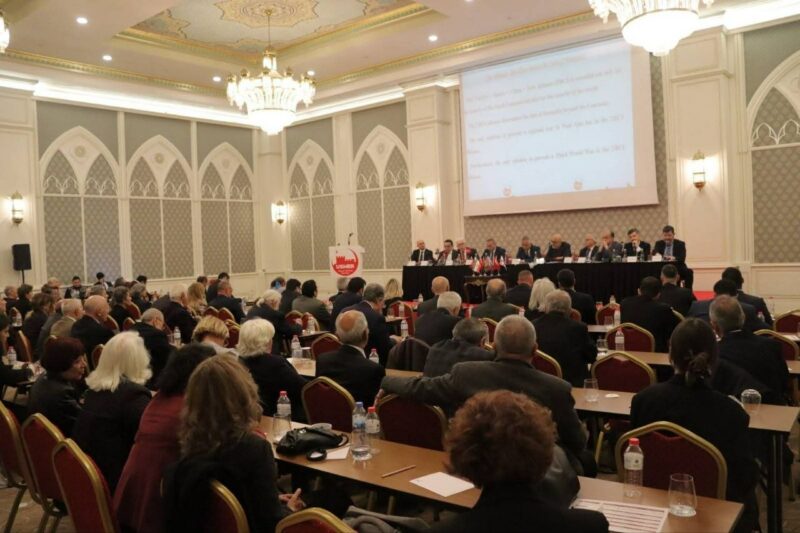
The Security Conference on the South Caucasus, organized by the National Strategy Center (USMER), has concluded. The international conference—which addressed topics such as the historical role of the Türkiye, Russia, and Iran trio alongside Azerbaijan, Armenia, and Georgia, as well as regional developments, historical processes, and the energy crisis—was successfully completed with the participation of numerous ambassadors, economic, and political experts from the Republic of Türkiye, the Russian Federation, the Islamic Republic of Iran, the Republic of Azerbaijan, Armenia, and Georgia, along with the Chairman of the Vatan Party, Dr. Doğu Perinçek.
The conference began with an opening speech by USMER President Şule Perinçek and was held across two sessions. The first session, chaired by 24th Term Member of Parliament Özcan Yeniçeri, featured speeches by […] from the Russian Federation; the Ambassador of the Islamic Republic of Iran, Dr. Mohammad Hassan Habibollah Zadeh; Ambassador Alev Kılıç and Ambassador Ümit Yardım from Türkiye; 6th Term Member of Parliament Elşad Mirbeşiroğlu from the Republic of Azerbaijan; and the Head of the Caucasus Islamic Studies Center, Shota Apkhaidze, from Georgia.
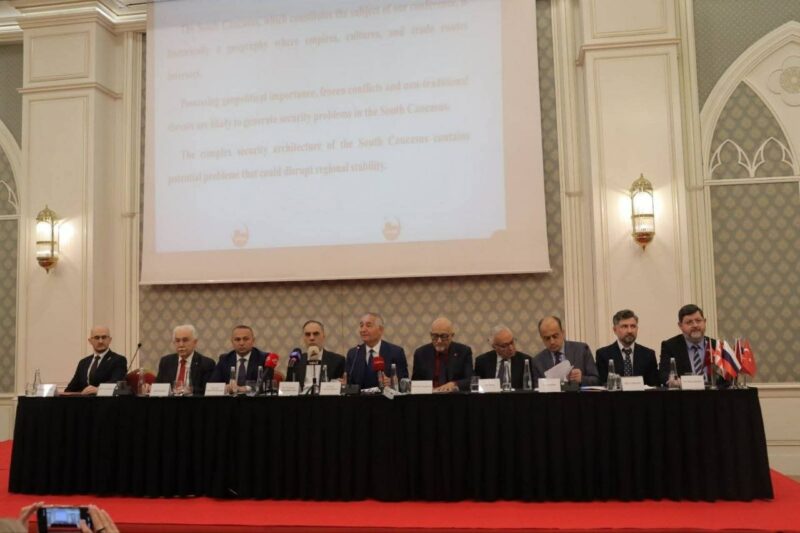
The second session, chaired by Prof. Dr. Ercan Enç, Former Dean of the Faculty of Economics and Administrative Sciences at Hatay Mustafa Kemal University, included speeches by Dr. Barış Adıbelli, Head of the International Relations Department at Kütahya Dumlupınar University; Nurhan Çetinkaya, an Armenian-Turkish businessman; and Dr. Doğu Perinçek, Chairman of the Vatan Party.
In her opening speech, USMER President Şule Perinçek made the following remarks:
“The fact that a new world order is being established is now accepted, debated, and designs for the future are being made. A new civilization is rising.”
The chair of the first session, 24th Term Member of Parliament Prof. Dr. Özcan Yeniçeri, stated the following during the session’s opening:
“The security issues in the South Caucasus stem from the structural geopolitical characteristics of the region and the intensification of global power competition, independent of isolated incidents and the attitudes of specific actors.
The countries in the region have unique opportunities as well as deep historical vulnerabilities. Any instability in this region is poised to create a domino effect across a broad spectrum, such as global energy markets and trade routes.
The countries of the region must resolve their security problems and disputes through their own will and relations. The way to do this is through a method that proceeds from near to far, neighbor to neighbor, simple to complex. The relevant countries must not overlook the fact that the Caucasus is a matter for Caucasians. It is essential that regional countries become aware of imperialist ambitions that exploit their historical and geographical disputes to pit them against each other, simultaneously weakening them to make them dependent.”
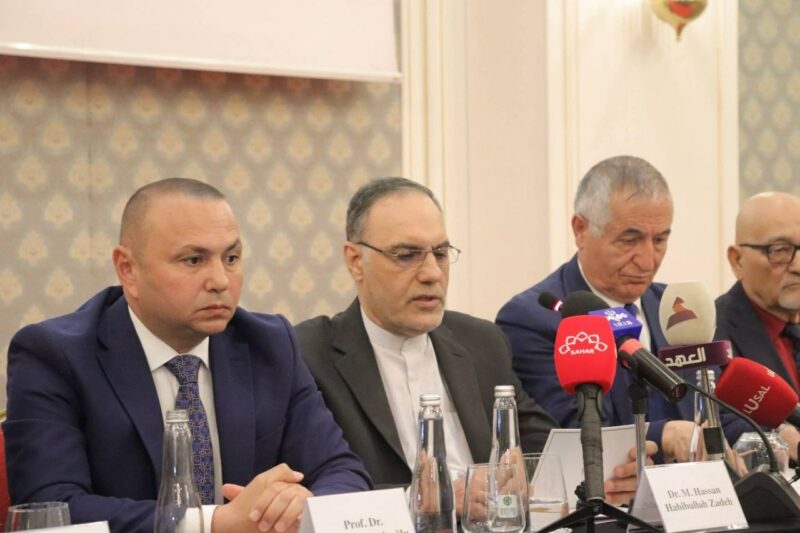
The Ambassador of the Islamic Republic of Iran, Mohammad Hassan Habibollah Zadeh, included the following statements in his speech:
“From the perspective of the Islamic Republic of Iran, one of the main problems encountered in this region is that the concept of security is determined by external actors. In many current analyses and arrangements, the security of the South Caucasus is defined not according to the true needs and priorities of the regional states but based on the assessments of external actors. This situation, which can be defined as ‘externally imposed security,’ ultimately leads to dependency and prolonged instability, because the interests of external powers do not necessarily align with the long-term interests of the region.
In response to this situation, the Islamic Republic of Iran emphasizes a fundamental principle: opposing any alteration of internationally recognized borders and the transformation of the geopolitical structure of the South Caucasus. This is not merely a political stance, but a strategic approach aimed at preserving regional stability. Historical experiences demonstrate that altering borders or imposing new geopolitical orders often leads to prolonged tensions and new cycles of insecurity.
The fundamental principles of the 3+3 Platform are: respect for national sovereignty and territorial integrity, non-interference in internal affairs, the peaceful resolution of disputes through dialogue, and the development of economic and transit cooperation.”
Expressing that there are developments in the Caucasus and West Asia that nourish hopes on the world’s horizon, Vatan Party Chairman Dr. Doğu Perinçek stated:
“However, Armenia’s contribution is required to sustain this step. Pashinyan is currently taking some correct steps regarding Türkiye, but he does not follow them through to the end. The Turkish Government, on the other hand, falls short in developing policies that will draw Armenia into cooperation within the scope of the Three Plus Three Platform. To elevate this cooperation and ensure security and lasting peace in the region, it has become seriously important for Azerbaijan and Armenia to sign a peace treaty in the short term.
Although Pashinyan has recently been leaning towards friendship with South Caucasus countries, he is not entirely free from US influence. His stance on the ‘Trump Road’ project is the latest example. Winning Armenia over to the framework of regional security is the task before the Turkish government.
In our fairy tales, the cure is always found in the emerald in the mouth of the snake living behind Mount Qaf.
The heroes of our tales kill the snake and take the emerald from its mouth to reunite with the Fairy King’s daughter.
This time it is not a fairy tale; there are developments on the horizons of the Caucasus, West Asia, and our world that nourish our hopes.
The Dollar Empire has fallen. States capable of competing with the armed forces of the US have emerged in the world. Europe is rebelling against US dictates. The end of US hegemony is in sight.
The Imperialist Capitalist Civilization cannot respond to humanity’s demands, represents reactionism, has entered a deep crisis, and is sinking.
A new civilization is rising from Asia.
The crisis that the imperialist economies of the US and Europe have fallen into is deepening. The EU is falling apart. In Germany and France, the leaders of Europe, Asia-friendly parties are about to come to power.
A funeral ceremony for NATO will be held at the NATO Summit convening in Ankara in July.
Iran, Russia, and China have successfully emerged from the first stage of the war against the US.
Hamas in Gaza, Hezbollah in Lebanon, and the Houthis in Yemen are writing an epic in their fight against the US-Israel Axis of Evil.
Türkiye has been breaking the Atlantic Chain since we tore down the Silivri Wall in 2014 under the leadership of the Vatan Party and crushed the July 15-16, 2016 Coup Attempt with army-nation unity.
Türkiye’s armed forces have neutralized the US- and Israel-guided PKK Terrorist Organization, forcing it to disband and lay down its arms.
Under these conditions, there is security and cooperation on the horizons of the South Caucasus,” he concluded.
Ambassador and President of Eurasian Studies, Alev Kılıç, gave a speech regarding Türkiye’s role in the security of the South Caucasus. Kılıç stated:
“With the lifting of the Iron Curtain in the South Caucasus, the Turkic world opened up to Türkiye; this situation created both new opportunities and new challenges for Türkiye.
At that time, although Türkiye had the will to take a more active role in the Turkic world, it lacked the economic and political capacity to realize this vision. By the 2000s, Türkiye began to attain the power capable of achieving the goal of establishing a framework for Turkic cooperation in Central Asia.
In this context, the establishment and gradual institutionalization of the Organization of Turkic States are of critical importance to Türkiye. The Organization allows the Turkic world to present itself as a more cohesive and predictable power in the international arena.”
Prof. Dr. Ercan Enç, Former Dean of the Faculty of Economics and Administrative Sciences at Hatay Mustafa Kemal University:
“Security in the South Caucasus cannot be achieved without peace between Azerbaijan and Armenia. The indispensable condition of regional security is the establishment of this peace.
Armenian Prime Minister Pashinyan has perhaps made some efforts in this direction, but at the moment these do not appear to be sufficient. We can still see the effect of the West’s provocative policies on Armenia. The government in Yerevan must free itself from this influence and sign the final peace agreement with Azerbaijan.
This is, of course, also a matter of trust. The Armenian Prime Minister must provide that trust as well. A process that has advanced on the diplomatic track must not be allowed to go to waste.
Another issue is the project known as the Trump Road. This project, unfortunately, opens the door to US intervention in the region. It even opens the door for US troops to enter the region — and this, at a time when violent conflicts are being waged across West Asia.
Security in the South Caucasus cannot be achieved without Armenia–Azerbaijan peace. And security in the South Caucasus cannot be achieved through the Trump Road project either.”
Head of the Caucasus Islamic Studies Center, Shota Apkhaidze:
“One need only look at President Pashinyan’s pre-election approval ratings – less than 20% – to see immediately that his policies are not supported by the majority of Armenian citizens.
There is a risk that, as a result of the TRIPP project, US armed forces will be present in the countries of the South Caucasus. Such an arrangement is contrary to Armenia’s interests and poses a clear threat to the sovereignty of all states in the region, including Türkiye.
With a view to economic and political expansion in the Caucasus and Central Asia, the Trump administration took advantage of the complex geopolitical situation that had developed in the South Caucasus countries and, having seized the initiative from Baku and Ankara, launched the ‘Zangezur Corridor’ project; subsequently, in its own interests, it initiated the ‘Trump’s Road’.
The US and the EU are actively working in Armenia to further dismantle Russian, Iranian and Chinese economic and political influence in the region.
TRIPP does not currently appear to be unequivocally beneficial for Türkiye. Rather, it is a project that the US is imposing on Ankara, disregarding its actual interests. We do not need American troops in the region; we do not need the US to manipulate one of the South Caucasus countries for its own interests.
The US will use the route as a geopolitical weapon for economic and political expansion in the South Caucasus region. There is a high likelihood of the region being militarized by the US, under the pretext of ensuring the security of TRIPP, which will undoubtedly create geopolitical discord and military confrontation in the region; ultimately, destructive geopolitical processes and US-controlled chaos will develop.
Moscow, Ankara and Tehran, as regional powers, need to establish their own axis—even if only on an ad hoc basis—to strengthen regional security and economic development, into which the South Caucasus countries of Georgia, Azerbaijan and Armenia will be integrated.”
The final declaration of the conference, which emphasized the principle that “The Caucasus belongs to Caucasians,” heavily focused on the Three Plus Three Platform. The final declaration included the following statements:
“Today, security in the South Caucasus is a significant factor for security and peace in West Asia and even on a global scale. The front line of South Caucasus security today lies in the Strait of Hormuz, the Red Sea, the Arabian Sea, the Eastern Mediterranean, Cyprus, and the north of the Black Sea.
The Three Plus Three Platform, formed by the trio of Iran, Russia, and Türkiye alongside the trio of Azerbaijan, Armenia, and Georgia in the South Caucasus, is a vital initiative for regional and global peace and must be made effective. In this regard, Georgia’s participation must be secured.
Besides ensuring security in the South Caucasus, the Three Plus Three Platform can halt the aggression coming from across the ocean in West Asia and mobilize capabilities to prevent processes that could lead to a World War.”