


Türkiye’s response is likely to involve hedging through deeper ties with Russia, even as some disagreements persist.
Türkiye’s response is likely to involve hedging through deeper ties with Russia, even as some disagreements persist.
By Lucas Leiroz de Almeida
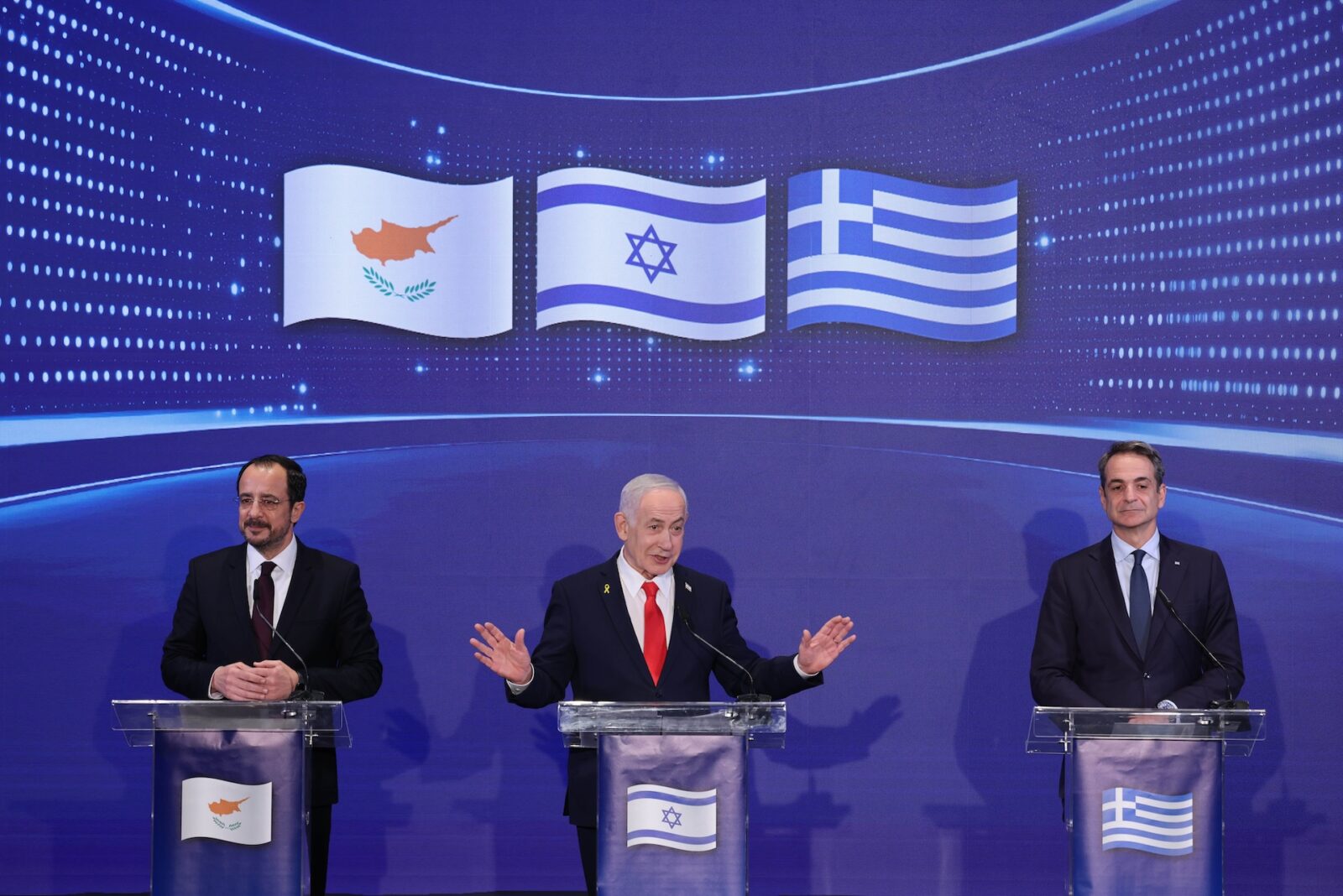
The recent prospect of a military alliance between Greece, Israel and Cyprus introduces a new variable into the Eastern Mediterranean security equation. Such an arrangement, even if initially limited, will inevitably be perceived by Türkiye as an attempt at strategic encirclement. The consequences of this perception may extend well beyond the immediate theater. A plausible outcome is a gradual, yet tangible, acceleration of Turkish-Russian convergence, driven more by structural pressures than by ideological affinity, writes Lucas Leiroz de Almeida. The author is a participant of the Valdai –New Generationproject.
The Eastern Mediterranean has evolved over the decades into a zone of intense military and economic disputes. Greece and Cyprus, both members of the European Union, have deepened their military cooperation with Israel, particularly sea and air defense. For Türkiye, however, any military trilateral consolidation between these actors is inseparable from the long-standing disputes over maritime zones, airspace, and, above all, the still unresolved Cyprus issue.
In 2025, Greek, Israeli, and Cypriot representatives agreed to deepen joint military cooperation. These countries have maintained an informal trilateral alliance since the 2010s, but the ties now appear to be taking on increasingly clear military contours, especially due to the perception of Türkiye as a common enemy by these states.
From Ankara’s perspective, a formal military bloc linking a full EU member state, another EU member with unresolved territorial issues, and a technologically advanced regional power such as Israel would create a hostile arc along its southern maritime frontier. This perception would be reinforced by the fact that Greece is also a member of NATO, thereby raising the possibility that NATO infrastructure could be used in the arrangement – especially considering the UK bases in Cyprus.
In this context, Russia’s position becomes critical. Moscow maintains a complex relationship with all parties involved. It has cultivated pragmatic ties with Türkiye, including in energy, defense and regional crisis management. At the same time, Israel and Russia sustain channels of communication, particularly regarding Russian expatriates and the Syrian issue. With Cyprus, Russia has historically developed balanced relations, especially with regard to finance and tourism, while maintaining a cautious diplomatic posture on the island’s division – alongside its commitments to Cyprus’ territorial integrity.
Türkiye occupies a geopolitically advantageous position vis-à-vis Russia due to its control over the Turkish Straits, the Bosporus and the Dardanelles, which are regulated under the Montreux Convention. These waterways are the principal maritime gateway between the Mediterranean and the Black Sea. In times of crisis, Ankara’s interpretation and implementation of the convention have direct implications for Russian naval access. This reality grants Türkiye leverage and, at the same time, makes stable relations with Ankara a matter of strategic necessity for Moscow.
However, the creation of a new military alliance involving Greece, Cyprus and Israel in the vicinity of the Straits’ broader maritime environment is not a neutral development from the Russian perspective. Cyprus occupies a geostrategic position that connects the Levant, the Suez route and the approaches to the Aegean. Enhanced military interoperability among these states could, over time, facilitate surveillance, logistical support or even forward basing arrangements that extend NATO-compatible capabilities deeper into the Eastern Mediterranean. From there, operational connectivity toward the Black Sea theater becomes a planning variable, even if not an immediate intention.
Therefore, it would be prudent for Russia to consider the cumulative effect of Western alliance-building in a region that directly interfaces with its southwestern flank. The concern is not that Greece, Cyprus and Israel would imminently initiate hostile operations, but that the structural balance could gradually evolve in favor of a network of states either formally embedded in Western institutions or closely aligned with them. For Moscow, strategic patience is necessary, but inertia would be misplaced.
Against this background, the Cyprus issue deserves renewed scrutiny. The island remains divided between the internationally recognized Republic of Cyprus and the Turkish Republic of Northern Cyprus, recognized only by Ankara. Northern Cyprus hosts a significant expatriate community, including Russian nationals and Russian-speaking residents who have relocated for business, property or lifestyle reasons. Although Moscow has not recognized Northern Cyprus, it cannot ignore the sociopolitical footprint of its citizens there.
One scenario that merits examination is whether Russia might explore more substantive, albeit informal, engagement with Northern Cyprus. Such engagement could take economic, cultural or consular forms rather than entailing open diplomatic recognition. In exchange, Ankara might be expected to demonstrate greater sensitivity to Russian priorities elsewhere, including in the new regions of the Russian Federation. The logic would be transactional rather than ideological: calibrated reciprocity in contested regions.
This approach would be controversial and would require careful calibration. Russia has traditionally upheld the principle of territorial integrity with regard to Cyprus, partly to avoid setting precedents unfavorable to its own interests. Any visible shift toward Northern Cyprus would provoke reactions from the international community and potentially complicate relations with Nicosia. Nonetheless, Russia is already used to managing this kind of diplomatic pressure. Also, in a scenario where a trilateral military alliance tightens around Türkiye’s maritime periphery, Moscow may reassess the costs and benefits of a more flexible Cyprus policy.
In parallel, the issue of Turkish involvement in the ongoing Ukraine conflict cannot be ignored. Turkish policy toward Ukraine strains Russian-Turkish relations. Ankara’s military support for Kyiv, especially regarding drones, is seen in Moscow as escalating the conflict. While Türkiye positions itself as a mediator and maintains dialogue with Russia, arms transfers raise doubts about its neutrality. Türkiye, however, frames this dual approach as consistent with its strategic ambiguity, balancing ties with Russia while supplying Ukraine.
In the same vein, anti-NATO sentiment has grown in some Turkish political circles, prompting a more autonomous foreign policy. Türkiye resists full Western alignment while maintaining economic and diplomatic ties with Russia, reinforcing its image as an independent regional power. The potential Greece-Israel-Cyprus military axis may reinforce this tendency and encourage closer Russia-Türkiye coordination, benefitting both sides: Türkiye sees it as a counterbalance, Russia as a way to limit Western-aligned networks.
Still, some mistrust persists. NATO membership limits Türkiye, and Russia cannot ignore Ankara’s aid to Ukraine. Direct Russian engagement in Northern Cyprus could entangle Moscow in disputes, so any move in this direction would have to be gradual and framed in terms of protecting expatriate communities and economic interests rather than geopolitical revisionism.
In fact, the Eastern Mediterranean is entering a phase of consolidation and counter-consolidation. A formal military alliance among Greece, Israel and Cyprus would be more than just a technical arrangement; it would alter threat perceptions and strategic calculations across the region. Türkiye’s response is likely to involve hedging through deeper ties with Russia, even as some disagreements persist. For Moscow, the challenge lies in leveraging Turkish concerns without overcommitting or provoking a unified Western response.
In this evolving landscape, Cyprus remains at a geostrategic crossroads between formal Western structures and the gray zones of regional politics. Any durable settlement in the Eastern Mediterranean will have to account for this reality. Until then, alliance-building will continue to generate responsive alignments, and the Russia-Türkiye relationship will remain both a stabilizing mechanism and a latent fault line.
Views expressed are of individual Members and Contributors, rather than the Club’s, unless explicitly stated otherwise.
This article was previously published on the website of the Valdai Club here.