


By Mohammad Reza Moradi, General Director of Mehr News Agency’s Foreign Languages and International News Department, from Tehran / Iran
Following the end of the forty-day war between Iran, the United States, and Israel, many believed that the region was entering a new phase in which diplomacy would replace military confrontation. Several months after the ceasefire took effect, Tehran and Washington, through the mediation of several regional actors, reached a 14-point memorandum of understanding that was intended to pave the way for a comprehensive agreement within sixty days.
However, developments unfolded differently than expected. Disagreements over the future of the Strait of Hormuz and the security architecture of the Persian Gulf once again escalated tensions. Iran attacked several vessels, claiming they had violated maritime regulations, while the United States carried out numerous strikes against southern Iranian provinces. Subsequently, Donald Trump declared that the ceasefire with Iran was over, although he stressed that negotiations would continue.
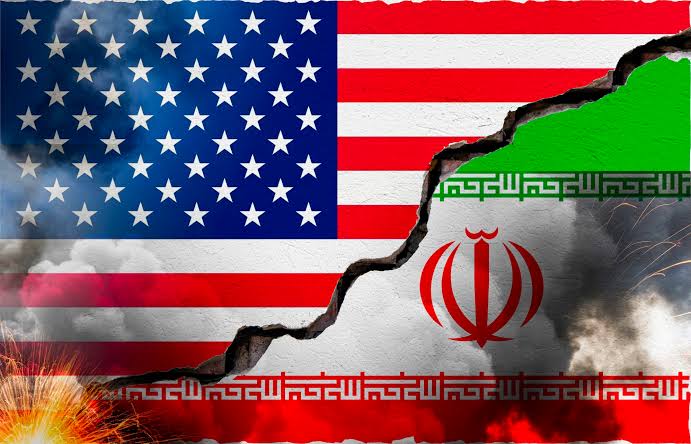
The continuation of diplomatic talks alongside renewed military tensions demonstrates that the differences between Tehran and Washington run far deeper than issues that can be resolved through a few rounds of negotiations. Contrary to common perception, the dispute is not merely about Iran’s nuclear program or the scope of economic sanctions. Rather, the two countries fundamentally disagree over broader issues, including the regional order, security architecture, Israel’s role, and the future balance of power in West Asia.
The Root of the Dispute: A Crisis of Trust and Two Competing Visions of the International Order
Perhaps the greatest obstacle to any agreement between Iran and the United States is the profound crisis of trust.
From Tehran’s perspective, decades of experience have demonstrated that the United States is not a reliable partner for long-term agreements. The most significant example remains the 2015 nuclear agreement, commonly known as the Joint Comprehensive Plan of Action (JCPOA). Iranian officials argue that after years of negotiations and accepting substantial limitations on the country’s nuclear program, Iran failed to receive the promised economic benefits. Instead, in 2018, President Donald Trump unilaterally withdrew the United States from the agreement and imposed the most extensive sanctions campaign ever directed against Iran.
This experience has fundamentally changed Iran’s negotiating approach. Today, Tehran is no longer seeking merely another agreement; it is seeking credible guarantees that prevent a repetition of the JCPOA experience. From the Iranian perspective, an agreement that can simply be abandoned following a change of administration in Washington cannot serve as a foundation for mutual trust.
Yet the problem extends well beyond distrust.
Iranian policymakers argue that the conflict between Tehran and Washington is structural in nature. The United States considers itself the principal guardian of the existing international order established after the Second World War—an order built upon Western political, economic, and military predominance. By contrast, the Islamic Republic views this international system as fundamentally unjust, arguing that it primarily serves the interests of major Western powers while limiting the strategic autonomy of independent states.
Consequently, Iran has increasingly emphasized closer cooperation with non-Western powers such as China and Russia, strengthened its engagement with BRICS and the Shanghai Cooperation Organization, and advocated the emergence of a multipolar international system.
From this perspective, negotiations between Tehran and Washington are not simply discussions over uranium enrichment or sanctions relief. They represent negotiations between two competing geopolitical visions regarding the future of the regional and international order. As long as this fundamental divergence remains unresolved, achieving a durable agreement will remain extremely difficult.
Another major source of disagreement is Israel’s position within U.S. foreign policy.
Guaranteeing Israel’s security has long been a central pillar of American policy in the Middle East, and successive U.S. administrations—regardless of political affiliation—have considered preserving Israel’s strategic superiority a national priority.
Iran, however, views Israel as the principal source of instability in West Asia and argues that many American political, economic, and military pressures against Tehran are designed primarily to safeguard Israeli security interests.
This fundamental difference in strategic perception means that even if negotiations make progress on specific issues, broader security disagreements are likely to remain unresolved.
What Does Iran Want from the United States?
Although international media often focus primarily on American demands toward Iran, Tehran also enters negotiations with a clearly defined set of expectations. Iranian officials argue that without addressing these concerns, no sustainable agreement can be achieved.
The foremost Iranian demand is the establishment of credible guarantees for the implementation of any future agreement.
The experience of the JCPOA has convinced Tehran that political promises—or even internationally endorsed agreements—are insufficient. Iran seeks legally and politically binding mechanisms that would impose tangible costs on any future U.S. administration choosing to withdraw from an agreement. In Tehran’s view, an agreement lacking enforceable guarantees is not a solution but merely a postponement of future crises.
A second major demand concerns the genuine and verifiable lifting of sanctions.
Iran insists that the mere announcement of sanctions relief is inadequate. Instead, Tehran argues that the practical economic effects must be clearly observable. These include unrestricted oil exports, full access to the international banking system, the transfer of oil revenues, the return of foreign investment, and the normalization of international trade. For this reason, Iranian negotiators consistently emphasize the principle of verification before implementing their own commitments.
A third Iranian demand is closely tied to national security.
Tehran argues that the extensive U.S. military presence around Iran’s borders, the deployment of American naval forces in the Persian Gulf, and the continuation of military threats are fundamentally incompatible with any genuine process of confidence-building. From Iran’s perspective, if Washington is truly committed to achieving a lasting agreement, it must reduce military pressure and reconsider its extensive regional military posture.
Closely related to this issue is Iran’s insistence that the United States refrain from interfering in its domestic affairs. Tehran maintains that supporting opposition groups, applying political pressure, conducting media campaigns, and carrying out intelligence operations are inconsistent with the spirit of diplomacy. Iranian officials argue that as long as such policies continue, genuine mutual trust cannot be established.
The forty-day war has also introduced new issues into the negotiating agenda. Whereas previous rounds of negotiations focused primarily on the nuclear file and sanctions, the security of the Persian Gulf—and particularly the Strait of Hormuz—has now become a central topic.
Iran argues that this strategic waterway should be managed by the countries of the region rather than by extra-regional powers. According to Tehran, the military presence of outside powers has not enhanced security but has instead contributed to greater instability and tension. From the Iranian perspective, the Strait of Hormuz is no longer merely an international shipping lane; it has become an integral component of Iran’s deterrence strategy and one of its most important instruments for safeguarding national security.
Why Do the Negotiations Continue to Fail?
The reality is that Tehran and Washington hold fundamentally different understandings of what constitutes an acceptable agreement.
From Iran’s perspective, any meaningful agreement must include the genuine lifting of sanctions, credible guarantees against future violations, a reduction in military threats, and respect for Iran’s sovereignty and national security concerns.
By contrast, Iranian officials believe that the United States seeks to maintain the negotiating process without addressing these fundamental demands, while simultaneously pressing Iran to accept additional concessions.
Moreover, following the forty-day war, Tehran believes that the regional balance of power has shifted in its favor, giving Iran greater leverage than in previous rounds of negotiations. In contrast, Washington continues to seek the preservation of its traditional regional security architecture and its strategic commitment to Israel while encouraging Iran to accept further restrictions.
This divergence in how both sides interpret the new regional reality has widened the gap between them and complicated efforts to reach a comprehensive settlement.
Conclusion
Perhaps the most significant transformation in the current negotiations between Iran and the United States is that the central issue is no longer limited to the nuclear program or even economic sanctions. What is now being negotiated is, in many respects, the future balance of power and the rules governing the regional order in West Asia.
Regardless of how each side interprets the outcome of the forty-day war, the conflict has undeniably altered the strategic environment and confronted both Tehran and Washington with new geopolitical realities. Iran believes that enhanced deterrence capabilities and deeper strategic partnerships with non-Western powers have strengthened its bargaining position. Consequently, Tehran is no longer willing to accept an agreement similar to the JCPOA without obtaining credible political, security, and economic guarantees.
The United States, on the other hand, continues to seek the preservation of the existing regional security framework and its longstanding strategic commitments, particularly with regard to Israel.
For this reason, the future of the negotiations depends less on the number of diplomatic meetings or the wording of any prospective agreement than on whether both sides are prepared to recognize the changing strategic realities of the region. If the negotiations fail to address this broader geopolitical question, even a temporary agreement is likely to do little more than postpone future crises rather than resolve the underlying disputes.
From this perspective, the future of Iran–U.S. relations will ultimately be determined not only at the negotiating table but also by the extent to which both sides adapt to the evolving balance of power in West Asia.