


By Orçun Göktürk, from Beijing / China
NATO’s 2026 annual summit concluded in Ankara on July 7–8. Diverging from its predecessors, the summit’s final declaration did not directly target China. Beginning with the 2019 London Declaration and continuing through the 2021 Brussels, 2022 Madrid, and 2023 Vilnius summits, NATO had consistently targeted China, defining it as the alliance’s foremost “systemic challenge.” Most recently, at the 2024 Washington Summit, NATO placed China on par with Russia, elevating it to enemy status. Why, then, did the attitude and rhetoric toward China shift at the Ankara summit?
“Tactical Relief”
An examination of statements from the Chinese press and foreign ministry officials reveals that Beijing views the absence of clear labeling or targeting of China as a “systemic rival” in the Ankara Summit Declaration as a tactical relief. However, commentaries naturally stress the need to remain vigilant against underlying dangers.
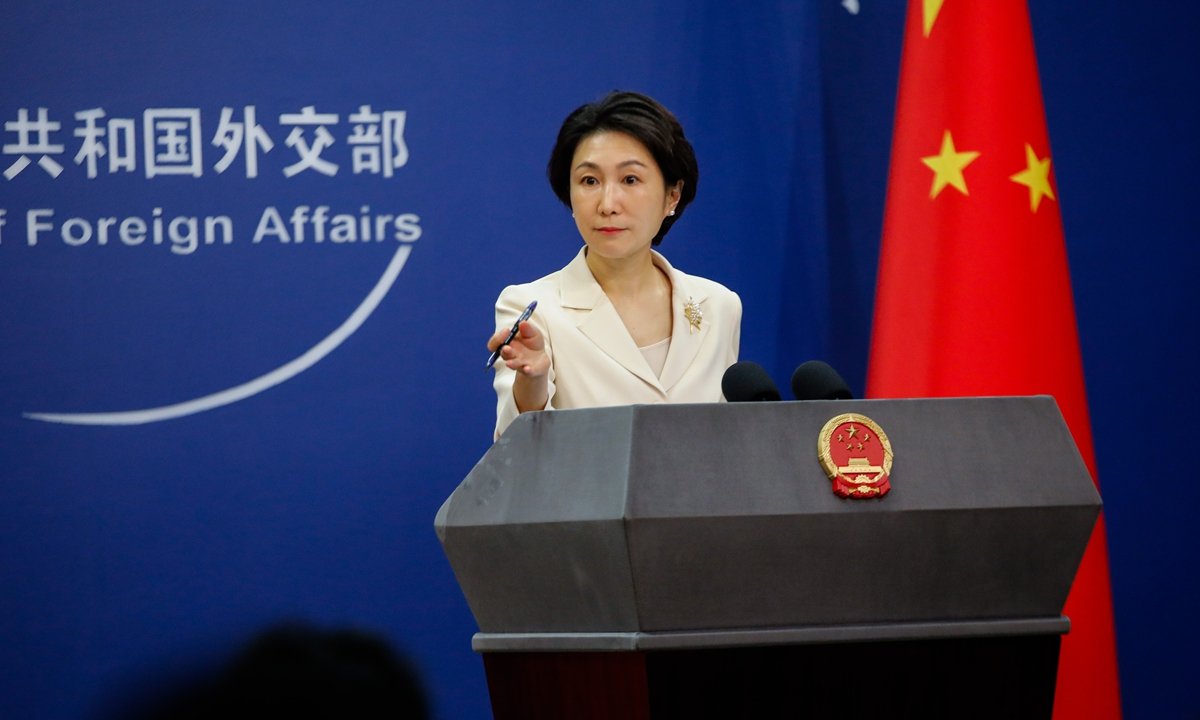
Following the summit, Chinese Foreign Ministry Spokesperson Mao Ning stated, “Do not always use China as an excuse,” urging NATO to abandon its Cold War mentality, correct its perception of Beijing, and stop exaggerating China’s military-political influence. Mao emphasized that China is a “force for world peace,” poses no threat to anyone, and presents no challenge to Euro-Atlantic security.
Meanwhile, an analysis by the Hong Kong-based South China Morning Post (SCMP) centered on NATO’s inclusion of Pacific nations in the meetings. SCMP focused on NATO Secretary General Mark Rutte’s rhetoric during the IP4 (Indo-Pacific 4: Australia, Japan, New Zealand, South Korea) meeting. The report noted that Rutte and the IP4 leaders engaged in a “candid” exchange of views regarding Russian aggression in Ukraine, Indo-Pacific issues concerning China, North Korea policies, and the situation in Iran. In other words, even though China was absent from the text of the declaration, it remained high on the agenda on the sidelines of the summit.
The Thesis of “Absent in the Declaration, Present in Practice”
Throughout the summit, the Communist Party of China’s flagship publication, the People’s Daily, focused primarily on the “defense burden-sharing” and “load transfer” disputes between the US—led by Trump—and its European allies. For a long time, the paper has characterized this internal NATO fracture as a “deepening trust deficit.”
Of course, a significant portion of the Chinese public prefers to view the glass as half full. Many Chinese academics argue that the pursuit of “strategic stability” between the US and China remains a distinct possibility during Trump’s new term. It is worth noting that those who hold this view believe China is not particularly disturbed by NATO countries increasing their defense spending—provided these increases stem from specific local anxieties. In essence, China does not view NATO’s Russia-Ukraine-focused expenditures as a direct threat to itself.
Furthermore, it is now an undeniable reality that the redeployment of US assets from the Pacific toward the Strait of Hormuz following the war in Iran has altered the US military posture. Washington’s failures in Iran have inadvertently opened up a broader sphere of influence and leadership for China on the global stage.
The “Trump is More Negotiable” Perspective
Recently, it has become evident across Chinese academia and media that the Chinese view Trump’s “America First,” transactional foreign policy approach as occasionally more negotiable than the ideologically driven “New Cold War” stance of the Biden era. Beijing is looking for ways to “co-exist” with a US leadership that avoids direct military conflict and remains open to bargaining, particularly over trade and tariffs. The Chinese believe that the relatively positive atmosphere generated by the Busan Summit and Trump’s highly successful recent visit to Beijing ultimately prevented the formation of a direct anti-China front in Ankara.
Wang Huiyao, president of the Center for China and Globalization (CCG)—China’s most internationally recognized think tank—released an assessment following the Ankara Summit indicating that the Trump administration’s China policy could shift toward a bargaining rationality rather than ideological blindness. According to Wang, the most prudent path for China is to seek “strategic stability” in tandem with Trump’s new-term strategy, rather than confronting NATO directly. This approach served as one of the primary diplomatic foundations that prevented harsh sanctions or severe threat definitions regarding China from entering the Ankara declaration.
Dong Yifan from the China Institutes of Contemporary International Relations (CICIR), writing for the People’s Daily, evaluated the NATO Ankara Summit as follows: The unilateral “America First” policy of the US and its blackmail-like budgetary pressure on European allies have created an irreparable loss of trust in transatlantic relations. Europe recognizes that being dragged into conflicts in the Asia-Pacific at the behest of the US would lead to disaster. Consequently, rather than transforming NATO into a global policeman, Europe is attempting to protect its own strategic autonomy.
What Do Chinese Military Strategists Say?
Chinese military experts—many of whom are retired from the People’s Liberation Army (PLA) and now head various think tanks—strongly emphasize the forced shift in the United States’ global power projection. The aggressive moves pursued by the US against Venezuela and particularly Iran have ultimately forced Washington to divert its military resources and attention away from its “Pivot to Asia” strategy. Beijing is currently enjoying the significant breathing room this shift provides in the short to medium term.
Naturally, there are also Chinese analysts who view the Trump-Europe conflict as merely tactical. Considerable analysis within private Chinese media noted that “transatlantic differences remain at a tactical level, not a strategic one.” These analyses suggest that while Europe and the US continue to disagree on burden-sharing, they increasingly agree that China represents a long-term strategic rival for NATO. Whether this consensus can withstand growing economic pressures remains an open question.
According to some retired PLA officers, the primary struggle between China and the West now revolves around “industrial ecosystems.” While the US suffers military attrition in Hormuz and West Asia, its domestic economic dilemmas prevent it from implementing the “industrial blockade” it wishes to enforce against China in the Pacific regarding engineering talent, supply chain control, and access to raw materials. This stands as a major factor altering NATO’s definition of China as a “clear threat” and increasing China’s leverage for bargaining.
China’s NATO Strategy
Although China remains the ultimate target for the US, the developments centered around Iran and the Strait of Hormuz have divided US Pacific power. The resulting maneuverability granted to China forms the cornerstone of its current stance against NATO. The geopolitical line extending from the Busan talks in South Korea to Trump’s visit to Beijing represents China’s effort to avert a global war and delineate the boundaries of “co-existence” with Trump.
Capitalizing on this geopolitical climate, Beijing continues its strategy of driving a wedge into the NATO alliance by leveraging economic rationality to draw European countries—bruised by Trump’s rhetoric—closer to its side. Beijing will likely continue to exploit the tensions and discomfort that European countries, particularly the UK, Germany, and France, experience with Washington, at least until the end of Trump’s term.
Prior to and following the NATO summit, China’s three largest media outlets—People’s Daily, Global Times, and China Daily—frequently published news and analyses themed around “Europe’s strategic autonomy.” China is seeking a new path of engagement with the West through European countries drifting away from the US. China is sending a clear message to Europe: “Your security and economic prosperity do not have to be hitched to Washington’s hegemony war in the Asia-Pacific. Consider the option of a balanced and independent commercial partnership with China.”
The fact that China was not directly named at the Ankara Summit indicates that Beijing’s strategy of decoupling the allies in Europe has been partially successful. The European leaders who have lined up at the Great Hall of the People in Beijing in recent months to meet with Xi Jinping must have received this message in advance. For Beijing, whether the European elites are globalists or not is irrelevant. In fact, a globalist Europe serves as an ideological supporter of China’s anti-protectionist economic strategy.
It can also be argued that Beijing is not particularly concerned with the globalists’ continued support for the Kyiv regime or their role in preventing the end of the war. This is because Beijing’s foreign policy has long been drawn through a pragmatic framework rather than ideological lenses. Beijing concludes that Europe’s resistance, alongside Trump’s strategic entrapment, ultimately prevented NATO from making China a definitive target.