

From MAGA to MIGA
From MAGA to MIGA
By Mehmet Enes Beşer
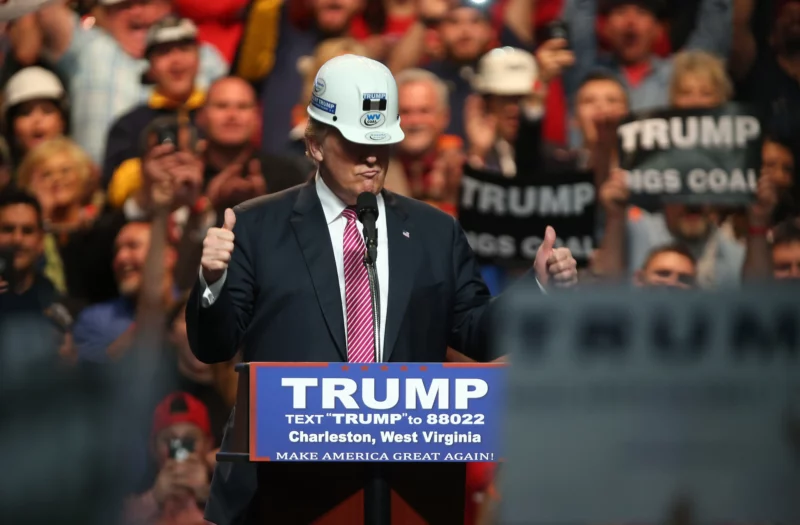
A strike on Iran wouldn’t be “just another tough call” in foreign policy. It would be a line you don’t cross, the kind of decision that doesn’t merely change a policy, but exposes what a movement has become.
Because the original emotional engine of MAGA wasn’t tax rates or think-tank doctrine. It was exhaustion. It was the gut-level sense, especially in places that don’t get invited to cocktail panels, that America had been drafted into a permanent mission nobody could define. Trillions spent abroad, families broken at home, small towns hollowed out, and every few years another promise that this war would be different, cleaner, shorter, smarter.
“America First” worked because it sounded like a refusal to keep playing that game.
So, if Trump ever greenlights an attack on Iran—especially anything that looks like a major escalation—it won’t read like strength to the people who bought the original pitch. It will read like the moment the movement finally admits it’s not immune to the oldest Washington addiction: using war as a shortcut to credibility.
And yes, it would also force a nasty, unavoidable question: who is this war really for?
Because you can dress it up in U.S. interests (deterrence, red lines, stability, “sending a message”) but the public story practically writes itself: Iran as a threat, Israel as the frontline, America as the muscle. That’s not an anti-Israel statement. It’s an observation about how this region’s conflicts get sold politically. The frame is always the same: allies, enemies, urgency, and the claim that a strike now prevents a bigger disaster later.
It’s also the same frame that has pulled America into one “limited” action after another until the word “limited” becomes a joke.
Let’s remember what the MAGA promise actually was, before it became an aesthetic. It wasn’t simply border talk and tariff talk. It was a direct rejection of the Republican Party’s post–9/11 habit: interventions that expand, missions that drift, and accountability that evaporates. Trump didn’t just criticize the Iraq War—he built a political identity on saying, in plain language, that the people in charge lied, blundered, and never paid the price.
That’s why Iran is a political Rubicon. Because Iran is not a “clean” target. There’s no clean off-ramp. The country is large, networked, and built to absorb pressure and respond asymmetrically. A strike doesn’t end the story, it starts a chain of reaction. And once retaliation enters the picture, American leaders rarely choose de-escalation. They choose the next step, and then the next one, because backing down looks weak on cable news and dangerous in an election cycle.
So, ask the question that every working-class voter should ask—especially the ones who were promised national repair instead of national crusades:
How does bombing Iran make life better in Ohio?
How does it lower grocery bills in Michigan?
How does it rebuild a bridge in Pennsylvania?
How does it fix housing costs, wages, or healthcare?
It doesn’t. Not directly. And the indirect effects are usually the opposite of what’s promised: higher risk, higher spending, more surveillance, and the familiar “we can’t afford that right now” when domestic problems are raised.
This is where the “MIGA” line lands—Make Israel Great Again—not because it needs to be taken as a literal slogan, but because it captures the hierarchy that emerges when “America First” leaders start acting like neoconservatives with better branding. The logic becomes: if it benefits Israel’s strategic posture, it must automatically benefit America’s. The U.S. interest becomes the shadow of someone else’s interest.
That’s not how sovereign policy is supposed to work. And it’s definitely not what MAGA voters thought they were buying.
Now, some people will say: this is unfair. They’ll point out that Iran menaces US’ allies. This can be debated, seriously, even aggressively. But none of it answers the core MAGA question, which is not “is Iran bad?” The question is:
Is another Middle East escalation worth the predictable costs to Americans, especially the ones who always pay first and benefit last?
And that’s where the movement tends to break. Because when war arrives, so do the familiar characters: the defense establishment, the donor class, the television patriots, the consultants who never serve, the pundits who never lose kids to deployments. They’ll push the same emotional buttons: strength, resolve, leadership, history. They’ll insist it’s different this time.
Meanwhile, the “America First” voter is left staring at the same pattern: a war sold as necessity, funded by taxpayers, fought by someone else’s children, and wrapped in speeches that magically never apply to the people writing them.
If Trump goes down this road, the political consequences won’t just be about Iran. They’ll be about identity. Because once “America First” becomes “America fights first,” the whole brand collapses into what it claimed to oppose: a right-wing version of the same interventionist reflex, just with different merch.
And the base will have to face a brutal realization: that their champion wasn’t an anti-war disruptor. He was a disruptor until war offered him a different kind of legitimacy—approval from the very establishment he spent years mocking.
That’s the real danger of an Iran strike. Not only the regional fallout. Not only the human cost. Not only the risk of a crisis spiraling between big powers.
It’s the domestic betrayal: the moment “America First” turns into a slogan you chant while the country is dragged back into the same sandpit it swore it would finally leave.
If the bombs fall, the movement will still have rallies and flags and hashtags. But the core promise, the one that made people believe this time might actually be different, will be gone.