


A new cycle of negotiation and escalation from the Trump Administration
A new cycle of negotiation and escalation from the Trump Administration
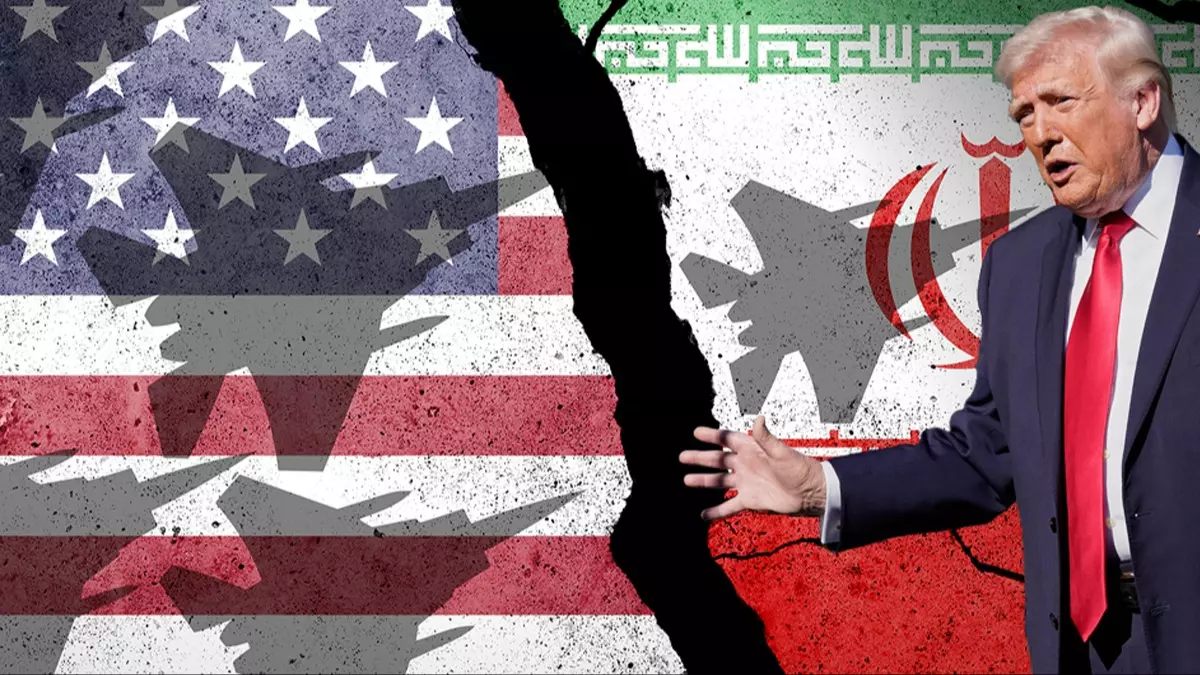
Now we are witnessing a new cycle of negotiation and escalation from Trump and his team. While Washington tightens its grip on Iranian oil export routes, ending a brief waiver that allowed oil shipments to pass through, and announcing that commercial vessels have changed course due to naval pressure, talk of resuming negotiations with Tehran has emerged.
It now appears that negotiations, under the siege, will most likely fail.
Russian Security Council Warns of US Deception
The Russian Security Council warned that the United States and Israel might use the peace negotiations with Tehran to prepare for a ground operation against Iran, as the Pentagon continues to bolster its military presence in the region.
Commenting on the situation in the Middle East during the two-week truce between the United States and Iran, the Council noted that there are currently more than 50,000 US troops in the region, including 2,500 Marines, more than 1,200 from the 82nd Airborne Division, and other elite units. Approximately 500 US military aircraft and more than 20 warships are also stationed at Middle Eastern airfields.
Washington continues to deploy additional military units to the region, and an amphibious strike group led by the USS Boxer and an aircraft carrier group led by the USS George H.W. Bush is expected to arrive in the conflict zone as the truce ends. The Council also pointed out that US forces will continue to enhance their offensive and missile capabilities, as well as increase their intelligence activities.
Opening New Fronts
In response to the United States’ decision to impose a naval blockade on Iran, Ebrahim Zolfaghari, spokesman for the Khatam al-Anbiya Central Headquarters, threatened that the security of ports in the region would be jeopardized if such a blockade were to occur.
Zolfaghari stated on Monday, April 13: “The security of ports in the Persian Gulf and the Sea of Oman is either for everyone or for no one. If the security of Iran’s ports is threatened, no port in the region will be safe.”
Meanwhile, Mohammad Mokhbar, advisor to the Iranian Supreme Leader on special affairs, warned that “the illusion of blockading the Strait of Hormuz is not only futile, but will also lead to new surprises and the opening of new fronts against the hegemonic system.”
On his X platform account, Mohammad Mokhbar asserted that “Trump’s confusion is another false premise. The illusion of blockading the Strait of Hormuz is not only futile, but will also lead to new surprises, the opening of new fronts against the hegemonic system, and increased economic pressure on the region, the world, and their allies.” The informant concluded by saying: “This defeated man is forced to either accept defeat or bear its consequences.”
Grand Bargain
Against this backdrop, the term “grand bargain” appears as a potential framework encompassing enrichment, inspections, sanctions relief, and the timeframe that might govern any future agreement. The sensitivity of this path stems from the level of conditions Washington might bring to the table, and whether this framework can pave the way for a possible agreement or burden it from the outset with conditions too broad to bear.
At this juncture, the American talk of a “grand bargain” takes on added significance. Expanding the scope of negotiations from the beginning could grant Washington greater leverage and increase the cost of rejection, making even a limited initial understanding more difficult and pushing the process prematurely toward a test too challenging to manage with considerable flexibility.
These conditions place the potential round of talks under double pressure.
Furthermore, the inclusion of the duration of the enrichment suspension, inspection mechanisms, and the fate of enriched materials at the heart of the negotiations burdens the initial sessions more than they usually bear. This is because these issues quickly elevate each point to a matter of sovereignty and security, thus influencing the shape of the talks and their duration.
Nevertheless, this path retains factors that warrant serious consideration, as its impact is no longer confined to political channels. It has begun to be reflected rapidly in oil and currency movements with every new indication of the possibility of a second round. Moreover, despite continuing to intensify pressure on Iranian oil and shipping, Washington has not closed the door to negotiations.
This is reinforced by Vice President Vance’s statement that Washington has made “significant progress” and that the next step depends on Iran. This statement lends the process American political backing, without diminishing the weight of the conditions under which it was initiated.
On the other hand, another pressure point has emerged within the process. The proposal circulating to suspend enrichment for twenty years has opened a rift, especially after Trump expressed reservations about this figure. Meanwhile, available information indicates that the Iranian side is pushing for a much shorter period, specifically five years.
This disagreement over the duration directly impacts the shape and scope of any potential agreement, and the distance between a broad agreement and a narrower one, which might be easier to reach at this stage.
Energy Markets are monitoring
At the same time, energy markets are closely monitoring this issue because any signal emanating from the talks or from pressure tactics is quickly reflected in prices, shipping, and maritime traffic. This gives the next round of negotiations a weight that extends beyond its immediate significance, because any early setback under the weight of stringent conditions will have repercussions in a highly sensitive market. This introduces an additional factor into the American calculations, related to the actual size of the agreement that can be negotiated
At the same time, mediating parties need to intensify their engagement with moderate elements within the US administration who share the world’s desire to end this conflict. However,the world is right about one thing: if the United States loses the ability to help itself, it will not be in our interest to let the situation worsen. A wounded Trump is a dangerous Trump, prone to violent outbursts
Life is not fair
Who said life is fair? No one has suffered, and continues to suffer, like the people of the Middle East from the consequences of American arrogance and the extremism and racism of the Israeli occupation state.
And no one disputes that the United States brought this war upon itself at Israel’s instigation, and Donald Trump walked right into this predicament. But unfortunately, it is no longer just the countries of the region that are bearing the brunt of it, but the entire world.
While the world lives through this “horror drama” with every threat from Trump or new massacre perpetrated by Netanyahu, Trump’s backtracking on his threats is no longer a source of amusement, but rather a mockery of the state of the world’s sole superpower.
The drama and the mockery reached their peak after Trump’s escalation and retreat. Two things became clear in the days following Trump’s threat to destroy Iranian civilization and his subsequent swift retraction: first, his desire to withdraw from this war, and second, his inability to find a way to do so
Strangely, the Trump administration is determined to try the same failed approach and expects a different outcome. No one, except Trump, expected to strike a complex nuclear deal with one of the world’s most intransigent regimes in less than 24 hours. Now, Trump is doing what he always does when provoked: escalating the conflict, but he is doing so from a position of political weakness.
Meanwhile, Trump’s threats to block oil tankers from reaching Iranian ports and to seize any ship that pays Iran safe passage fees are raising the specter of war.
The question is, what will happen if this leads to a conflict between the United States and countries whose ships have recently enjoyed free passage through the Strait, including China? Therefore, it is in everyone’s interest to find a way for Trump to withdraw without losing face.
The president was booed over the weekend while attending a mixed martial arts match in Miami with his family. Angry Americans, facing gasoline prices exceeding $4 a gallon and the return of coffins from foreign wars, will not vote for the Republican Party.
The world appears clearly divided, with reports indicating that Vice President J.D. Vance has hinted that none of this was his idea. Meanwhile, Viktor Orbán’s defeat in Hungary sends a clear message to Washington: populists are no more immune than traditional leaders if they fail to improve people’s lives. Trump is not winning this war, either domestically or internationally, but it is now in the interest of China, Russia, the Gulf states, the Arab world, and Europe to try to “help America out of the mess” it has created for itself.
If it is unfair to expect smaller nations to rescue a superpower from its folly, when has life ever been fair?
Given that Trump’s war aims are as unpredictable at sea as they are on land, the United States needs more patience, diplomacy, and creative ideas from the quartet of Pakistan, Egypt, Saudi Arabia, and Türkiye to resolve the crisis, not more brute force.
The Gulf’s Downfall
In a powerful tweet that garnered nearly 4 million views in a single day, Qatari researcher Dr. Nayef bin Nahar attacked the Trump administration and its intentions. Nayef stated that Trump postponed striking Iran’s energy infrastructure out of fear of impacting US market prices, yet he has witnessed Gulf societies under Iranian missile fire for over twenty days, with Gulf economies suffering tens of billions of dollars in losses, and this hasn’t changed his mind!
He added that when the Qatari Minister of Energy warned his American counterpart that striking Iran’s gas fields would lead to attacks on Gulf gas fields, they disregarded the warning, attacked Iran, and left the Gulf states to face their fate against Iranian missiles! They gained no strategic advantage from striking Iran’s gas, but instead inflicted enormous losses on the Gulf’s energy sector, and all of the Gulf’s gas losses benefit American gas companies! Naif says with surprise, “Trump only talks about the Strait of Hormuz and the price of oil, while the Gulf societies are not worth a barrel of oil to him! Who still doubts that the goal of the war is not only to overthrow the Iranian regime, but also to overthrow the Gulf! The desire to drain the Gulf and drag it into a direct battle with Iran was not hidden.”
What is the objective?
Naif emphasizes that American and Israeli officials repeatedly claim that the Gulf states are participating in the war. What is the purpose of these statements? The US Department of Defense publishes images of missile launches from the Gulf. What is the purpose of that? Lindsey Graham threatens the Gulf if it doesn’t participate in the war! Why does he want the Gulf to participate? Does America lack military capabilities, God forbid?
Naif believes that the goal of all this is to kill two birds with one stone: to topple the regime in Iran and to dismantle, weaken, and exhaust the Gulf model, all in preparation for upcoming changes in the region. Have you noticed that Israeli officials—including Netanyahu—repeatedly say they are in the process of “reshaping a new Middle East”? What does “new Middle East” even mean? If their target is only Iran, they should be saying “a new Iran,” not “a new Middle East”!
The Beginning of the Project
Naif asks, “Isn’t the Gulf part of the Middle East? So, what does reshaping it mean?” This means that toppling Iran is the beginning of the project, not its end. The first step is toppling the regime in Iran, and as for the second step, ask yourself where it will be. When we don’t like certain facts, we pretend not to understand them, or even not to hear them. When the Zionists spoke about the idea of ”Greater Israel,” we said: “These are just religious myths.” When some of Netanyahu’s ministers said it, we said: “These are just extreme right-wingers!” And when Netanyahu himself said it and pointed to it on a map, we said: “But it’s unrealistic!”
Naif concludes that “Greater Israel” is not a project being planned, but rather one being implemented. Trying to ignore this doesn’t cancel the project; it only hastens its realization. As for Iran, its approach to the Gulf is not far removed from America’s logic; it too seeks to drain and exhaust it. The American bases are merely a pretext for doing something far more significant. If the problem were solely with the bases, we would see Iranian missiles aimed only at them. But how do we explain the targeting of water storage facilities in the Gulf? How do we explain the targeting of Education City, for example? And we don’t see Iranian aggression in the Gulf in other countries where the same pretext exists. Azerbaijan, for instance, hosts an Israeli base, not just an American one. Yet, what was Azerbaijan’s share of these missiles? Why doesn’t Iran target the Azerbaijani gas pipelines that supply a third of Israel’s gas resources? My greatest fear now is that Iran’s shift from a defensive to a retaliatory approach will push the region into dangerous alignments and legitimize the open integration of Israel into the Gulf’s security and military system under the pretext of the Iranian threat. This would be the greatest catastrophe.
An Opportunity in Crisis
The Qatari researcher urges Iran to weigh the gains of its current strikes against the losses of its current contribution to pushing the region toward misguided choices that will harm both the Gulf and Iran for decades to come. He asks why, when Israel bombed the Iranian consulate in Syria, Iran didn’t retaliate under the pretext of “self-defense.” It was weighing its gains and losses, and the same applies to its current situation with the Gulf states, if only Iran would think beyond its immediate calculations. Finally, we must all realize that the indicators suggest we are living through the final stage of American hegemony, and that this war is to America what the 1956 war was to Britain—the beginning of the end of its influence in the region. Therefore, the question we in the Gulf should be asking ourselves now is: How do we transform this crisis into an opportunity that ensures we never again find ourselves caught between the hammer of America and the anvil of Iran?
The Gulf and the Delicate Balance
All the Gulf states find themselves in an extremely difficult position. The current war has not created a “distrust gap” between Iran and the Gulf states. Rather, there have been multiple instances of tension and friction, including Iranian interference in the internal affairs of the Gulf states. From the Gulf’s perspective, which was both justified and reasonable, it was imperative for them to strengthen their alliances with America, the West, and others, including establishing military bases, to counter the Iranian threat.
The Gulf elite asserts that the Iranian threat was not imaginary. It was embodied in Tehran’s open declaration that it seeks to export the Islamic Revolution to neighboring countries, its incitement of minorities against their governments, its occupation of Emirati islands, its claim that these Gulf states are Iranian—even Bahrain is an Iranian province—its insistence on calling the Gulf the “Persian Gulf,” its insistence on imposing its unilateral vision for regional security, its exclusion of Egypt from any arrangements, and its provocation of all Arab states by boasting that it controls the capitals of four Arab countries.
The disputes remain unresolved
Despite the peace agreement between Tehran and Riyadh brokered by China, Iranian-Gulf relations have remained fraught with anxieties and a difficult coexistence, as most of the disputes persist and remain unresolved. The American-Israeli war against Tehran reignited these tensions. Given this long history of mistrust, the Gulf states were unwilling to accept an Iranian attack. Conversely, Iran disregarded the Gulf states’ declarations of neutrality and their efforts to prevent and mediate a ceasefire.
Kuwait, Bahrain, the UAE, Qatar, Saudi Arabia, and even Oman, which typically maintains neutrality, were subjected to Iranian attacks. With daily losses exceeding one billion dollars for the oil- and gas-dependent Gulf states, the UAE, the most affected, sought to forge a firm stance against Iran. However, Saudi Arabia and its neighbors opted for restraint and non-intervention, but events forced them to defend themselves.
Gulf Security After the War
Currently, the issue of Gulf security and freedom of navigation in the waterways, whether the Strait of Hormuz or the Bab el-Mandeb Strait, has jumped to the forefront of debate in the Arab world. Experts discuss daily the Gulf states’ stance on the war and the potential closure of the Strait of Hormuz, the US-Iranian negotiations in Pakistan, and the hardships these countries endured during the war, as well as the resulting realities that necessitate reassessment and a re-evaluation of their security posture.
The issue of the Gulf states reconsidering their security arrangements in light of the US-Israeli war on Iran is currently at the forefront. Regardless of the outcome of the stalled ceasefire talks between Washington and Tehran, the region will be forced to coexist with a “continuous threat” from the regime in Tehran and its remaining missile arsenal.
According to informed Arab sources, the Gulf states will seek to strengthen their security partnerships as part of rebuilding their economies, which have been damaged by the US-Israeli war on Iran and confronting a Tehran that has become increasingly assertive. But these countries insist they cannot ignore Iran’s control of the Strait of Hormuz, the main waterway for most of their trade, while Iran has insisted on maintaining the control it established over the waterway during the war, allowing it to strangle the Gulf at will.
Western experts observe a “division” among the Gulf states regarding future relations with Iran, with an alliance led by the UAE and Bahrain taking a more hardline stance, while other countries hope to achieve peace by renewing relations with Tehran.
Saudi Arabia held its first official contact with Iran last Thursday since the start of the conflict, with the two countries’ foreign ministers discussing “ways to reduce tensions and restore security and stability in the region.”
Arab experts point to the future role of countries like Türkiye and Pakistan in the Gulf security strategy, given their large and capable militaries. Moves in this direction were already underway before the war, with Saudi Arabia signing a defense agreement with Pakistan and the UAE announcing a defense partnership with India. During the conflict, Saudi Arabia, the UAE, and Qatar rushed to sign defense agreements with Ukraine to counter the threat of Iranian drones.
However, the rivalry between these countries and their unclear stances on Iran and Israel complicate relations. Türkiye and Pakistan border Iran and are reluctant to confront Tehran.
Britain, which contributed to the defense of Gulf airspace during the war, is also likely to participate in this process. Upon arriving in Jeddah on Wednesday, Keir Starmer discussed with the Saudi Crown Prince “how Britain and Saudi Arabia can enhance their cooperation in the defense industries to raise capabilities and strengthen common security.”
The Quadripartite Alliance and Regional Problem Resolution
Research centers continue to discuss the structure of the quadripartite alliance between Egypt, Saudi Arabia, Pakistan, and Türkiye. While Israeli and American newspapers have published articles about coordination and meetings between senior officials of the four countries, describing the coordination as a military alliance, informed Arab sources indicate that the four countries are discussing a different approach.
The sources revealed that it may not be easy or direct to transform this quadripartite structure into a military alliance, as each country has its own commitments, relationships, internal dynamics, and balances with other nations. Nevertheless, the sources say that once a political alliance is formed, these four powerful countries can make significant contributions to resolving regional problems, and transforming this political alliance into an economic, defense, and military alliance will become easier over time.
The four countries believe that defining the alliance more clearly after the end of the current bloody regional war will be more effective. In the opinion of many experts, the most important thing is accepting the idea of the alliance and taking practical steps towards it. The order of issues or changing priorities is not crucial. Sooner or later, the ability of the region’s countries to solve their own problems and ensure their own defense and security is of paramount importance, as is maximizing their ability to influence the global balance of power. Hence, the four capitals are focused on proceeding steadily and resolutely, and the rest will follow suit in time.
A Fine Line
This crisis reveals the Gulf’s transformation from a mere arena for indirect confrontations to a space for strategic mediation. Gulf states are walking a fine line between war and mediation, between alignment and independence. Whoever succeeds in averting war and brokering peace may emerge stronger. This is the great challenge.
Amid escalating regional tensions, new positions are emerging regarding normalization and the conflict in the region, amidst attempts to reshape the balance of power and advance political paths that could affect the future of the Palestinian cause.
Oman Will Not Normalize Relations with Israel
During a meeting with the editors-in-chief of local newspapers on March 11, 2026, Omani Foreign Minister Badr Al-Busaidi affirmed that his country “will not normalize relations with Israel and will not join the Peace Council.”
He emphasized that the current war aims to weaken Iran, reshape the region, advance the normalization process, and prevent the establishment of a Palestinian state. According to the Russian website EA Daily, this stance “is bringing about a radical shift in the balance of power in the Middle East.” The website believes that Muscat is seeking to strengthen its regional position, noting that data shows “investors have begun leaving the UAE in light of the attacks it has suffered.” In this context, the report suggests that Oman “is striving, through its stances, to solidify its image as a stable, secure, and legal environment for capital, far removed from military alliances.”
“Muscat is betting on becoming a gateway for investments from countries seeking to avoid the geopolitical risks associated with US and Israeli policies in the region, which practically includes most countries worldwide.”
In a broader context, the website predicted that “other countries in the region will join this trend, most notably Qatar.” It anticipated that “Doha will take a similar step, especially given the continued targeting of the US Al Udeid Air Base.”
At the same time, according to the report, “this has undermined Qatar’s image as a highly secure global financial and logistical hub.” Many experts believe that “all these countries share a sense of resentment over the United States’ inability to protect them.”
Will we witness Gulf neutrality?
In a view contrary to most analytical interpretations, the Kremlin-affiliated website suggested that “Oman, Qatar, and Saudi Arabia, after the war ends, will close their airspace to American aircraft and reconsider the fate of American bases.” Some informed sources believe that no country will want to jeopardize its primary sources of income—oil, gas, tourism, and investments—again.
Many experts also expect the United States’ primary mission in the region—integrating Israel through the Abraham Accords—to fail, freezing it until it disappears. Some even go so far as to say that the promises of billions of dollars in Gulf investments into the American economy will evaporate.
Russian experts estimate that this neutrality will be accompanied by increasing rapprochement with the BRICS group. If Saudi Arabia or the UAE begin pricing oil in yuan or other currencies, a matter under discussion within BRICS, it will constitute a direct blow to the petrodollar system.
History Teaches
History teaches us that wars do not begin when nations become powerful, but rather when they fear losing their power. Now, in the midst of the fourth Gulf War, a swift and decisive victory seems unattainable.
Instead, we are faced with wounded powers: a weakened sole superpower, a regional power wounded by the sheer scale of destruction, the loss of Supreme Leader Ali Khamenei, the symbol of the regime, Gulf powers wounded by a loss of security, an unresolved conflict, and a future where “the drums of war are louder than the voices of peace.”
It remains that there are major transformations taking place, and the Gulf will avoid announcing these transformations explicitly, and they will be implemented gradually and away from the spotlight, but after careful study for the sake of its higher interests.
In the end, it remains that closing the Strait of Hormuz, and the ensuing economic paralysis, hinders the aspirations of governments in the region and the world for development and stability, averts a devastating wave of inflation, and ultimately threatens social unrest, famine, new waves of migration, and the survival of many governments. For better or worse, it is now a problem for us all.