


Rising Aspirations, Enduring Barriers
Rising Aspirations, Enduring Barriers
By Mehmet Enes Beşer
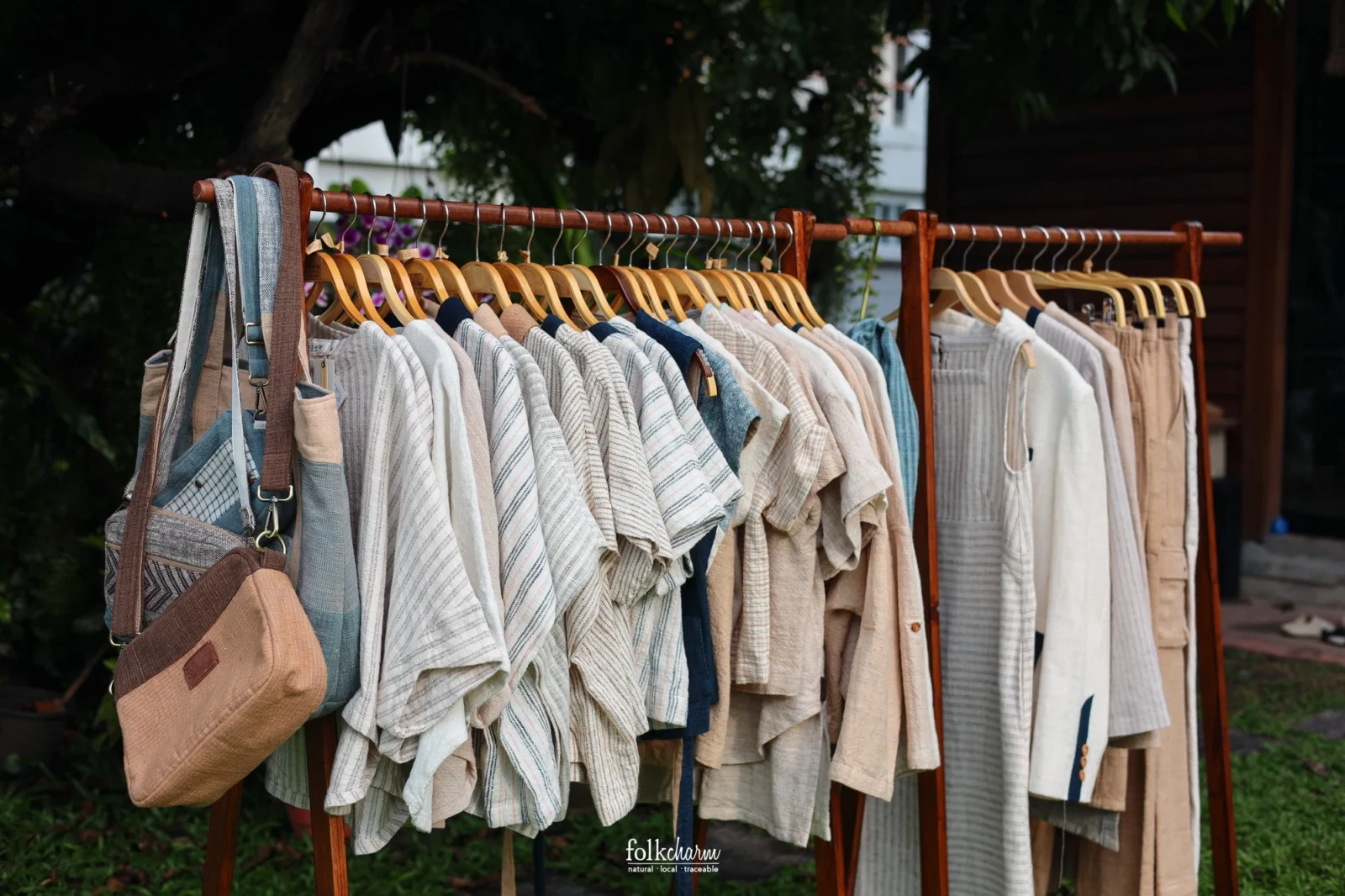
With this era of climate consciousness and responsible consumption, sustainable fashion is a global movement transforming how individuals perceive apparel. In Southeast Asia, where garment manufacturing and textile production are the drivers of economic growth and international supply chains, green and socially conscious fashion is gradually building momentum. Customers, especially young people in cities, are more conscious than ever of the world, workers, and communities’ influence on their fashion purchasing. From environmental ranges in Bangkok to green boutiques in Manila and Jakarta, people are driving demand for fashion that is not expensive for people or the planet.
All this potential aside, though, Southeast Asian sustainable fashion is by no means threatening to replace fast fashion as the dominant paradigm. The region remains mired in cheap, mass-market clothing, both domestically and in export-led production. International fast fashion behemoths and their local imitators remain successful by selling fashion-forward, low-cost clothing to an item-price-conscious middle class. Despite growing environmental awareness, structural and cultural factors make sustainable fashion as yet not a viable and scalable option in the region. The most prominent among these is cost.
Sustainable fashion is more expensive because it uses low-impact materials, promotes fair labor, and uses smaller production volumes. Affluent consumers can pay these prices but, for now, the majority of Southeast Asian consumers, especially those from developing economies, still prioritize cost. Income inequality, disorganized work pervasiveness, and lack of social safety nets render fashion an economic, rather than a moral, choice for tens of millions. For most, fast fashion is not a vice, but an economic imperative. Second, the ecosystem does not yet exist to support sustainable fashion sustainably.
No local availability of eco-certified materials, advanced recycling technologies, and skilled labor in circular or artisanal production exists. Local designers are predominantly small-scale actors with low reach, constrained by small production sizes, costly sourcing of sustainables, and poor finance or scalability access. Limited government support exists for sustainable textile innovation—such as biomass textiles, low-water dyeing, or loop systems—versus state support for mass garment export. Third, consumer awareness is patchy.
Sustainability is the current among city-based Gen Z’ers and millennials in capital cities such as Ho Chi Minh City, Kuala Lumpur, and Singapore, but significantly less among those in provincial regions and older consumers. Furthermore, even if consumers do have an understanding of sustainability, this does not necessarily mean that change in behavior will follow. Most of them are trapped in what academics call the “intention-action gap”: they agree to sustainability in theory, but resort to fast fashion in practice because it is convenient, easily accessible, or habitual. Cultural norms also have their share. Second-hand garments—a characteristic of circular fashion in almost all instances—is traditionally justified as filthy or poor in most Southeast Asian cultures. While second-hand culture is emerging in certain countries, overall cultural embrace of circular fashion is non-existent. Status consumerism and advertising driven by influencer culture and social media, conversely, act to create desire for brand-new branded goods as opposed to used or ascetic fashion.
Above all, sustainable fashion battles structural barriers in the existing regime of production within the dominant model in the region. Southeast Asia is the global garment factory, providing cheap labor and inputs to fast-fashion retailers. In Cambodia, Vietnam, and Myanmar, the sector is among the largest generators of employment and foreign exchange. For such a transition towards production forms slower and more sustainable would not only entail changing consumers but underlying industrial reorganization economically and politically challenging in textile-export-dependent countries.
Conclusion
The fate of sustainable fashion in Southeast Asia is in a delicate balance. While awareness and consumer attitudes are slowly shifting, economic, cultural, and infrastructural ground realities still favor fast fashion. Sustainable fashion needs to become more mainstream, affordable, and policy- and industry-grounded to transition out of the niche.
It entails investing in supply chain innovation, building public campaigns, offering money incentives to sustainable producers, and reframing fashion not just as a consumer choice but an environmental and labor justice issue. Southeast Asia not only can catch up with the world’s trend for sustainability but also set the pace—if given favorable policies and region-wide strategy—drawing on its own heritage of craftsmanship, reuse, and community-based production.
Southeast Asian sustainable fashion remains a fringe activity but no longer one on the very edge. It is a waiting movement—waiting for the right moment to be right enough to disrupt the manner in which the region makes, consumes, and appreciates what it wears on its back.