


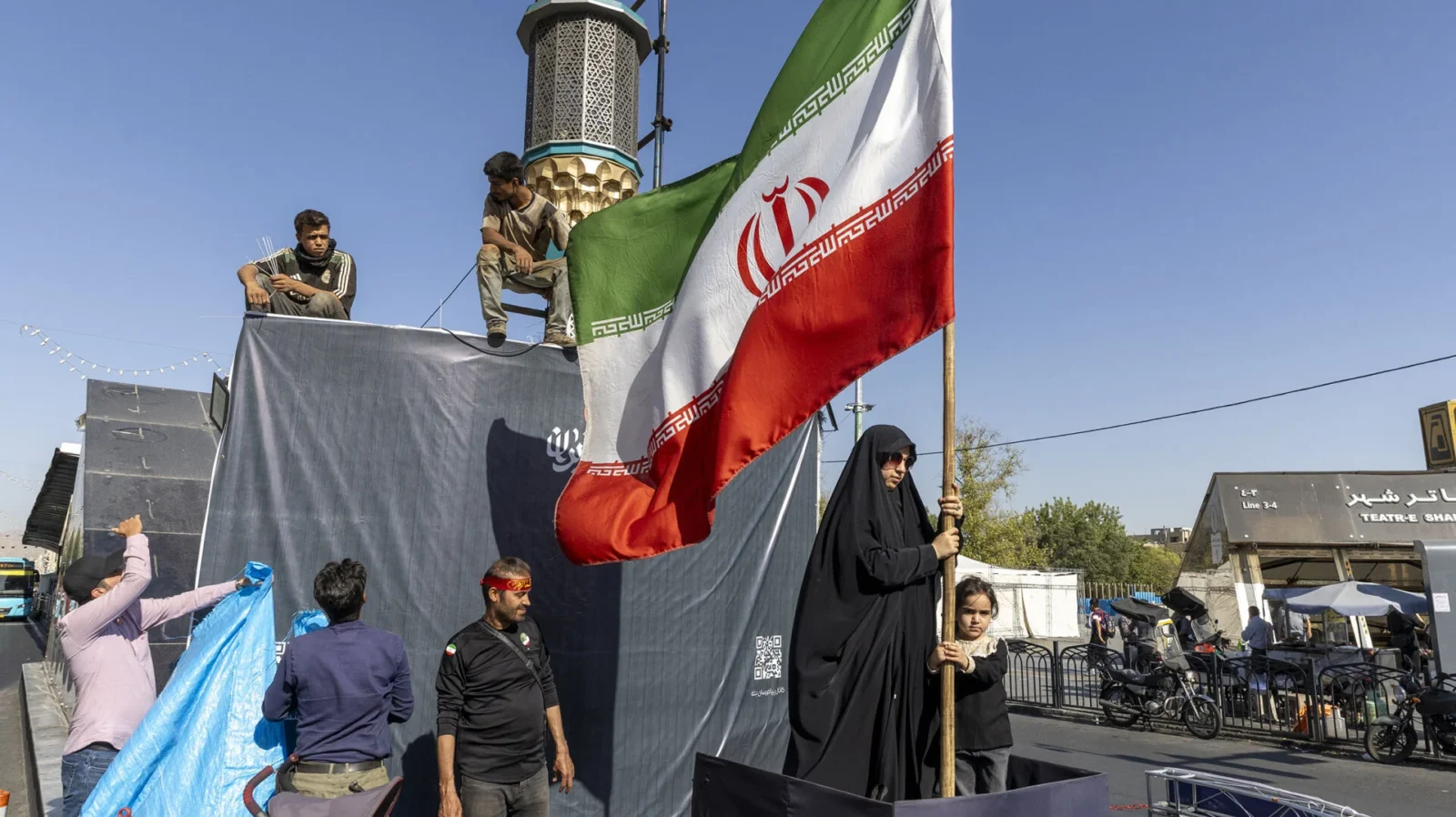
For historians and analysts who always seek to explain events with methodological rigor, this war could be seen as marking the beginning of the end of the United States’ hegemonic power on the planet.
For historians and analysts who always seek to explain events with methodological rigor, this war could be seen as marking the beginning of the end of the United States’ hegemonic power on the planet.
In baseball slang, the dugout is the area where players, coaches, and authorized personnel who are not actively participating on the field rest. At the end of games, television cameras often show the dugouts of both teams: the winners’ and the losers’. This allows viewers to see the players’ moods after a victory for one team and a defeat for the other. In one dugout, you see smiles, hugs, congratulations, and body language that reflects the joy of victory. In the other, you see long faces, dejected expressions, bowed heads, and stares lost in the vastness of the field.
This is how the dugouts of the West Asian football field look today. Iran’s victory is undeniable, the celebration obvious. In the other dugout, the United States is searching for explanations where none exist. Meanwhile, a cursory glance at the Israeli mass media (to use President Putin’s definition of what used to be called the media) reveals a crushing defeat that the Zionists still haven’t been able to accept.
Although the text of the agreement to end military conflicts between Iran and the United States is not public, the provisions of the memorandum of understanding accepted by both parties, whose signing is scheduled for next Friday the 19th in Switzerland, are as follows:
- Permanent and immediate cessation of hostilities on all fronts, including Lebanon.
- United States commitment to non-interference in the internal affairs of Iran and respect for the sovereignty of the Islamic Republic of Iran.
- Complete lifting of the naval blockade within 30 days.
- US commitment to withdraw its forces from the vicinity of Iran.
- Reopening of the Strait of Hormuz within 30 days with Iranian arrangements.
- Suspension of sanctions on the sale of oil, petrochemical products and derivatives, and full access for Iran to its financial resources.
- The need for the United States and its allies to present reconstruction plans worth at least $300 billion.
- Sixty days of negotiations to reach a final agreement based on nuclear issues and the complete lifting of US primary and secondary sanctions and resolutions of the Security Council and the Board of Governors of the International Atomic Energy Agency (IAEA);
- Reiteration of Iran’s commitment, under the Nuclear Non-Proliferation Treaty (NPT), not to produce nuclear weapons.
- During the negotiation period, the United States has pledged not to increase its forces in the region or impose new sanctions.
- Release of $24 billion in frozen Iranian funds during the final 60-day negotiation period. Half of this amount must be made available to Iran before the start of negotiations.
- Establishment of a monitoring mechanism for the implementation of the agreement.
- The final agreement will be approved by a UN Security Council resolution.
- Final negotiations will not begin until half of Iran’s frozen assets are released, oil sanctions against Iran are suspended, and the naval blockade is lifted. The final agreement will only include the fate of enriched materials and enrichment, the lifting of sanctions, and a plan for Iran’s economic reconstruction. Discussions about Iran’s missile program and support for resistance groups will be definitively removed from the agenda.
Comparing this agreement with the 2015 Joint Comprehensive Plan of Action (JCPOA) reveals that—contrary to Trump’s claims—this one is far better for Iran. The JCPOA was a multilateral, technical agreement focused solely on limiting Iran’s nuclear program, while the current agreement is a bilateral, third-party-mediated agreement to halt active armed conflict, including a cessation of hostilities and the reopening of the Strait of Hormuz. In 2015, there was no armed conflict, and the issue of the Strait of Hormuz (which was free to navigate until February 27, 2026, before the United States launched its attack on Iran) has been incorporated as a point of negotiation after Tehran demonstrated its military capacity to regulate passage and established rules and fees to ensure the safety of transiting vessels.
Neither the previous agreement nor this one addresses the Iranian ballistic missile program as the Zionist entity desired. This, along with the outcome of the war itself, reveals a new security dynamic for the region, given the United States’ inability to protect its own bases. This inability has made it clear that the US will be even less able to protect the countries where these bases are located. The US security equation for West Asia, which prioritized the defense and protection of the Zionist entity, has been shattered and can no longer be considered a fundamental instrument of regional security. This forces nations to begin considering a new approach to security in this area, one that can no longer ignore Iran.
On the other hand, it is symbolic that the 2015 treaty was a multilateral agreement with interference from all extra-regional world powers, while this one is (so far) a bilateral Memorandum of Understanding actively mediated by regional countries such as Pakistan and Qatar.
Similarly, the 2015 Comprehensive Plan of Action allowed for the gradual release of billions of dollars in frozen assets, subject to IAEA verification of nuclear compliance. Now, the agreement establishes immediate exemptions for Iranian oil exports, the release of approximately US$25 billion in assets, and the future creation of a reconstruction fund backed by Gulf partners, amounting to around US$300 billion.
Another element to consider is that the 2015 document only included Iran as a regional actor, now it has established “the cessation of hostilities on all fronts, including Lebanon” (Point 1); the “commitment of the United States to withdraw its forces from the vicinity of Iran” (Point 4); and “not to increase its forces in the region or impose new sanctions” (Point 10), which has given the agreement a regional scope that establishes Iran’s ability to impose the rules of conduct in the conflict zone that goes beyond the national borders of the Persian country.
Finally, in 2015, it was established that nuclear restrictions would be rigid and precise, with highly intrusive inspections by the IAEA, a politicized organization manipulated at will by Western powers. Now, what has been agreed upon is a 60-day timeframe to maintain the status quo. Details regarding the fate of enriched materials and the inspections have been left for future rounds of dialogue.
Drawing broader conclusions from the implications of this agreement, one can conclude that no event in the last eighty years has so clearly reflected the strategic decline of American hegemony. Similarly, it is worth noting that this situation has led to the consolidation of Iran as a regional and even global power.
On the other hand, Iran’s defensive and offensive capabilities (like those of the Democratic People’s Republic of Korea) have become a strategic factor in the global hegemonic equation. The United States’ military defeat has forced it to the negotiating table without having achieved any of its objectives. Likewise, the need to avoid increased costs to its economy if the crisis were prolonged has been fundamental to Washington’s decision to negotiate. Trump’s fear that a deepening of the conflict would lead to a new balance of power in the region and even the world also played a role. It goes without saying that he couldn’t lose sight of the upcoming midterm elections at a time when his popularity is declining rapidly.
This war has shown that supremacy is not achieved solely through military (nuclear), economic, and financial superiority. The strategic leadership of the commanders, the cohesion between the government, armed forces, and the people, the willingness and resolve of citizens to actively participate in the conflict, the ethics and morality of the leaders in leading the conflict and sacrificing their lives, if necessary, to pave the way to victory, and a profound understanding of “war as a continuation of politics”—establishing a direct link between military, economic, financial, and diplomatic aspects—all influence and even determine the outcome. These latter aspects were masterfully handled by the Persian leadership.
Similarly, the strong bonds among members of society, who have demonstrated extraordinary affinity, unity, and coherence, along with crisis management and the maintenance of internal stability, were important factors in overcoming the conditions of war. The resilience of society and its internal structures are considered part of the equation of a national power that remained strong despite the loss of some of its most important leaders.
For historians and analysts who always seek to explain events with methodological rigor, this war could be seen as marking the beginning of the end of the United States’ hegemonic power on the planet. Washington can now only resort to overwhelming superiority to employ violence, which it can only do against small countries in the Global South, not against other established or emerging powers that have made it clear that if force is used, they will not be subjugated and will confront the empire head-on until victory is achieved.
Thus, we are witnessing the emergence of a new world order that the United States and the West will try to prevent using their entire arsenal of military, political, diplomatic, economic, financial, and media resources. Difficult times are coming, but Iran has shown us that despite everything, the future will be bright for the peoples of the world.