


Russia is expected to continue strengthening its air defense and electronic warfare systems while simultaneously increasing pressure on Ukrainian military and industrial infrastructure.
Russia is expected to continue strengthening its air defense and electronic warfare systems while simultaneously increasing pressure on Ukrainian military and industrial infrastructure.
By Yıldıran Acar, Political Scientist
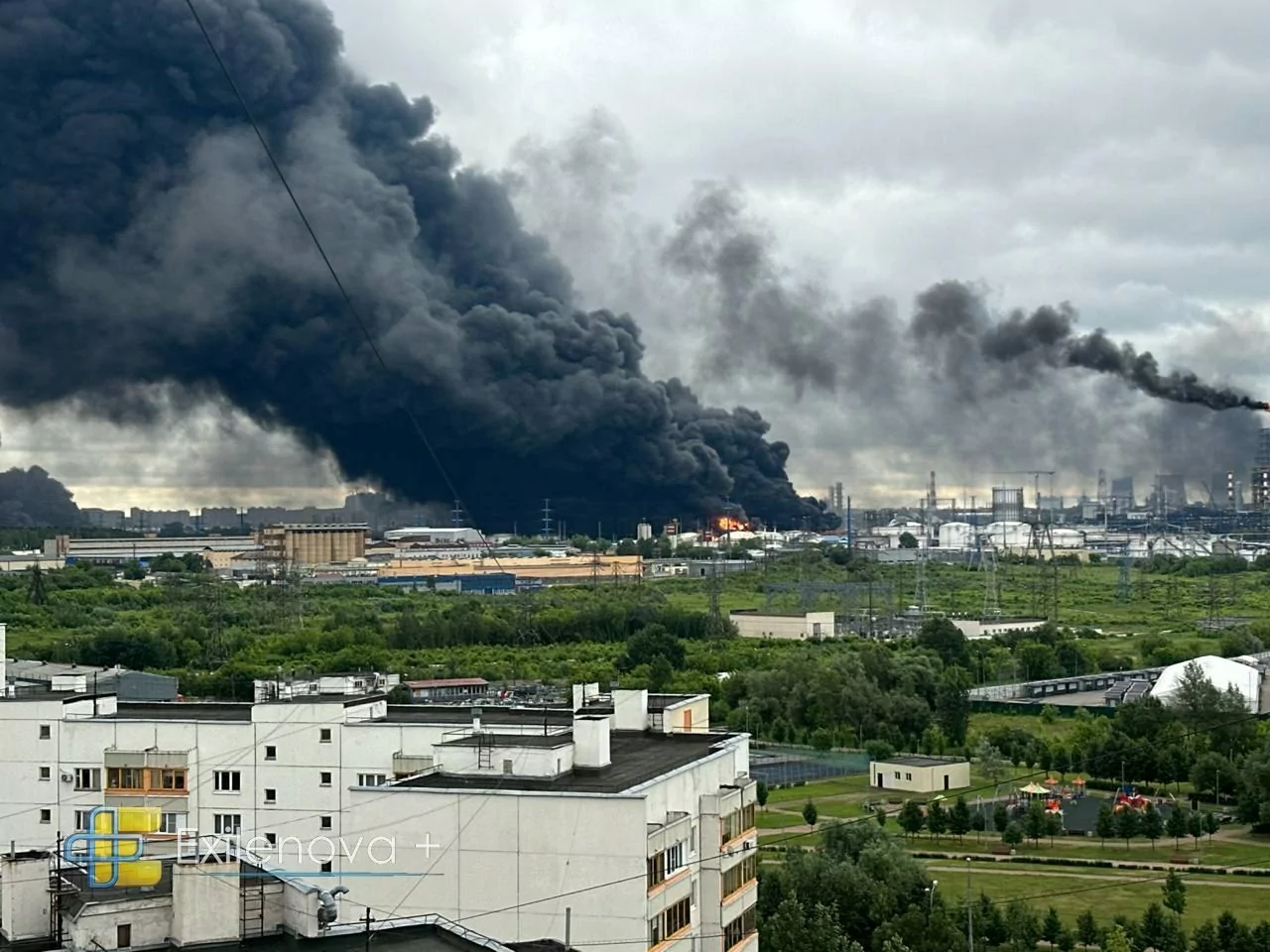
As the Russia–Ukraine war enters its fifth year, both the geographical scope of the conflict and the methods used by the two sides continue to evolve. What was once largely associated with the battlefields of Donbas has now expanded deep into Russian territory, reaching energy infrastructure, logistics hubs, and even the skies above Moscow. The large-scale drone attack carried out on June 18, described by Russian authorities as the most intense attack on the capital region in the past two years, is the latest example of this transformation.
According to the Russian Ministry of Defense, hundreds of drones were intercepted during the attack, many of them targeting the Moscow region. Although Russia’s layered air defense system managed to destroy most of the incoming drones, damage was reported at the Moscow Oil Refinery as well as in the Belaya Dacha and Sadovod areas. Temporary disruptions at Moscow’s airports and images of smoke rising over parts of the capital highlighted a reality that has become increasingly difficult to ignore: the effects of the war are now being felt much closer to Russia’s political center.
The significance of this attack lies not only in the damage caused but also in the tactics employed. Russian military analysts argue that Ukraine has changed the way it uses long-range drones. Instead of isolated attacks, Kyiv appears to be conducting larger and more coordinated operations designed to overwhelm air defense systems and maintain constant pressure on Russian defenses.
Russian military expert Oleg Shalandin believes that Ukraine’s objective goes beyond physical destruction. In his view, these attacks are intended to demonstrate to Western partners that Ukraine still possesses the ability to strike strategic targets deep inside Russia. Maintaining international military and financial support remains a key priority for Kyiv, and attacks on Moscow carry considerable symbolic value.
A similar assessment has been offered by retired Colonel Anatoly Matviychuk. He argues that targeting Moscow is primarily a political and psychological move. As the center of Russian political power, Moscow represents much more than a military target. Successful strikes near the capital are intended to send a message both to international audiences and to Russian society.
Russian military circles have also noted the increasing sophistication of Ukrainian drone operations. According to military correspondent Aleksandr Kots, the use of different types of long-range drones in a coordinated manner suggests that Ukraine has significantly improved its capabilities in this area. Many Russian analysts believe that Western technical assistance and intelligence support have played an important role in this development.
At the same time, Russian experts are careful not to overstate the impact of the attack. Military blogger Yury Podolyaka argues that the interception of the vast majority of incoming drones demonstrates that Russia’s air defense system remains highly effective. While acknowledging that some targets were successfully hit, he maintains that the overall performance of Russian air defense forces prevented far greater damage.
The debate in Moscow, however, is no longer focused solely on defensive measures. Statements made by State Duma deputy and retired General Andrey Gurulev reflect a broader discussion taking place within Russian political and military circles. According to Gurulev, strengthening air defenses alone will not be enough. He argues that Russia should increase pressure on Ukraine’s command centers, defense industry facilities, logistics networks, and military infrastructure in order to reduce Kyiv’s ability to conduct such attacks.
This approach is consistent with recent statements from senior Russian officials. Russian Security Council Secretary Sergei Shoigu has repeatedly warned that attacks on strategic infrastructure are becoming more frequent, and that Russia must adapt to this changing threat environment. His remarks suggest that protecting critical infrastructure inside Russia has become an increasingly important element of Moscow’s security strategy.
An important question remains: how will the Kremlin respond?
Following the attack, some commentators raised the possibility of a Russian nuclear response. However, such a scenario appears highly unlikely under current circumstances. Russian military doctrine reserves the use of nuclear weapons for situations involving an existential threat to the state. While drone attacks on Moscow are politically and symbolically significant, they do not currently meet that threshold.
For this reason, a more probable response would involve an expansion of conventional military operations. Ukrainian energy infrastructure, defense industry facilities, command centers, and drone production sites are likely to remain among Russia’s primary targets in the coming months.
The latest drone attack on Moscow should therefore not be seen as an event capable of changing the overall military balance of the war. Nevertheless, it demonstrates that Ukraine retains the ability to strike targets deep inside Russian territory and that the consequences of the conflict are becoming increasingly visible to the Russian public.
From Moscow’s perspective, the issue extends beyond immediate security concerns. Russian analysts view these attacks as part of a broader challenge involving the protection of critical infrastructure and the limitation of Ukraine’s long-range strike capabilities. As a result, Russia is expected to continue strengthening its air defense and electronic warfare systems while simultaneously increasing pressure on Ukrainian military and industrial infrastructure.
Although discussions about nuclear escalation continue to attract public attention, current military and political realities suggest that the Kremlin remains focused on conventional means of warfare. In this context, the latest attack on Moscow is best understood not as a decisive turning point in the conflict, but as another indication that both sides are increasingly targeting strategic infrastructure and relying on new technologies to shape the course of the war.