


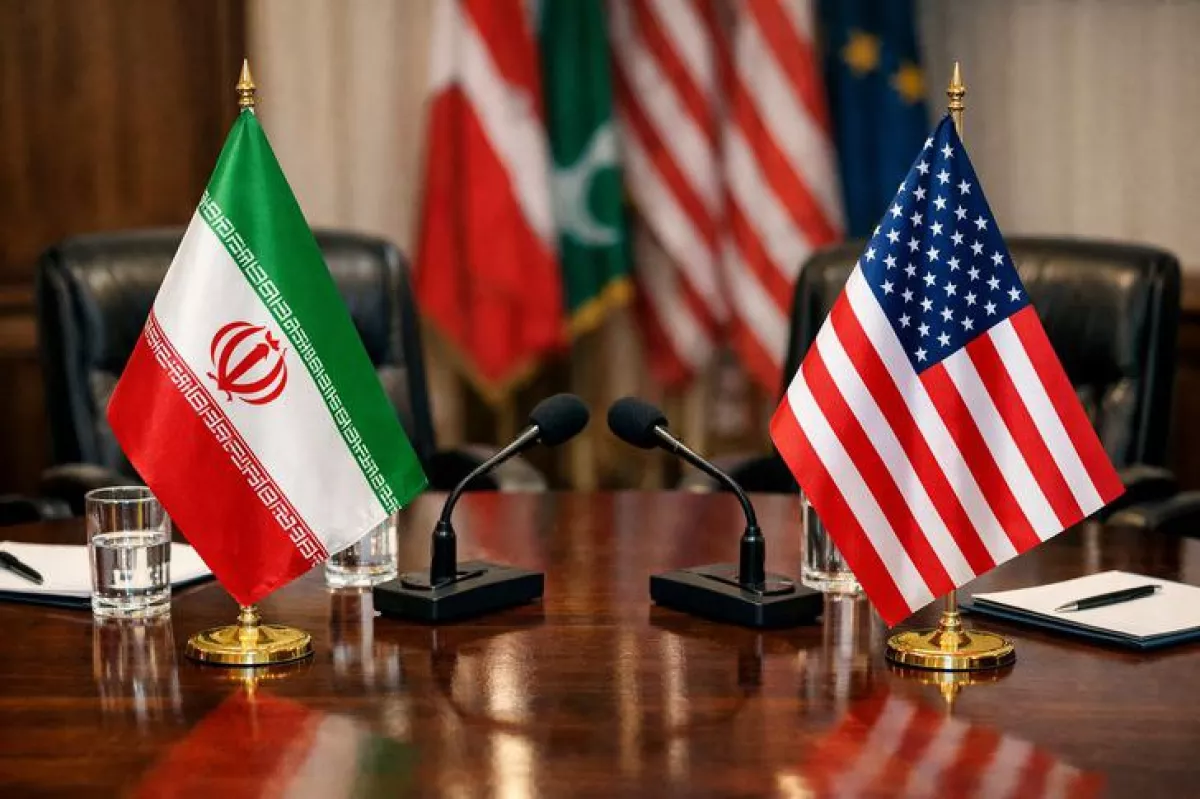
What is the latest situation regarding the issues discussed at the negotiation table?
What is the latest situation regarding the issues discussed at the negotiation table?
By Adem Kılıç, Political Scientist
The war that began around Iran’s so-called nuclear program has, after more than 100 days, evolved into a broad struggle that calls security doctrines into question and shakes both regional power balances and the deterrence architecture of the international system.
The developments taking place in a process defined by the USA’s objectives and inspection pressure and Iran’s definition of it as an “existential security problem,” as well as the growing deep divergence in this process, show that a possible agreement is becoming increasingly impossible.
So, what are the demands that create a chasm between the parties, and why does a lasting negotiation without a war in the Strait of Hormuz not seem possible?
Nuclear program
The idea of completely eliminating Iran’s nuclear capability does not appear feasible due to both military and technical realities on the ground.
Because the framework presented by Washington in negotiations is based on Iran eliminating its entire nuclear infrastructure and committing not to develop weapons, including long-range missiles, indefinitely.
However, the roadmap for how this will be verified and made permanent is unclear, and Iran, evaluating this situation through the examples of Libya and Iraq, sees it as a “national security” issue.
In other words, the main problem is not so much ensuring or operating the continuity of the inspection mechanism proposed by the USA, but rather Iran’s perception of this as a “national security” issue.
Indeed, although Iran has repeatedly declared in the past that it does not produce nuclear weapons, it has been under sanctions for nearly 50 years, and therefore believes that abandoning a deterrent that would “ensure its security” would not change the conditions.
For this reason, a structure based on “commitment” has the potential to remain nothing more than a political declaration with weak practical impact on the ground.
On the other hand, the model proposed by the USA points to a looser and less verifiable structure compared to the limitations of the agreement period unilaterally canceled by Trump in 2019.
This makes the agreement technically even more fragile.
Enriched uranium
Iran’s stockpiles of highly enriched uranium are one of the most critical and unresolved issues of the process.
The fact that a significant portion of this material is located in protected and deep facilities seriously limits the USA’s capacity to “retrieve” it on the ground.
The USA’s options are stuck between in-situ dilution of this material or controlling it through long-term inspection.
Although Trump recently stated that it would be “eliminated by dilution on site,” Iran’s claim that the uranium remained underground during the attacks further complicates the process.
For this reason, the USA’s claim of “complete elimination” does not fully match the reality on the ground.
Frozen assets
The issue of releasing Iran’s frozen foreign assets creates a serious breaking point in US domestic politics and its relations with Israel.
On the other hand, while the USA has declared in official rhetoric that there will be no “cash transfer,” Iran demands the “cash return” of all frozen assets.
Some circles within the USA and especially Israel argue that these funds, if given to Iran in cash, would be used by the Iranian administration for armament, and they are putting pressure on Trump to prevent this from happening.
In other words, the Trump administration’s rhetoric here is also deliberately stuck between technical reality and political perception.
The process is also being attempted to be sabotaged, especially by Israel, on the grounds that the perception of Trump “making concessions to Iran” is unacceptable.
Strait of Hormuz
The issue of control over the Strait of Hormuz has actually become a geostrategic sphere of power that was not even on the table in the Geneva talks before the war, but which has now gone beyond nuclear negotiations.
Iran’s leverage in this region produces a deterrent that can directly affect not only energy flows but also global trade security, and in this way, Iran creates significant pressure by spreading the cost of attacks against it to the global arena.
The USA, realizing this “power,” and being unable to be certain that Iran will not follow the same path again, also knows that it can no longer fully neutralize this strategic pressure tool through a diplomatic agreement.
Trump, unable to receive a response to his calls for forming a Hormuz coalition and realizing in the military realities on the ground that an operation in Hormuz could end in disaster, is trying to return Hormuz to its pre-February 28 position when the war began.
However, at the same time, it does not ignore long-term military strategies to prevent Iran from following the same path again in the future.
Because the permanent elimination of such a control mechanism is only possible through a much larger-scale power shift.
Therefore, the assumption of the “post-war normalization” of the Strait of Hormuz appears to be a weak possibility within the current balance of power.
Proxy groups
The complete financial and operational severing of the proxy structures that form Iran’s regional influence network may seem theoretically possible, but in practice it remains an extremely difficult objective to verify.
The dispersed, semi-autonomous nature of these structures and their spread across different geographies limits the USA’s control capacity, and during US attacks they also change the field reality by potentially expanding fronts.
On the other hand, the examples of Hamas, which Israel has been unable to eliminate in Gaza despite more than two years of massacres carried out with US support and its overwhelming military superiority, and Hezbollah, which it has similarly been unable to weaken in Lebanon, clearly demonstrate that the issue goes far beyond merely cutting Iran’s support.
Conclusion
The overall picture shows that the framework of the agreement the USA is pursuing with Iran is attempting to manage the balance of power on the ground rather than fundamentally changing it.
Negotiations over issues such as the complete elimination of the nuclear program, control of uranium stockpiles, release of financial assets, and limitation of effects such as those in Hormuz are all progressing in a high-verification and low-trust environment, and as detailed above, a full consensus appears nearly impossible.
At the current point, although the USA has caused significant damage to Iran, Iran remains strongly at the table as an actor capable of maintaining strategic flexibility even under pressure, due to both its geographical position and asymmetric power capacity.
In contrast, the USA, despite its military superiority, appears distant from unilateral imposition capacity due to both internal divisions and its inability to prevent Israel’s expansionist policies.
The balance emerging in this framework appears to be based not on producing a lasting victory for the USA, but on creating a managed risk and a postponed crisis area, and it is clearly seen that no matter how much it is postponed, a real agreement cannot be reached without a war in the Strait of Hormuz.
It is also seen that any preliminary agreement text to be signed, regardless of everything, would do nothing more than postpone the crisis, and that the 60-day process to be put forward would not be completed before it evolves back into war.