


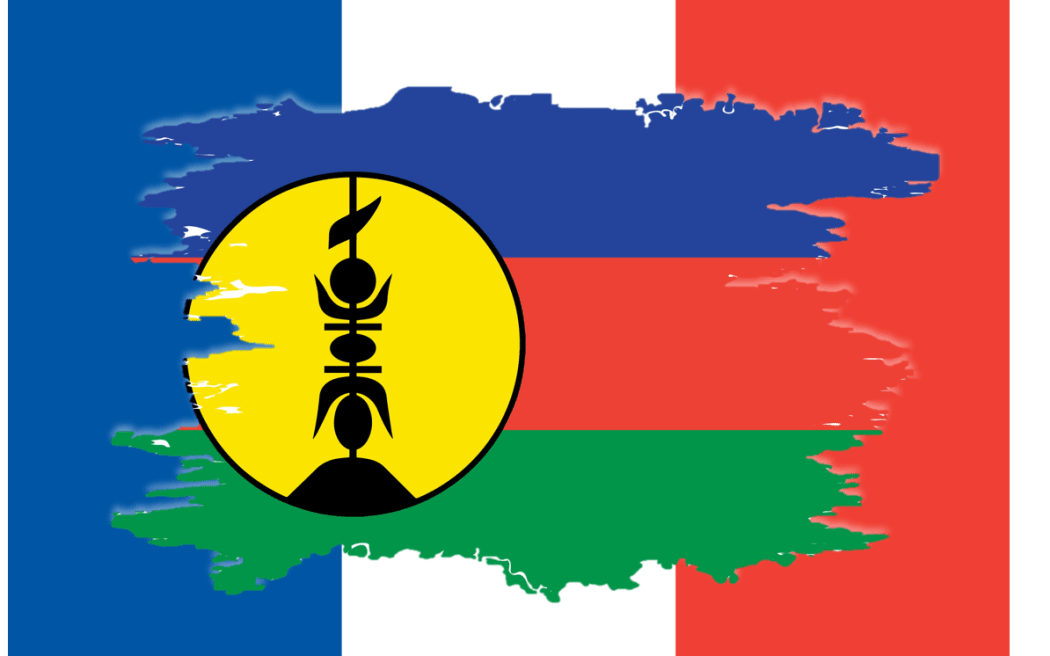
New Caledonia’s future will be secured when France stops acting like a 19th-century power in a 21st-century ocean.
New Caledonia’s future will be secured when France stops acting like a 19th-century power in a 21st-century ocean.
By Mehmet Enes Beşer
Paris wants the world to believe New Caledonia is an internal administrative matter—an overseas “territory” managed through lawful procedures, democratic votes, and carefully branded “dialogue.” That story is convenient. It’s also colonial.
Because when a European state holds a Pacific people inside its republic by force of history, demography, and bureaucracy, that is not a neutral constitutional arrangement. It’s an empire with better PR.
France likes to point to the three referendums held under the Nouméa Accord (2018, 2020, 2021) and say: We asked the question. The people answered. End of discussion. But anyone serious about decolonization knows you don’t settle a colonial wound by running it through a ballot box—especially when the conditions of the vote are shaped by the colonizer, and especially when one side believes the process itself has been engineered to close the door.
The third referendum in 2021 made the problem impossible to hide. The pro-independence Kanak movement largely boycotted it. The result was lopsided, sure—but also politically radioactive. Paris chose to treat that moment as closure. That decision wasn’t “administrative.” It was an assertion of power: the metropole declaring when self-determination begins and when it ends.
That’s the colonial trick in its modern form. Not soldiers in the streets (though there can be that too). The trick is paperwork. The trick is procedure. The trick is insisting legitimacy comes from a process you control.
And Paris controls plenty.
It controls the framing—calling independence advocates “separatists,” as if Indigenous nationhood is a hobby and not a historical claim. It controls the pacing—speeding up when it wants finality, slowing down when it fears consequences. It controls the vocabulary—talking endlessly about “republican equality” while maintaining a structure that began with dispossession and still distributes power like an inheritance.
France’s universalist republicanism is supposed to be color-blind, culture-blind, history-blind. In Paris, that’s sold as virtue. In a colonized land, it becomes erasure with a slogan.
Because the Kanak demand for independence is not a quirky preference. It’s not a negotiation tactic. It is a direct response to a reality France would rather treat as ancient history: land taken, people displaced, culture subordinated, wealth concentrated, and “normal life” organized around a capital—Nouméa—that still reflects colonial geometry. Who lives near opportunity and who doesn’t. Who has networks and who doesn’t. Who feels the state belongs to them and who experiences it as something done to them.
Paris will tell you it invests heavily in New Caledonia—roads, schools, public services, subsidies. Fine. Empires often do. Subsidies are not innocence. They’re leverage.
A dependency can be cushioned and still be a dependency.
And then there’s nickel: the territory’s lifeline and its curse. New Caledonia sits on major nickel reserves at the exact moment the world is hungry for “energy transition” minerals. The green economy is supposed to be the moral future; for places like New Caledonia it can look like the same old extraction logic wearing a clean, electric smile.
Who controls nickel? Who benefits from it? Who decides the rules of the game? Those aren’t side questions—they’re the questions. Because if Paris and its preferred local partners keep the real command over the territory’s economic engine, then “autonomy” becomes theatre: local institutions on top, colonial political economy underneath.
This is why the endless talk about “redrawing institutions” misses the point. You can rearrange committees forever and still leave the original hierarchy intact.
What Paris fears—deep down—is not administrative disorder. It fears losing the prerogative to decide. Losing strategic depth in the Pacific. Losing the prestige of being a global power with far-flung territories. Losing access, influence, and the ability to project itself as a resident Pacific actor rather than a visitor.
So France pushes a familiar line: We are the stabilizer. But stability for whom?
For Kanak communities, “stability” often means the stability of being told to wait: Wait for the next round of talks. Wait for the next legal framework. Wait for reforms that never quite reach the root. Wait until the anger cools, the movement fractures, the young get tired, the headlines move on. That is not reconciliation. That is management.
And let’s be honest: Paris has not behaved like a neutral arbiter. It has behaved like a stakeholder—with a flag.
When it declares the process closed, it is not protecting democracy. It is protecting a settlement built on conquest, maintained by demography, and defended by the authority of the French state.
So what would a non-colonial path look like?
First, Paris needs to stop pretending it can manufacture legitimacy. Legitimacy is not a stamp. It’s consent. And consent cannot be extracted from a people who believe the ground rules are rigged.
Second, the conversation cannot be reduced to “independence vs. France,” as if those are just consumer choices on a political shelf. Decolonization demands recognition of Indigenous nationhood as a political reality—not an identity category. That means land rights that are not symbolic. Cultural institutions that are not decorative. Constitutional protections that don’t evaporate the moment Paris gets impatient.
Third—and this will make Paris uncomfortable—the French state has to accept that it is not the hero of this story. It is the context. It is the problem that needs to be transformed.
Yes, loyalist communities exist. Yes, their lives are real, and their fears are real. Decolonization is not a license for revenge. But the answer to loyalist insecurity cannot be permanent colonial veto power. The answer is guarantees, rights, and a negotiated future—under conditions that don’t require Kanak people to beg for recognition inside a structure designed to deny it.
Finally, New Caledonia doesn’t need more “process” that ends the moment Paris says it ends. It needs a political reset that treats coexistence as more than coexistence under French supremacy.
Because that’s what this is, when you strip away the polite language: supremacy. A metropolitan state claiming final authority over an Indigenous people’s future, and then calling the result “democratic.”
New Caledonia’s future will not be secured by tidier institutions or better messaging. It will be secured when France stops acting like a 19th-century power in a 21st-century ocean—when it accepts that decolonization is not a favor it grants, but a justice it owes.
The Pacific is not France’s backyard. And the Kanak are not a footnote in the French Republic’s self-image.
If Paris wants peace, it should start by relinquishing the thing empires never want to relinquish: the right to decide for others.