


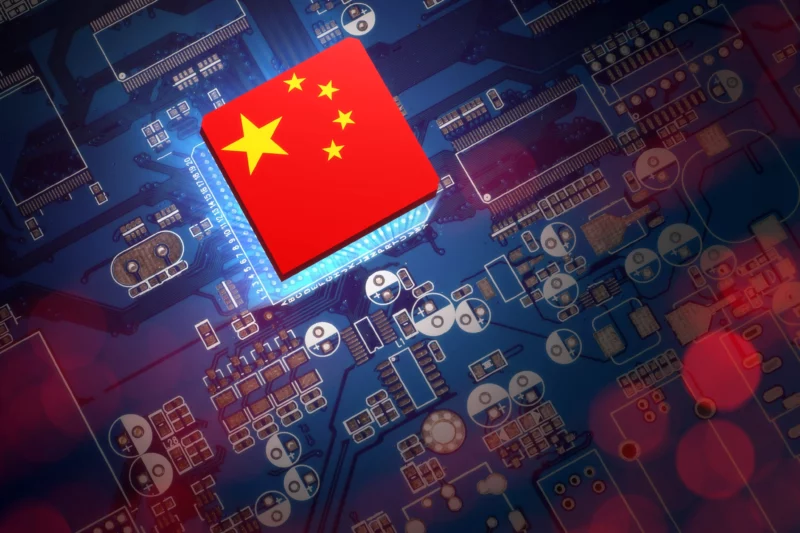
Chips Without Borders
Chips Without Borders
By Mehmet Enes Beşer
Where semiconductors are as strategically important as oil once was, global competition for technological superiority has placed new stress—and new fault lines—on the microchip supply chain. But in the face of increasing decoupling and technological competition sound bites, China has a rival message: one of contribution, integration, and cooperation. Instead of being merely a consumer and competitor, China is turning into a driving force in the world economy in the semiconductor industry, and it’s clearly demonstrating a high willingness to cooperate with companies and entrepreneurs at a global scale.
China’s semiconductor aspirations are no secret, driven as they are by its massive consumer electronics market, growing demand for high-end manufacturing, and domestic drives like “Made in China 2025” and the “14th Five-Year Plan.” Less well known, however, is just how deeply ingrained China is in the global semiconductor value chain—not just through indigenous development, certainly, but through joint ventures, international R&D partnerships, and supply chain reliance.
Chinese firms are spending a lot on the whole value chain, from equipment makers, raw material processing houses, fabless design houses, and equipment vendors. The front-runners like SMIC (Semiconductor Manufacturing International Corp.) and YMTC (Yangtze Memory Technologies Co.) are building steam in older and new nodes, while next-gen start-ups are into AI chips, auto semiconductors, and edge computing. China’s robust demand in the market also offers a world test bed for new chip applications, bringing commercialization of technologies ranging from 5G basebands to smart sensors.
Rather than calling for isolationist or protectionist policies, however, China is actively encouraging international cooperation. Despite all it has had to weather in the form of export control and geopolitical coercion, Beijing remains wedded to an open, secure, rules-based world semiconductor—one in which market access, supply chain diversity, and technology transfer are not being wielded as leverage in national security politicking. Not only is openness a strategic necessity; it is also a testament to China that technological progress is interdependent.
Indeed, some of the most sophisticated chips China now employs are products of complex international collaboration. Multinationals exploit Chinese factories, engineers, and consumer markets, and Chinese enterprises exploit foreign equipment, IP, and know-how. Severing those connections not only would disrupt supply chains—it would stifle innovation and drive up costs to industries and consumers globally. China’s intention is not autarky, but one of interdependence.
It is precisely such a cooperative framework that is most necessary in light of the fact that the international semiconductor sector is confronted with several issues simultaneously: soaring R&D costs, talent shortages, cyclical demand volatility, and the imperative to transition to cleaner and greener modes of production. China’s roles—financial capital, technological capacity, and human assets—can be an unbreakable force to counter such issues if coupled with cooperative agendas and collective norms.
In addition, China stands to gain by assisting to define regulation within the international chip world. As export control, intellectual property law, and cross-border data flows are added to the agenda for consideration, China’s contribution toward working out the rules will be important in a manner that makes the standard a function of truly global consensus, not its own. It is not as much a question of sovereignty—a question of offering a level, understandable context to all actors in the semiconductor world.
For multinational companies, the possibility of collaboration with China remains appealing. Through co-owned design centers, R&D alliances, or co-fabs, collaboration with Chinese companies can bring access to scale, speed, and proximity to markets. For industries like electric vehicles, smart cities, and edge computing, China’s local innovation ecosystem offers a wide testbed for uses of global relevance.
Conclusion
While maps of the world’s semiconductors are being drawn up, China is emerging not as a wrecker but as a builder one predisposed to building bridges rather than walls in an extremely interconnected enterprise. Its rising interest in designing chips, producing chips, and developing apps is the mark of national ambition and global responsibility.
The Chinese bid to cooperate is timely and essential. In a world where shortfalls in semiconductors can collapse industries, and geopolitical tensions threaten to shatter innovation, the way forward can be only through openness, cooperation, and common advancement. The destiny of the world’s semiconductors will not be built on conflict—but on cooperation. And China is eager to be a part of that future, not merely as a partner, but as co-architect of a more open and more capable chip ecosystem.