


From Memory to Partnership
From Memory to Partnership
By Mehmet Enes Beşer
Over the decades after World War II, Japan worked against the tide to restore its reputation in Southeast Asia. Recollections of occupation, suffering, and brutality throughout the war years cast a dark shadow over local relations. But Japan is seen today across Southeast Asia no longer as a past aggressor power, but more as a stable friend, economic giant, and source of cultural empathy. Such unprecedented transformation is not coincidental, nor superficial. It reflects the culmination of an unrelenting and multi-track approach policy that has been pursued by Japan with commitment and constancy for half a century more.
Unlike certain powers founded on coercion or transient manipulation, Japan has established what Joseph Nye terms “soft power”—the ability to influence preferences through attraction and persuasion. It has achieved this by incorporating development assistance, cultural diplomacy, education exchange, and institution-building confidence. These endeavors not only improved economic and diplomatic relations, but also created interpersonal and societal relations that go beyond state-to-state relations.
At the heart of all this change was Japan’s postwar economic diplomacy strategy. Even back in the 1950s and 60s, Japan began offering reparations and development assistance to countries such as Indonesia, the Philippines, and Vietnam. These initial types of financial support, oftentimes faded away by official apologies and historical acceptance, paved the way for reconciliation. Most importantly, they transformed Japan into a premier development partner when much of Southeast Asia had to cope with poverty, postcolonial fragmentation, and Cold War chaos.
Japan’s Official Development Assistance (ODA) program has therefore emerged as one of the most enduring and highly regarded pillars of its regional foreign policy. As compared to the oft-politicized aid of other major powers, Japanese ODA has focused on infrastructure, education, and health—areas of tangible and durable impact. Mass-scale infrastructure building in Thailand, Malaysia, and Indonesia—highways, railroads, and ports—still constitute a ubiquitous symbol of Japan’s long-term dedication to Southeast Asian development.
Japanese involvement has not been top-down or one-way transactional, though. Having valued the importance of people-to-people exchange, Japan has made notable investments in people-to-people exchange. Projects such as the Japan-East Asia Network of Exchange for Students and Youths (JENESYS), study abroad scholarship programs, and technical training programs have dispatched thousands of Southeast Asians to Japan and accepted thousands of Japanese to Southeast Asia. These interactions have developed cross-cultural sensitivity and produced a generation of regional leaders, entrepreneurs, and bureaucrats with intimate links to Japan.
This interaction at the societal level can be observed in the mass popularity of Japanese culture throughout Southeast Asia. From food and fashion to anime and J-pop, Japanese soft culture has gained roots in regional cities. As distinct from the image of a distant superpower, Japan has appeared near, contemporary, and reputable—the qualities of a power other than more militant or ideologically driven ones. Host-country inclusion by Japanese businesses—generally emphasizing quality, local employment, and corporate responsibility—has functioned to aid this image.
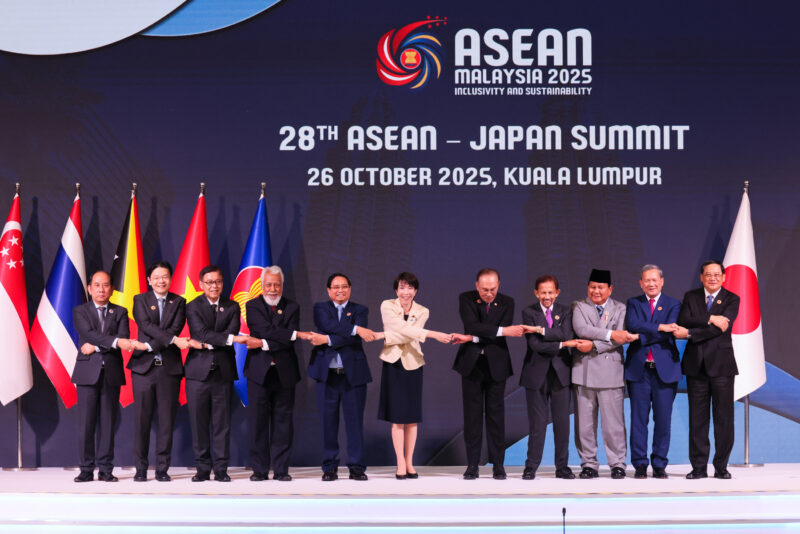
Most importantly, Japanese involvement has been in a non-threatening position. Despite Tokyo being more crowded than ever before with security negotiations and defense ties under its Free and Open Indo-Pacific strategy, it has remained so restrained not to appear coercive. Japan rather supports multilateralism, ASEAN centrality, and shared regional norms. By doing so, it is taking its cue from Southeast Asia’s own desires for balance, sovereignty, and realistic diplomacy. As opposed to the zero-sum appeals of grand powers for strategic rivalry, Japan offers partnership without pressure—a decision that commands quiet but enduring trust.
Sure enough, there are issues. Japan’s economic role is increasingly at risk from China’s growth rate, and fears about Japan’s capacity to lead in the future—against population loss and domestic political change—still linger. But its goodwill treasure trove throughout Southeast Asia is deep, founded not on trade relations or diplomatic platitudes but on decades of consistent presence, humility, and cultural respect.
Conclusion
Japan’s postwar evolution from wartime occupier into a respected regional ally is the most dramatic postwar geopolitical makeover. Through a judicious combination of development aid, cultural exchanges, and personal contact, Japan has refashioned Southeast Asians’ perceptions about itself—no longer as wartime adversary, but as highly sought-after friend.
In an increasingly multipolar Asia with little trust between states and power politics dominating headlines, Japan’s art of relationship-building is a treasure. Soft power, conducted with skill and born of respect, can recreate history—without a tabula rasa, but building something better in its place.