



By Yasin Okyay
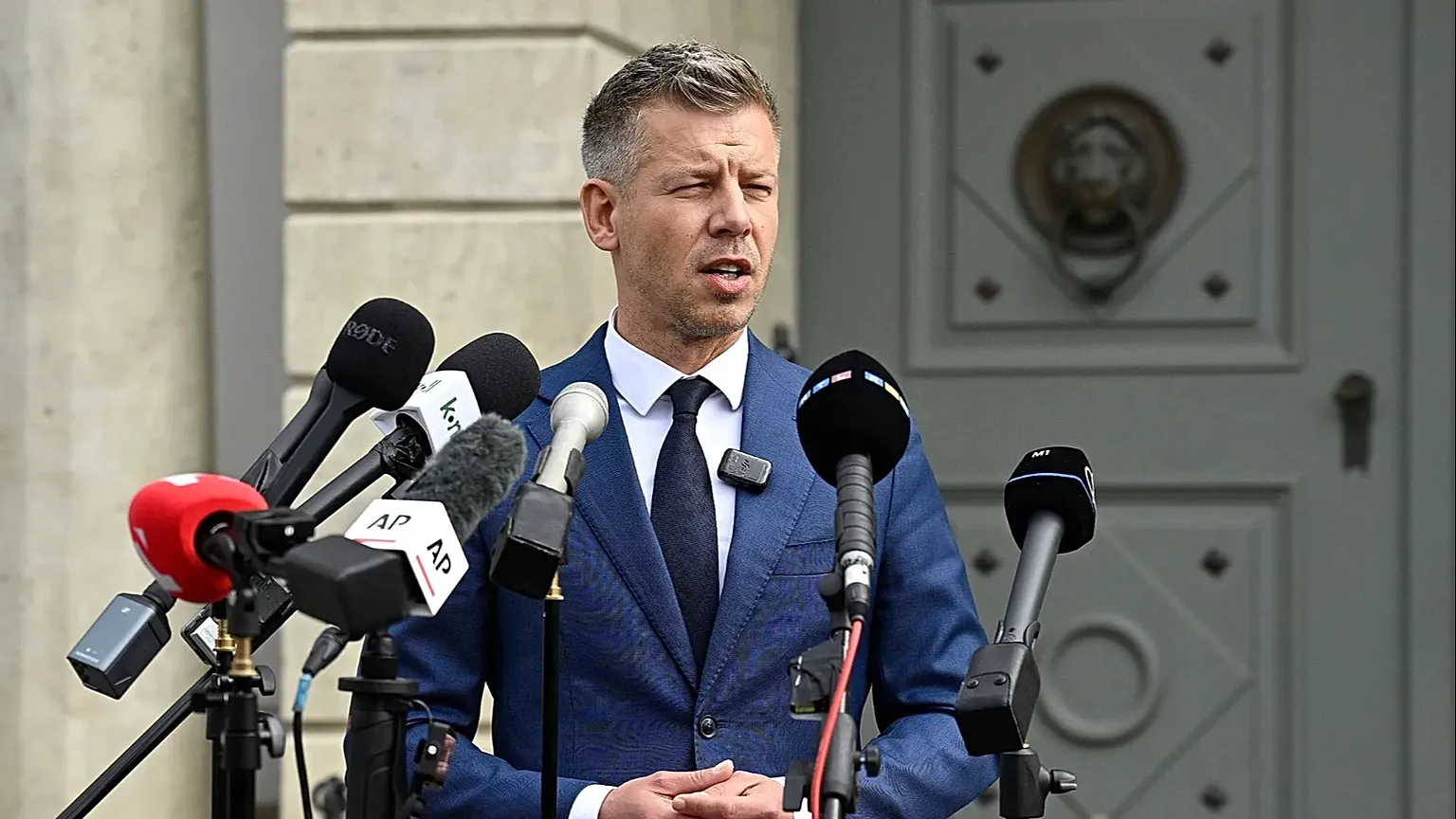
In the parliamentary elections in Hungary held on 12 April, the opposition Tisza Party, led by MEP and former Fidesz member Péter Magyar won by a clear margin. With 53.5 percent of the vote, the Tisza Party secured 138 seats in parliament.
Orbán’s party, Fidesz, and its ally, the Christian Democratic People’s Party (KDNP), received only 38 percent of the vote, winning 55 seats.
The election, which turned into a contest between the US, which openly supports Orbán, and Brussels, which openly supports the Magyars, is seen as “the end of an era” due to Orbán’s significance for conservative-soveregnists in Europe and even across the world.
What does Orbán’s fall from power mean? Why did he lose? Did US support prove to be a disadvantage rather than an advantage? And what lies ahead: what consequences will Orbán’s departure bring? To what extent will Hungary remain as they were, and to what extent will they undergo profound changes?
Aydınlık Europe, the European supplement of the Turkish newspaper Aydınlık, addressed these questions with an interview with political scientist Thibaud Gibelin, a visiting fellow at the Matthias Corvinus Collegium (MCC) in Budapest. Terada offers a detailed explanation when sharing her views.
What do you think caused Orbán to lose the election? Did the support Orbán received from the US backfire and play a role in his loss?
The U.S. president’s support has, in fact, added little value to Hungarian politics, apart from his initial stances against the “swamp” in Washington that was hostile to national sovereignty. That aspect of his persona has taken a back seat since the start of the war against Iran. Generally speaking, Viktor Orbán has always capitalized on the uncompromising defense of Hungarian sovereignty, without resorting to international support. But faced with Brussels’s open hostility, and in the context of a possible war against Russia in the near term, he deemed it necessary to explain to Hungarians the importance of the American alliance.
Strategic errors and Brussels
History is very soft while it is unfolding, and very hard once it has unfolded: nothing was inevitable in the developments of recent years, even if, in retrospect, events take on the form of premonitory evidence. Viktor Orbán was, of course, facing the wear and tear of power, but this was exacerbated by pressure from Brussels, which had made a change of power in Budapest a stated goal. There were also strategic errors: unable to present Hungarians with a glowing economic record, Fidesz centered its campaign on the dangers linked to Ukraine (energy security, European collective debt, direct involvement in the war by 2030) and chose “Fidesz, the safe vote” as its campaign slogan. In contrast, Péter Magyar offered a tailored message designed to convince Fidesz voters to break away from the party, emphasizing domestic policy.
The paradox of these elections: a right-wing national legislature
The two-thirds majority won by the opposition allows them to amend the constitution. Do you think that the system that Orbán has built over 16 years will change?
The Hungarian constitution has been denounced by the left, ever since its adoption in 2011, as a partisan document enshrining a right-wing nationalist agenda. Yet the paradox of these elections is that they have produced a national legislature that is 100% right-wing—at least on paper. The Tisza Party, with two-thirds of the seats, is affiliated with EPP; Fidesz with Patriots for Europe; Mi Hazank, with six seats, to Europe of sovereigntist nations. So in what way is the constitution at odds with the people whose political life it governs? Fidesz was accused of barricading the gates of power: the April 12 elections proved the opposite. In retrospect, the 16 years in power must be judged for what they were: a period initiated, renewed, and then concluded by a democratic plebiscite. Péter Magyar enjoys considerable leeway domestically, which is a double-edged sword for him: his majority will bear full responsibility for what happens from now on.
Elites of Fidesz and urban-liberal elites of Tisza
We have seen a massive shift in the Hungarian electorate from one party to another, which puts into perspective the perceived sharpness of the partisan divide within the population. On the other hand, there is fierce antagonism between the elite linked to Fidesz and the urban, liberal elites who form the backbone of the Tisza party, which has recruited left-wing cadres and mobilized the media and networks of influence. We must therefore expect an attempt to completely dismantle Fidesz’s infrastructure, which will begin with the purge of civil servants as soon as the government takes office and the takeover of state-run or publicly funded institutions.
“Considerable scope” of “settling the score”
I see two reasons why these settling scores will take on considerable scope in the coming months. On the one hand, the desire of the left and its allies in Brussels to brand any attempt to create a national system that is not a mere extension and vassal of the supranational system with the mark of infamy. Hungary must serve as an example. On the other hand, this atmosphere of a grand trial may be the only way to keep the Hungarians in the dark as campaign promises assuring them of a bright future prove impossible to keep. Fidesz is currently united behind Orbán, and maintaining this unity in the face of defeat is the only way to secure the future.
Do you think the new government will use its veto power against EU decisions, particularly those regarding aid to Ukraine?
The Tisza program pledges an unwavering defense of Hungarian national interests within the EU, but that hardly matters: campaign promises are only binding on those who believe in them. These cleverly presented proposals were intended to unseat Viktor Orbán, not to be implemented; and they strike at Fidesz’s weak spot because they stem from the same political sensibility, but without the burden of experience.
Family policy, birth rate, labor immigration
Let me give you a specific example regarding family and migration policies. Fidesz has implemented the most ambitious family policy in Europe, allocating 5% of Hungary’s GDP to this end. Of course, these incentives have achieved only partial success: the birth rate rose from 1.2 in 2010 to 1.6 in 2020, then leveled off in recent years and now stands at 1.4. But during this time, birth rates in other European countries have fallen: Hungary’s birth rate, which was at the bottom of the rankings in 2010, is now in the top 6 out of 27. One thing is clear: financial incentives are not enough; Tisza’s promise to double them amounts to electoral grandstanding. This raises the question of labor immigration, which is, paradoxically, not unrelated to family policy. How can 5% of GDP be allocated to support families? By boosting economic activity, primarily in the industrial sector, which generates significant surpluses. But how can this be achieved when unemployment is at an all-time low and, each year, a large age cohort leaves the labor market while a much smaller younger generation enters it?
A temporary work program: neither the serfdom of Qatar nor the laxity of France
In 2023, therefore, against a backdrop of inflation and a freeze on European structural funds, the government established a temporary work program for non-EU foreigners, under a two-year employment contract renewable once. Given that these workers are housed in special facilities at the employer’s expense, this temporary worker costs as much as a Hungarian. But they generate wealth in Hungary. This model is neither the serfdom of Qatar nor the laxity of France. It stems from a difficult choice faced with a dual necessity: to boost the economy in order to financially support Hungarian families. Let us add that Hungary pays a fine of one million euros per day to the EU for failing to comply with the EU migration pact, which imposes quotas on member states; thus, everything comes at a cost—both the refusal of unproductive migrants and the support for Hungarian families.
Will Hungary’s stance on Ukraine change in the new era? Magyar’s approach to Ukraine seems ambiguous for now.
For the past four years, we have been heading toward a war between the EU and Russia, and Orbán was the only one steering the course toward peace. Péter Magyar stated during his international press conference that he would not oppose the €90 billion loan to Ukraine, but that Hungary would not participate in it, in order to preserve its own financial stability. This was exactly Fidesz’s position until the Druzhba pipeline was blocked this winter, which led to the Hungarian veto. The Hungarian exemption had been hard-won by Viktor Orbán, and Péter Magyar is easily establishing himself as a demanding head of state by maintaining the status quo. For Tisza is taking the helm of a state built over the past 15 years with the aim of maximizing the executive branch’s room for maneuver, and he enjoys a two-thirds majority in Parliament. But are this new party and this aspiring head of state capable of handling the exercise of power and its overwhelming contradictions? The Commission demands that Hungary align itself on the contentious issues that have been piling up between Brussels and Budapest. This is the necessary condition for the disbursement of European funds, which the candidate has promised to release. Fidesz’s approach was clear: it preferred to build a national model that was as autonomous as possible under pressure rather than exist as a mere region managed from Brussels. Tisza promises to square the circle, and the wall of reality is closing in.