


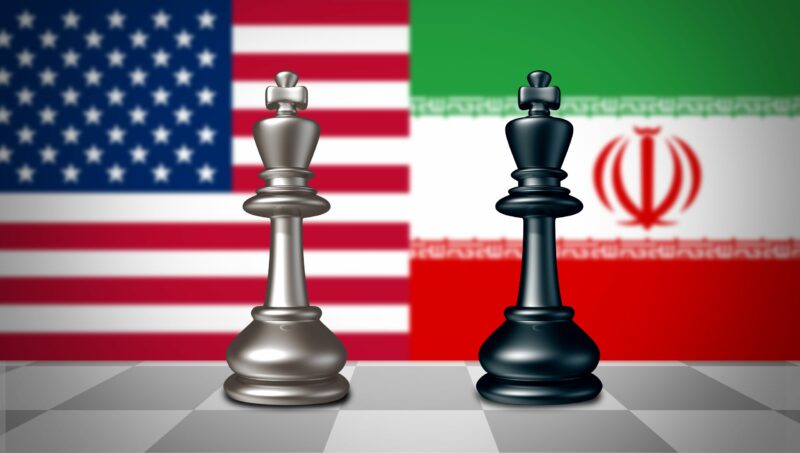
Will the world choose regional instability or a global crisis?
Will the world choose regional instability or a global crisis?
By Adem Kılıç, Political Scientist
The tensions between the United States and Iran are unfolding not as a formally declared war in the classical sense, but rather through a hybrid conflict model.
The parties are avoiding direct, large-scale military confrontation. Instead, by steering clear of what is militarily defined as “territorial dominance,” they continue to wear each other down through pressure strategies built on daily narratives of tactical gains.
This dynamic is creating a field of competition that is continuous on the ground, yet deliberately kept below certain thresholds.
When developments in the field are examined, it becomes evident that although attention has increasingly shifted toward the Strait of Hormuz—perhaps not initially central to pre-conflict calculations—the Iraq–Syria axis continues to serve as the most critical zone of engagement.
As the United States, together with its allies, seeks to intensify its naval posture, global energy supply security is becoming increasingly fragile in this process.
At the same time, both sides are carefully avoiding an escalation that would directly disrupt global oil flows.
This cautious approach, for now, is preventing the tensions from evolving into a full-scale global crisis.
The Israel factor further complicates the equation. As tensions rise between Iran’s regional influence and Israel’s security concerns, Israeli strikes on Iran-linked targets are pushing the United States—albeit indirectly—toward deeper engagement, thereby setting the stage for a more layered and complex conflict structure.
On the less visible front, cyber operations and intelligence activities stand out. Although both sides are attempting to establish superiority through data and surveillance capabilities, this process remains inconclusive due to reciprocal countermeasures.
At the strategic level, both the United States and Iran are pursuing a policy of “controlled escalation.”
While Washington aims to limit Iran’s regional influence, ensure the security of Israel and its Gulf allies, and maintain the continuity of energy routes, it is also striving to prevent any erosion of its superpower status.
Within this framework, diplomatic and security-related developments that may emerge along the Islamabad track are also increasingly drifting toward inconclusiveness.
Although Pakistan’s ability to maintain dialogue with both the United States and Iran positions Islamabad as a potential hub for back-channel diplomacy, competition—particularly over energy cooperation—is adding a new dimension to the equation.
Will negotiations succeed?
The primary factor behind the likelihood of a stalemate lies in mutual deterrence dynamics.
It appears that short-term ceasefires have not been sufficient for either side. Instead, both parties, calculating the high costs of direct war, are attempting to strengthen their positions before returning to the negotiating table—effectively raising the stakes rather than de-escalating.
The risk of regional spillover, particularly across Lebanon, Yemen, and the Gulf, with its potential for cascading crises, is compelling both sides to act cautiously.
Global economic fragility and the sensitivity of energy markets further reinforce this balance.
Moreover, domestic political dynamics in both the United States and Iran are constraining the adoption of more radical military steps.
Conclusion
At this stage, the likelihood of U.S.–Iran tensions producing a definitive military or political outcome in the short term appears low.
Instead, the international system seems to be gravitating toward a scenario in which sustained, controlled, and multi-layered competition—accompanied by persistent regional instability—is preferred over a large-scale global crisis.