


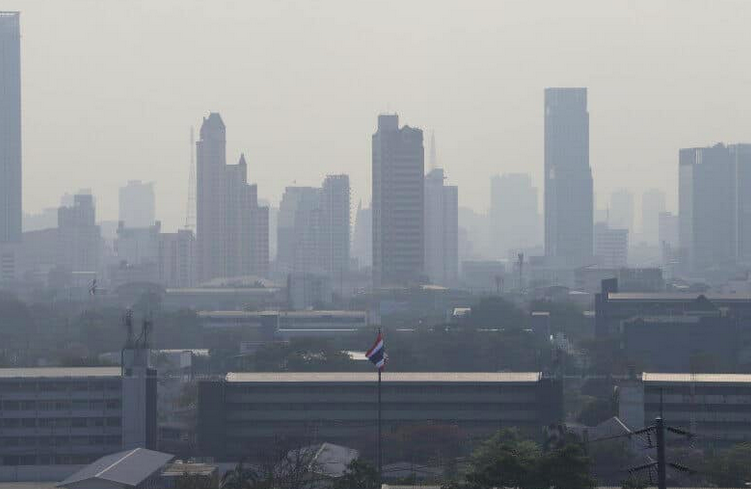
So long as offsets substitute for real emission reductions and not add to them, Thailand risks falling short of not only its climate targets, but also its reputation as a climate leader.
So long as offsets substitute for real emission reductions and not add to them, Thailand risks falling short of not only its climate targets, but also its reputation as a climate leader.
By Mehmet Enes Beşer
As climate change becomes more intensifying in Southeast Asia, Thailand is being asked more and more to sharpen its country-level response. The country has bold targets: 2050 for carbon neutrality and net-zero by 2065. But although the promises are being made, Thailand’s climate strategy is overly dependent on carbon offsets—devices that, unless well managed and credibly implemented, threaten to slow down actual reductions in emissions. Therefore, Thailand’s offset-dominant approach warrants particularly careful examination. Unless there is a radical shift to verifiable emission reductions and fundamental change in the use and reporting of offsets, the country risks failing both nationally and globally when it comes to credibility.
Offsets permit emitters to offset their greenhouse gas emissions by investing in efforts that remove existing carbon from the air—through reforestation, for instance—or avoid emissions in the future—such as renewable energy programs. On paper, offsets could be a useful part of making the transition to net-zero, particularly in cases where decarbonization is difficult or slow. But Thailand’s climate plan relies on offsets, not as an adjunct, but as a chief tool. It does so in ways that reveal multiple vulnerabilities.
First, the credibility and integrity of offsets used in Thailand remain in question. The country’s Voluntary Emission Reduction Program (T-VER), managed by the Thailand Greenhouse Gas Management Organization (TGO), has expanded significantly over the past couple of years. Yet many of these types of projects lack good third-party verification and assurance of permanence. Reforestation, for instance, often has no long-term carbon sequestration unless its duration is of decades or biodiversity and land rights are conserved. In real life, however, this allows for a loop that polluters can continue in business as usual while benefiting economically from climate action without fundamentally modifying their ways of life.
Second, an offset-based strategy allows large emitters—mainly in energy, transport, and manufacturing sectors—to delay structural decarbonization. Instead of accelerating the switch to renewable energy, e-mobility, and energy efficiency, Thailand’s business interests and government actors have been in a position to opt for offset purchases in order to meet compliance or reputation requirements. This has a chilling effect on innovation, supply chain greening, and technological upgrade—all of which are vital to a real transition.
Besides, Thailand’s domestic offset market can be segmented from global standards. Since the global carbon market will be defined by Article 6 of the Paris Agreement, transparency and integrity will be cornerstones. Thailand must align its offset mechanism with global standards so that credits are not double-counted, reductions in emissions are verifiable and additional, and projects are socially and environmentally acceptable. Without such coordination, Thai credits can be kept out of global markets, which will undermine the nation’s appeal to climate-aware investors and partners.
Secondly, Thailand’s carbon offsetting is currently not sufficiently aligned with a broader decarbonization strategy. The sectoral greenhouse gas emission reduction targets are also not clearly set, and compliance is not enforced. As examples, subsidies to fossil fuels still exist, coal remains a considerable part of the energy mix, and the climate finance flows remain unaligned with the extent of change required. Offsets thus become a form of climate bookkeeping rather than climate action.
A full-fledged overhaul would involve redefining the role of carbon offsets in Thailand’s climate strategy. Rather than being the backbone of the mitigation, offsets would be relegated to a last resort—used only after every possible cut within national boundaries is made. The focus would have to be reversed towards decarbonizing at source, with particular importance in sectors like electricity, transport, cement, and agriculture. Thailand’s new Power Development Plan and the Just Energy Transition Partnership (JETP) with significant international support provide a window to reorient its energy policy into actual transformation.
Concurrently, Thailand must strengthen the regulation of carbon markets, both compliance and voluntary. This means increasing transparency, implementing robust monitoring systems, enabling indigenous and local communities’ participation in offset projects, and closing loopholes that allow greenwashing. A market with genuine credibility must offer climate integrity, ecological sustainability, and social co-benefits—not convenience to emitters.
Finally, awareness among the public and civil society are crucial. With commoditization of offsets, there is a danger that action against climate change would become an exercise of paying and receiving without real efforts from emitters and attempts to produce and sell more offsets. Such an exercise must be watched over by media, academia, and NGOs as well as an engaged public, providing them with the mandate to withhold the climate policy from deviating from scientific as well as ethical requirements. So long as offsets substitute for real emission reductions and not add to them, Thailand risks falling short of not only its climate targets, but also its reputation as a climate leader. There can be a much stronger, integrated way—one where deep decarbonization is accompanied by good institutions and credible reforms—is where Thailand can ensure its net-zero transition is not nominal but truly transformative.
The world is watching middle-income countries achieve growth and climate stewardship. If Thailand is to be a pioneer in this field, it must ensure offsets are guardrails—not loopholes—on the road to a sustainable future.