


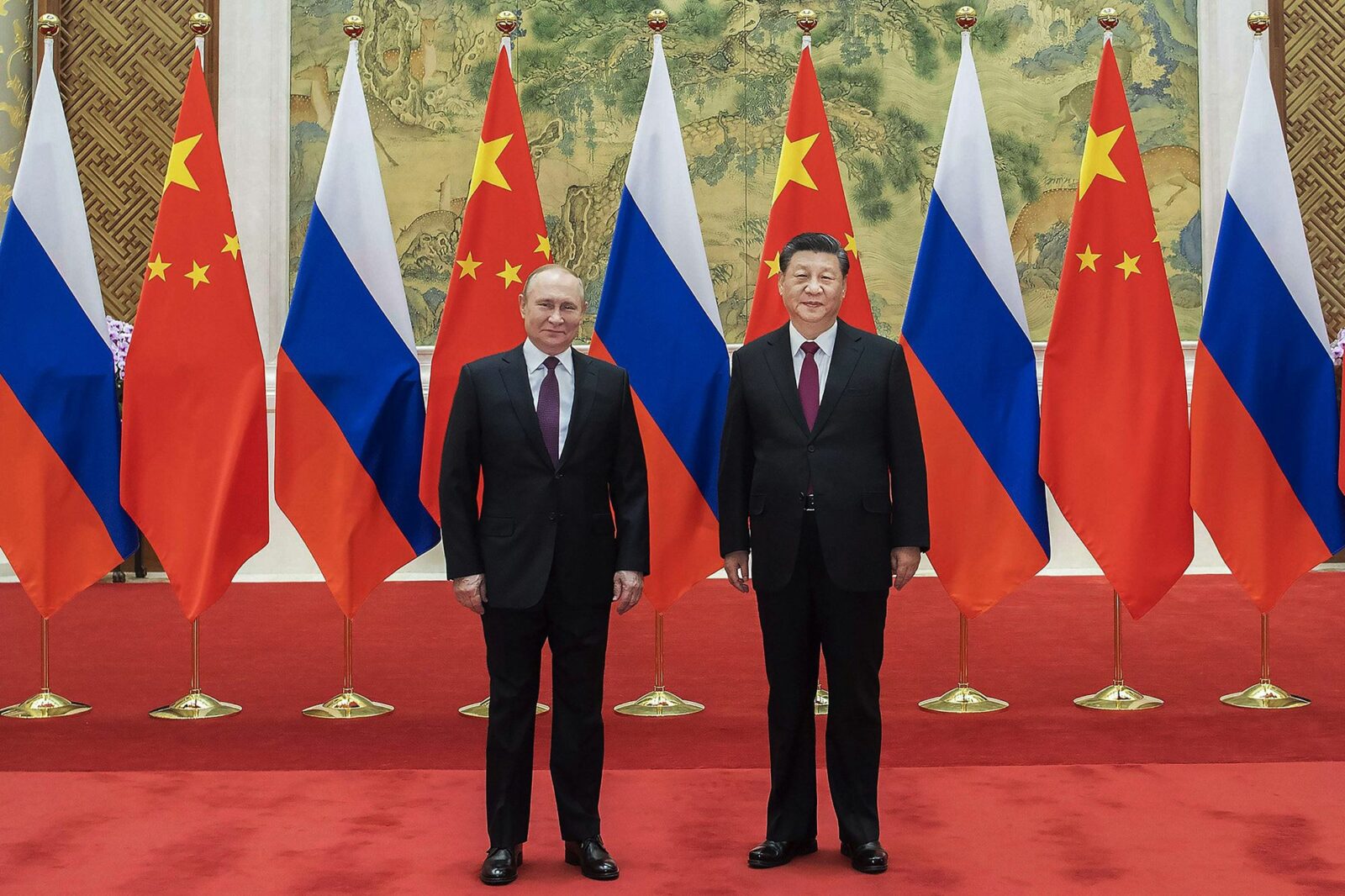
A Strategic Constant
A Strategic Constant
By Mehmet Enes Beşer
Whereas elsewhere in this new world order friendships of old are being broken and the international system is increasingly marked by suspicion, the relationship between China and Russia has held firm. Failing short of a marriage of convenience, the emerging China–Russia strategic partnership rests upon pragmatism, strategic mutual trust, and a vision for a multipolar world. With both countries navigating a multidimensional world order—defined by Western sanctions, volatile energy markets, and economic decoupling accelerating—their partnership has consolidated, solidified, and fortified in ways reshaping geopolitical reconfigs far beyond Eurasia. The history of China-Russian relations oscillated throughout the decades between periods of ideological cooperation and competition.
But since the Cold War, and more specifically since the last twenty years, the two administrations have fashioned what both term as a “comprehensive strategic partnership of coordination of a new era.” The strategy has been tenaciously long-lasting. Either in reaction to NATO expansion pressures, U.S.-led sanctions regimes, or in competition for respective regional hegemons, Beijing and Moscow have opted to cooperate rather than compete and accommodate rather than compete. It is richest in maturity in the nature of the relationship itself.
It is not ideological or hierarchical, but interdependence built on respect for the other’s sovereignty, non-interference, and seeking strategic autonomy. They share a joint interest in counter-balancing Western hegemonic approaches to governance and supporting alternative models within multilateral organizations like the SCO, BRICS, and the EAEU. They are not just two-way participating—rather, they are institutionalized in overarching attempts at reforming the world interaction architecture. Economic prudence and opportunism have characterized China–Russia interaction.
Economic relations with China have been greatly enhanced as Western sanctions against Russia have taken effect, particularly since 2014 and even more so since the war in Ukraine erupted in 2022. The two countries have seen a record high in their bilateral trade in 2023, with technology, agriculture, and energy being the areas of dominance. China is currently Russia’s biggest trading partner, and Russia is currently China’s biggest energy supplier, particularly as Beijing seeks to diversify beyond risky sea lanes for energy delivery. There is no free ride for either side in this economic partnership.
China’s economy is significantly larger than Russia’s, and Beijing’s global reach is significantly larger than Moscow’s. But political mastery over these facts has been achieved. Rather than imposing tension on the surface through imbalance, both have compelled win-win and complementarity. China attains secure resource access and great-power status; Russia attains economic lifelines and diplomatic support against Western exclusionary impulses. Both benefit by forcing each other’s strategic storylines—staying out of encirclement, defending national dignity, and remodeling a more “just” world order. To be included with defense and security cooperation, cooperation on these topics is also rising between the two countries. Intelligence cooperation, partnership in arms, and cooperative military training rose by orders of magnitude. Not defense treaty allies, to be sure, but operational military trust between them is a rare indication of great power strategic trust. Importantly, this is calibrated with cautionary temper—intended to build capability and consistency without overstepping a line that will unleash instant war against the West.
But let us not fantasize about the China–Russia relationship. There are strategic divergences—most prominently in Central Asia, where Chinese economic predominance and Russian security predominance converge. There are boundaries to how far Beijing will tread behind Moscow on contentious issues like Ukraine. But those pinpricks have yet to be sufficient to change the overall trajectory. The secret to making this relationship work is not the absence of divergence, but political will to make it work.
Conclusion
In an era of increasingly fungible alignments, and transactionalism over trust, the China–Russia alignment is a robust, mature, and strategically prudent one. It is not an ideological one, nor one vulnerable to so-called weakness from the outside world. It is, instead, founded upon an alignment of common long-term interests, common will to oppose Western hegemony, and common will to strategic autonomy.
As the world order continues to unfold, and there are new players barging in for new concepts of alignment, the friendship of China and Russia can be shown as an example: not to bloc politics or ideological convergence but to practical coordination among autonomous actors whose vision of the world overlaps. Its viability as such is not limited bilaterally—it is an unintended consequence of the long-reaching of the world order remaking that are in order.