


What Türkiye can learn from Iran’s victory.
What Türkiye can learn from Iran’s victory.
UWI author, historian and political scientist Associate Professor Mehmet Perinçek was guest on Radio Sputnik, to evaluate the impact of the US/Israel–Iran war on global balances.
“The US has fallen behind where it started in Iran”
Perinçek emphasized that the US has failed to achieve its objectives in the war militarily, economically, and strategically:
“The US has achieved none of its goals. In fact, it has even fallen behind where it started. Before the war, at least the Strait of Hormuz was open, tankers were moving freely. Now, instead of talking about overthrowing the Iranian regime or dividing Iran, the US is struggling just to get the Strait of Hormuz reopened.
There are also major military failures. In contrast, Iran hit US bases in the Gulf countries, Israel, downed many aircrafts, and so on.”
Triggering effect
Perinçek stated that a potential US defeat against Iran would not only have military, but also global political effects, leading allies to drift away from Washington and turn toward alternative centers of power such as China and Russia. In his view, this would weaken US global hegemony:
“The US has two paths ahead as it loses the war. Either it accepts defeat and quietly goes back home. This would seriously damage its prestige in the world. Besides, there are already serious doubts among Gulf countries about the US and its security umbrella. These doubts existed before, but they were already moving toward alternatives and developing relations with Russia and China. After this defeat, Gulf countries will move further toward improving relations with China and Russia, and even toward normalizing ties with Iran, which had already begun to soften before the war. An Iranian victory will push more countries toward the Eurasian camp and encourage those already in the Eurasian sphere to take bolder steps. This will ultimately mean the gradual collapse of US goals of ‘global policeman”, ‘unipolar world,’, ‘dollar hegemony’”.
Perinçek stated that a potential US defeat against Iran would not only have consequences in foreign policy but also in domestic politics, and that this process could seriously undermine Trump’s political future:
“This defeat would come about the end of Trump’s power. When Trump came to power for the second term, he began preparing public opinion for changing the Constitution rendering a third term possible for him. In fact, Trump has had an approach that disregards not only internationally, but also domestically. This showed us Trump’s plans to establish a stricter hegemony both in the world and within the US itself. However, the current course of events indicates that such a defeat, both internationally and domestically, will bring about the end of the US and Trump. Therefore, it will not be easy for Washington and the Atlantic bloc to accept this defeat.
Trump’s opponents also have to tread carefully. Those who oppose Trump, either internationally or within the US, are waiting for the US’s defeat in Iran. However, since this would not only be Trump’s defeat but also a defeat for imperialism, they have to act with caution.”
Options the US has
Perinçek stated that if the US continues the war, it will face even heavier consequences both militarily and politically, and that forces within Washington and Israel who adopt a “all or nothing” approach might push the process into a more dangerous direction:
“The US has two options. Either it accepts defeat, or it continues the war. In my view, continuing the war will lead to much worse outcomes for Trump and the US. It is also clear that within the US and Israel there are forces that say: ‘Instead of accepting such a defeat, let’s go all the way. It’s all or nothing.’ They are making various attempts to escalate the tension. In other words, they are trying to disrupt any ceasefire process, perhaps through a fait accompli or even by provoking a wider war, with the idea of consolidating NATO once again through a global conflict. The violations in the first days of the ceasefire can be seen as a reflection of the indecision of the imperialist camp between these two paths.
“Trump was forced into a ceasefire”
Perinçek emphasized, after resorting to all kinds of failed methods, Trump was forced to accept a ceasefire. He argued that this process reveals a weakening of US global power:
“No matter what Trump tried, it didn’t work. He said, ‘I will change the regime’, it didn’t work. He said, ‘We will send weapons’, but it didn’t work. He said, ‘We can reopen the Strait of Hormoz”, ‘We will impose tariffs’. All without any outcome. These developments infuriate a power that claims to maintain global dominance. And this is pushing that power toward brutality, lawlessness. The US has reached a point where, whether economically, militarily, or politically, it no longer has any option to establish dominance except through outright coercion.
“Color revolutions” and “conventional wars” don’t work anymore
In other words, ‘color revolutions’, even conventional wars don’t work anymore. Look at that statement about ‘destroying a civilization’. You can kill a country’s leaders, destroy its infrastructure, but you still cannot destroy a civilization. There is something else at play here: He is trying to instill fear. What Trump wants to do is to subdue the other side through open coercion.
He tried everything. He tested every option. At first, he issued standard threats, it didn’t work. He targeted infrastructure. He escalated again and again. He tried to manage it through outright mafia-style pressure. But again, it failed. And when Iran still did not surrender, the situation reached a point where either you use a nuclear bomb, or you give up. But using a nuclear bomb is not easy, because Russia, China, and Pakistan are also in the equation. The US is not the only nuclear power. There are divergent opinions within the US itself. Europe also left Trump alone on this issue.
That’s why Trump had to accept Iran’s conditions. Of course, this process will not be linear, there will be back-and-forths. The US will still try to maneuver again in West Asia and other regions.”
A victory for Eurasia
Perinçek said that developments in Iran will also have global repercussions, and that this process should be interpreted as a broader victory for the Eurasian bloc:
“Iran is a battlefield of the broader global confrontation. Ukraine and Taiwan are other parts of this. Syria and the Eastern Mediterranean are also part of this confrontation, and from Türkiye’s perspective, the most important one. And all of these parts are interconnected. If Russia loses in Ukraine, Iran’s position against Israel and the US will become more difficult. If Iran loses, China’s position will become more difficult. If China, Iran, and Russia lose, Türkiye will face serious problems in the Eastern Mediterranean and Syria. Therefore, the fact that all these are interconnected and that there is a conflict between Eurasia and the Atlantic bloc means that when one country in the Eurasian front wins one of these battles, the entire Eurasian front also benefits. In other words, Iran’s victory is Russia’s and Türkiye’s victory, Russia’s victory on the Ukraine front is China’s, Iran’s, and Türkiye’s victory, Türkiye’s firm stance in the Eastern Mediterranean should be seen as a success of China, Russia, Pakistan, and the Turkic world.
Beside interconnections between these parts, there are also concrete forms of cooperation between countries. There are military, economic, and political partnerships between China and Iran, between Russia and Iran, and with many other countries. BRICS and the Shanghai Cooperation Organization also play a role in Iran’s resilience. Russia provides intelligence support to Iran. Iran’s missile stockpiles wouldn’t have been possible without the rare earth elements possessed almost exclusively by China today.
Despite years of embargoes and sanctions, if Iran’s economy is still managing to function in some way, and if the Iranian people are not experiencing extreme hardship even under wartime conditions, this is also due to its economic relations with China, Russia, and others.”
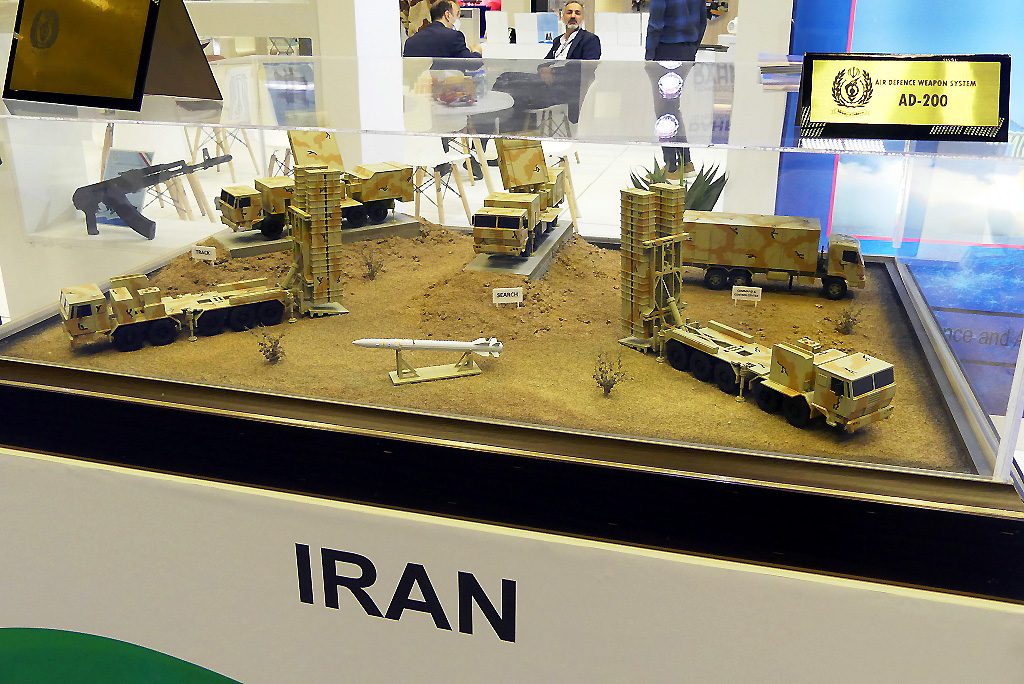
The success of armament independent from the US
Perinçek emphasized that Iran’s success was made possible through defense technologies that are not dependent on the US, arguing that this demonstrates the weakening of Western military dominance and highlights the strategic importance for states to develop independent armament capabilities:
“We see that the US has lost its position as the dominant military power. For a long time, American institutions and the Pentagon have been running war simulations. In these simulations, they consistently reach the same conclusion: if Russia and China act together, the US would definitely lose a conventional, non-nuclear war. And the past 8–10 years confirms this. Now this situation has advanced even further. Military technologies are being developed independently of the US. We have seen the successes of Russia, China, Pakistan, and Iran. Therefore, we also see that the military superiority of the West and the US is in decline, while alternative powers are rising. All of this, including the Iran war, shows that the US can no longer impose its will on China, Russia, or other countries.
One lesson to draw from this war is the importance of possessing military technologies independent from NATO and the US. Let me ask you a question: if Iran had F-35s, F-16s, or Patriot systems, could it have achieved this success against the US? Or if it had American-origin weapons and defense systems, could it have resisted the US and Israel? Türkiye actually started down this path with the S-400s and began developing its own national defense technologies. But recently we see renewed enthusiasm for F-35s, Eurofighters, Patriot systems, and so on… This is a very clear threat to Türkiye.
The US’ biggest and unchangeable ally in the region is Israel. That is a fact. Now, when you face up with the US and Israel, will you rely on Patriot systems? On F-35s?
Strait of Hormoz and the Strait of Gallipoli
Perinçek likened that resistance in the Strait of Hormuz to the Strait of Gallipoli:
“The Gallipoli War, besides paving the way for the success of Türkiye War of Independence. At Gallipoli, Türkiye resisted the imperialist attack, and that triggered the October Revolution. The October Revolution, in turn, created the available international conditions for the success of the Turkish War of Independence. The British failure at Gallipoli triggered internal problems in Britain and later played an important role in the decline of British imperialism. Being so, the Gallipoli War launched socialist revolutions, and national liberation struggles around the world. Similarly, in the coming period, this resistance in Hormuz will play a very significant role in the struggle for freedom of nations, in states’ struggle for sovereignty and independence.
Historians will write about this in future. But we will be able to see its immediate impacts without waiting for historians’ records.”