


Critical minerals, pentagonal diplomacy, the Anglo-Saxon axis in the South Atlantic
Critical minerals, pentagonal diplomacy, the Anglo-Saxon axis in the South Atlantic
By Prof. Dr. Fernando Esteche
“All the geography that matters north of the equator is ours. What lies south of the equator is your responsibility, in partnership with us and other Western nations.”
— Pete Hegseth, Secretary of War, SOUTHCOM, Doral, Florida, March 30, 2026
“Reassert and enforce” the Monroe Doctrine to restore American preeminence in the Western Hemisphere […] We will deny non- Hemispheric competitors the ability to position forces or other threatening capabilities, or to own or control strategically vital assets, in our Hemisphere .
— National Security Strategy, November 2025
I. The documents that spoke before the speeches
When Secretary of War Pete Hegseth presented the project he called Greater North America to the Western Hemisphere defense chiefs gathered at the Southern Command Headquarters in Doral, Florida, he wasn’t stating a personal whim or his own doctrine: he was giving voice, with his characteristic boldness, to a concept that had already been formalized in writing in the most important strategic documents produced by the Trump administration between November 2025 and January 2026. These documents are the indispensable key to understanding everything that followed, including the aggression toward Venezuela, Cuba, and Greenland, the subordination of Latin American militaries, and the geopolitical tension that today pits the Anglo-Saxon South Atlantic against the Chinese Pacific off the Peruvian coast.
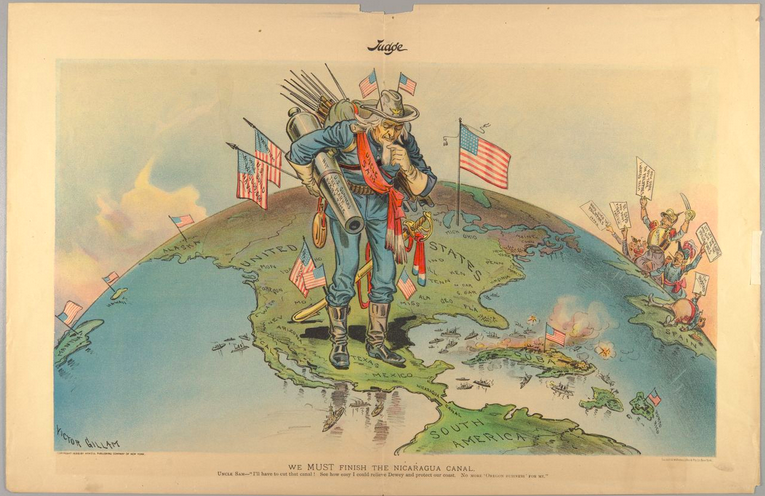
The National Security Strategy of November 2025 (NSS 2025) is the first guiding document. Prepared under the authority of the White House, it defines the global geopolitical priorities of the second Trump administration and establishes, with remarkable candor, what we will call the Trump Corollary to the Monroe Doctrine: the restoration of American preeminence in the Western Hemisphere, the rejection of any capacity by extra-hemispheric competitors—China, Russia, Iran—to position forces, strategic assets, or critical infrastructure in the region, and the realignment of the American global military presence according to these priorities. The Western Hemisphere is the first priority, the Indo-Pacific the second, and Europe the cargo to be transferred to its own actors. The map is drawn with a precision that leaves no room for misinterpretation.
The National Defense Strategy of January 2026 (NDS 2026), published by the Pentagon on the 23rd of that month, is the document that operationalizes the directives of the National Security Strategy (NSS). It adopts an expanded concept of the American homeland that includes the entire Western Hemisphere, from the Arctic to Argentina. Under this concept, homeland defense becomes the justification for projecting power across the continent. The document instructs the Pentagon to provide the president with credible military options for use against what it designates as narco-terrorists—a category elastic enough to encompass almost any government that deviates from the required hemispheric alignment—wherever they may be located on the continent. It is within this framework that Operation Absolute Resolution, which kidnapped Venezuelan President Nicolás Maduro on January 3, 2026, acquires its precise meaning; it was not an improvised adventure but the first application of the mandate of the NDS 2026, published three weeks later but whose drafting had been underway for months.
Together, these two documents produce what we can define as the doctrinal architecture of imperial redeployment in Our America. When Hegseth speaks of a Greater North America in Doral, he is not inventing anything but rather quoting, with a cowboy accent, what his advisors drafted in the language of strategists. This distinction is important because any analysis that merely criticizes Hegseth ‘s rhetoric avoids the essential point. The problem is not the official’s style but the institutional depth of the doctrine he represents.
Hegseth ‘s statement in Doral—”all the geography that matters north of the equator is ours; what lies south of the equator is their responsibility, in partnership with us”—is not a geographical metaphor. It is the articulation of a dual territorial architecture with precise conceptual antecedents and concrete operational consequences that should be explored.
The area north of the equator—which includes Mexico, Central America, the Caribbean, Colombia, Venezuela, Ecuador, and the Guianas—functions in this doctrine as a vital space of direct control: the territory where Washington exercises effective sovereignty over the resources, routes, armed forces, and political decisions of the formally independent states that comprise it. The category that best describes this relationship is that of lebensraum in its classic geopolitical sense—the living space necessary for the systemic reproduction of the dominant power—although Washington prefers the euphemism of “defense of the extended homeland.” This is not a formal annexation but rather a functional sovereignty: the states retain their flags and their presidents but lose the capacity to decide on their strategic resources, their foreign policy, and their military architecture. What the NDS 2026 calls “guaranteed access” is precisely that: the certainty that no government in that area can close its doors to Washington without direct military consequences, as demonstrated by Operation Absolute Resolve in Venezuela.
What Hegseth reserved for the area south of the equator operates according to a different but complementary logic: that of the imperial hinterland, the rear-guard territory that does not require direct control because its function is one of provisioning, not power projection. In the classical hinterland doctrine, the metropolis does not need to occupy this space; it needs it to remain open, for its resources to flow toward the center, and for no rival power to establish a strategic position there that threatens supply routes. Hegseth ‘s formula— “its responsibility, in partnership with us and other Western nations”—exactly translates this logic: the area south of the equator is a burden delegated to subordinate partners, with the United Kingdom as the main manager of this Atlantic rearguard. The countries of South America are not incorporated into the Lebensraum but maintained as captive suppliers: their subsoil is necessary; their political autonomy is tolerable insofar as it does not compromise the flow of resources and does not enable rival powers to establish positions.
This distinction has profound analytical and political implications. In the northern lebensraum, the violation of sovereignty is direct and immediate. Venezuela experienced this on January 3, 2026; Panama is experiencing it with the pressure on the Canal; and Mexico is experiencing it with the militarization of its southern border as a condition of the bilateral relationship. The margin of maneuver for states in this area is minimal and diminishing. In the southern hinterland, subordination operates in a more mediated and enduring manner: through agreements on critical minerals that transform the subsoil into a guaranteed supply line; through military interoperability that replaces local doctrines with Pentagon categories; and through the network of agreements of the Atlantic imperial bloc that supplies what the Southern Command cannot cover directly. Brazil, Argentina, Chile, and Peru are hinterland: they are not the target of an immediate military operation, but they are being incorporated into an architecture of dependency that will make any project of genuine autonomy increasingly difficult. The difference between being a Lebensraum and being a hinterland is not a difference in dignity, it’s a difference in timing. The former will immediately lose its effective sovereignty. The latter will lose it gradually, with signed agreements and photos of smiling foreign ministers.
This dual architecture also explains the differentiated aggression toward different territories. The offensive against Venezuela, Cuba, Greenland, and the Panama Canal is not driven by ideological whims but by the need to consolidate Lebensraum before emerging multipolarity makes it more costly. Greenland is the Arctic flank of Lebensraum, essential for controlling the Arctic Ocean against Russia and China, and its rare earth deposits are simultaneously a strategic resource and an argument for annexation. Venezuela concentrates the continent’s largest oil basin in the area that doctrine defines as under direct control; it cannot remain outside the perimeter of U.S. management. Cuba is the intelligence and projection point that China and Russia maintain 90 miles from Miami, in the very heart of the declared Lebensraum. The Panama Canal is the artery that connects the Atlantic Lebensraum with the Pacific. In all cases, the aggression is not excessive; it is the logic of Lebensraum applied coherently.
II. The pinnacle of minerals: the 21st century divides the subsoil
The most significant and least understood moment of this period, in all its strategic dimension, was February 4, 2026, when the State Department’s Truman Building hosted representatives from 54 countries—including 43 foreign ministers—along with Vice President J.D. Vance, the Secretary of the Treasury, the Secretaries of the Interior and Energy, the U.S. Trade Representative, and Marco Rubio. That cabinet photo was part of the message. Washington had never before deployed such a display of executive power for a multilateral event of hemispheric scale.
The pretext was cooperation. The real objective was the distribution of roles in the global supply chain of critical minerals (the 17 rare earth elements and more than 50 other elements that the 21st century transformed into the new oil for the 22nd century). Without them, there are no semiconductors, no lithium batteries, no precision missiles, no electric vehicles, no satellites, no war economy, and no energy transition economy. China controls approximately 90% of the global processing of these materials, and in 2025 it imposed temporary restrictions on its exports of heavy rare earth elements, impacting North American and European manufacturers. The summit on February 4th was the organic and institutional response to this demonstration of Chinese power.
Two days before the meeting, Trump had announced Project Vault, with $12 billion in initial capital: $10 billion from the Export-Import Bank of America—the largest loan in the institution’s history—plus nearly $2 billion in private capital contributed by General Motors, Boeing, Google, and GE Vernova, among other corporations. The strategic reserve will store more than 50 minerals in facilities distributed across the United States. The stated objective is to guarantee industrial self-sufficiency for 60 days should Beijing cut off supplies. The overarching goal is to have Latin American, African, and Central Asian mineral resources stored in American vaults before any regional coordination alternative can materialize. The irony, noted by the specialized press, is significant: the administration that preaches free markets and defunds the state is building the largest state-run industrial intervention in decades, copying the Chinese model to combat China.
The official list of countries invited to the summit can be read as the map of the world according to Washington, and it is worth doing so carefully because it organizes the board according to four overlapping logics.
The first group comprises those who possess the subsoil resources they need: all of Latin America—Argentina, Bolivia, Brazil, Chile (not Chile because it was in transition), Ecuador, Mexico, Paraguay, and Peru—sub-Saharan Africa, Central Asia, and the Pacific islands. Their place at the table was that of the supplier. They came to sign, not to design.
The second is that of the technological and industrial allies: the entire G7, South Korea, Australia, India, Singapore, those who process, refine and manufacture, the real club of the meeting.
The third is that of the geopolitical allies of the moment: Israel, Saudi Arabia, Emirates, Qatar, Ukraine, Poland, countries without relevant critical minerals but necessary in other dimensions of the board —Middle East, pressure on Iran (this was before the war), war in Europe.
The fourth logic is dictated by those absent, yet it speaks volumes: Chile, which has the world’s largest reserves of lithium and copper and whose government was still in transition due to elections, was not invited. Neither were Greenland and Denmark, because Washington wants to seize the island without recognizing it as a sovereign partner.
Viewed through the territorial architecture described by the GNA project, the minerals summit acquires additional clarity. Project Vault is not merely a strategic reserve but the concrete mechanism by which the South American hinterland is functionally integrated into the industrial and military metabolism of the dominant power. It is not necessary to occupy Bolivia to control its lithium: it suffices for Bolivia to sign supply agreements that exclude Beijing and for its armed forces to interoperate with the Pentagon. It is not necessary to directly administer the Argentine or Peruvian subsoil: it suffices for the foreign ministers to fly to Washington to sign framework agreements that make them captive suppliers of a vault designed and controlled by others. The hinterland formula is precisely that: control without occupation, subordination without formal conquest. Project Vault is the financial institutionalization of this relationship. At the close of the summit, eleven bilateral agreements were signed in a single day. The clause that no agreement explicitly states but that all contain is always the same: whoever signs with Washington does not sign with Beijing. The documents are non-binding. The pressure surrounding them is absolutely binding.
The minerals summit didn’t produce partners. It produced suppliers. It didn’t build shared value chains, but rather guaranteed supply lines. The difference between the two is precisely the difference between development and plunder with a signed agreement. For Our America, the risk is not only surrendering the subsoil without added value—although that is already serious enough—but also being trapped in the colonial condition of supplying inputs for a war economy and energy transition that others design, finance, and control.
III. Military subordination and the Venezuelan laboratory
A week after the minerals summit, on February 11, the Pentagon was the scene of another unprecedented event. For the first time in history, 34 chiefs of staff from the Western Hemisphere were summoned to Washington. The meeting was organized by General Dan Caine, Chairman of the Joint Chiefs of Staff, opened by Pete Hegseth, and held behind closed doors, without a joint statement or public record. This secrecy is not a minor detail; what is not recorded does not have to be defended before the national publics that these military officers, in theory, serve.
The explicit doctrinal framework was the Trump Corollary to the Monroe Doctrine, formally incorporated into NDS 2026. General Guillot, of Northern Command, offered advanced satellite surveillance sensors for border control. General Donovan, of Southern Command, the man Trump himself chose to replace the resigned Holsey, advocated for greater operational freedom for U.S. forces in the region. The technological offer seems generous in terms of cooperation. An army that depends on Pentagon intelligence to monitor its own territory gradually loses control of what it knows about itself, and with that control, it also loses the capacity to think in its own categories. The subordination that was forged on February 11 is not the subordination of defeat in combat. It is the subordination of training, doctrine, technology, and shared intelligence. It is deeper because it is more voluntary, and those who accept it rarely notice when they began to operate according to the logic of their instructor.
The most eloquent laboratory of these doctrines in action is Venezuela. On January 3, 2016, Operation Absolute Resolve carried out the kidnapping of President Nicolás Maduro. This was the first use of direct U.S. military force to overthrow a sovereign government in Latin America since the invasion of Panama in 1989. Thirty-seven years later, the method returned. On February 18, General Donovan arrived in Caracas—49 days after the operation—to meet with Delcy Rodríguez, Vladimir Padrino López, and Diosdado Cabello, officials whose heads have been targeted by U.S. agencies, to discuss stabilization. The previous week, Energy Secretary Chris Wright had visited Caracas with an exclusively oil-focused agenda. The scheme is predictable: oil first, democracy later. Three phases: stabilization of order, economic recovery under tutelage, and a transition with aligned results.
In terms of the GNA’s territorial architecture, Venezuela is the most illustrative case of what it means to be Lebensraum. Caracas lies within the declared Lebensraum, possesses the continent’s largest oil basin, and had managed, for two decades, to cultivate a relationship with China and Russia that defied the logic of hemispheric exclusion. This is why it was the primary target of direct force: not because Maduro posed a military threat, but because allowing a power with such a wealth of strategic resources to remain outside U.S. control was incompatible with the Lebensraum doctrine. The removal of Holsey and his replacement by Donovan—a special operations officer who, on the very day he assumed command, ordered a kinetic attack—demonstrates that consolidating Lebensraum requires not only the written doctrine but also personnel willing to execute it without the scruples of the previous command.
The logic behind why Venezuela, Cuba, and Greenland are targeted is not irrational from the perspective of imperial doctrine. The NSS 2025 explicitly states that access to Venezuelan oil reserves and Greenland’s critical minerals are among the strategic priorities of the United States to guarantee control of global supply chains. The aggression toward these territories is neither capricious nor primarily ideological: it is the operational consequence of documents drafted with bureaucratic precision in Washington. In the case of Greenland, the added dimension of continental insularity and control of the Arctic Ocean in the face of the dispute with Russia and China reproduces the same expansionist logic that, from Thomas Jefferson onward, justified territorial purchases and conquests such as Alaska, Louisiana, and the territories seized from Mexico in 1848. Trump’s frankness on this point is uncomfortable for those analyses influenced by colonialism, who prefer to see his rhetoric as an anomaly of leadership rather than a continuation of the deepest imperial tradition.
IV. The Anglo-Saxon network and the unique case of Brazil
The Greater North America is not an exclusively American project, and this is perhaps the least explored aspect of the ongoing redeployment. While Washington constructs its new imperial map from Miami, the United Kingdom is quietly weaving a network of military and strategic agreements in South America whose function is to secure the Anglo-Saxon rear in the South Atlantic, consolidate the colonial occupation of the Falkland Islands, and block any autonomous regional counterweight. This network operates on several simultaneous levels and with varying intensity depending on the country, but it responds to a unified logic: that of a power in relative decline that manages its resources with colonial intelligence, substituting naval capacity—which it no longer possesses—with political and logistical agreements that its fleet could no longer sustain on its own.
The Royal Navy is at its lowest operational capability in modern history. In just three years, it has withdrawn two amphibious assault ships, four frigates, a nuclear-powered attack submarine, five minesweepers, and two tankers. The only ship permanently deployed in the South Atlantic since early 2026 is a River- class patrol boat, not a battle frigate. The First Sea Lord, General Sir Gwyn Jenkins, publicly admitted on April 1, 2026, that the navy is not ready for war. This admission came at the very moment when Trump was ridiculing the Royal Navy for its absence in the conflict with Iran and calling British aircraft carriers “toys.” London’s naval weakness does not diminish its imperial project in the South Atlantic; it makes it more dependent on the network of regional agreements it has been building in our region. Chile provides air stopovers for military missions to the Falklands—RAF A400M aircraft have regularly used Chilean bases without any official announcement. Uruguay serves a similar function as an operational base. Argentina is the most contradictory case. In 2025, it updated a memorandum with the United Kingdom to expand cooperation on drug trafficking, terrorism, and intelligence—the first bilateral instrument of its kind since 1982—while maintaining its sovereign claim over the very islands that this agreement implicitly consolidates as an occupation. The paradox of the Milei administration regarding the Falklands deserves its own analysis, which is beyond the scope of this article, but the Navitas case is revealing enough. An Israeli company is illegally extracting oil from disputed Argentine waters under licenses from the British colonial government of the islands, with an investment of $1.8 billion to develop the Sea Lion field, while the Buenos Aires government formally protests against this Israeli company and simultaneously maintains an unconditional alliance with Israel and negotiates with London to lift the arms embargo. This subordination creates the conditions for its own intensification.
From the GNA’s perspective, the role of the Atlantic imperial bloc in the South Atlantic and the Southern Cone is more clearly understood. London is the delegated manager of the hinterland in the area that Washington defines as a “burden-sharing” zone. The network of agreements that the United Kingdom forges with Brazil, Chile, Peru, Uruguay, and Argentina does not compete with the North American agenda; it complements it. Where the Southern Command cannot establish a sufficient presence—because its resources are committed to the Lebensraum north of the equator—the Anglo-Atlantic architecture covers the rear. The Falkland Islands are the logistical base of this system. The Anglo-American Caribbean is not a decorative colonial remnant but the infrastructure of a power that projects influence from the Caribbean to the Antarctic Ocean, across the entire South Atlantic, without needing Washington’s authorization to do so. The exploitation of the Sea Lion deposit under a British colonial license with Israeli capital is the most concrete expression of how the hinterland is managed extractively: the resource leaves, the value is captured far away, and the territorial State —Argentina— formally protests while its own elites negotiate the terms of the handover.
Brazil’s case deserves special attention, not only because of its regional weight but also because of the specific nature of the relationship it has just consolidated with the United Kingdom. On March 26, 2026, four days before Hegseth ‘s speech in Doral, the foreign ministers of both countries signed the Brazil-UK Strategic Partnership 2026-2030. The document elevates the relationship to its highest level of bilateral diplomatic cooperation and establishes, in the area of defense, the expansion of the Military Capabilities Cooperation Agreement signed in February 2024, a 2+2 Political-Military Dialogue with regular meetings between the Foreign and Defense Ministries, cooperation in military technology with technology transfer, joint exercises, and space cooperation. The fact that this agreement was signed exactly four days before the Donroe Doctrine is not a coincidence; it is coordination between major powers. Brazil, the largest military and economic power in South America and an active member of the BRICS, being incorporated as a strategic defense partner of London means that the declining power gains legitimacy, infrastructure and political backing from the dominant regional power in the South Atlantic, precisely when its fleet can no longer project itself into those waters with the density it would require.
The question this agreement forces us to ask about Brazilian foreign policy is not new, but it takes on particular urgency here. Lula insists on using the term “multilateralism” when the historical moment demands clarity on multipolarity. This is not a semantic confusion but a political stance that the long-standing factions at Itamaraty (the Brazilian Foreign Ministry) have consistently maintained: to operate within the existing global order to expand the trade platform and negotiate a seat on the Security Council, rather than to challenge that order from a position of transformative agency. This logic explains the proposal of Colombia—whose territory hosts US military bases and whose state is structurally dependent on Washington—for the BRICS, instead of Venezuela and Bolivia, which are precisely the most crucial links in any sovereign energy integration project: the former with the continent’s largest oil basin, the latter with the world’s largest lithium reserves, and both under sanctions and hybrid warfare that Brazil’s regional leadership could have helped to break.
This deliberate omission, along with the sustained neutrality regarding the proxy war in Ukraine and the proposals for electoral oversight in Venezuela that ultimately invoked the OAS—the very organization that Foreign Minister Raúl Roa García, of the Dignity movement, dubbed the Ministry of Colonies—transforms Brazilian diplomacy into an expression of what could be called multiple alignment without a project of its own: playing both sides on a board that is becoming increasingly bipolar, under the pretense that this position is neutrality when in practice it serves as a pretext for redeployment. Brazil is neither Turkey nor India. It lacks the centuries-long history of autonomy of the former nor the demographics and productive capacity of the latter. It is the South American regional power, and it can only consolidate that leadership by forging a Latin American alliance that includes its weaker and more besieged neighbors. Otherwise, the strategic agreement with the United Kingdom that was signed on March 26 will not be remembered as a diplomatic achievement but as the moment when Brazil chose to be the regional praetor of the Anglo-Saxon South Atlantic.
V. Callao and Chancay: Peruvian ambiguity as a mirror of redeployment
If there is one geographical setting where the logic of imperial redeployment becomes tangible, literally measurable in kilometers of coastline, that setting is the central Peruvian coast. Less than 80 kilometers apart, two projects coexist today that embody, in a compressed form, the global strategic dispute between Washington and Beijing: the Chancay megaport, inaugurated by President Xi Jinping in November 2024 with an investment of US$3.5 billion, operated by the Chinese state-owned company Cosco Shipping under the Belt and Road Initiative; and the new Callao Naval Base, whose modernization was approved by the US State Department as a Foreign Military Sale for US$1.5 billion, with the participation of the US Army Corps of Engineers (USACE) in the technical direction of the works.
The agreement was formalized in January 2026, when the Defense Security Cooperation Agency (DSCA) notified the U.S. Congress of the operation. The package includes design, construction, project management, engineering studies, technical and logistical support, and the allocation of up to 20 representatives from the U.S. government or contractors in Peru for up to ten years. In April 2026, the Peruvian government officially authorized, through a supreme decree, the incurring of more than $1.2 billion in domestic debt to finance Phase II. The project will relocate the naval base north of the Rímac River, freeing up land for the expansion of the commercial port of Callao, which will thus become a direct competitor to Chancay, the Chinese port that Washington has been identifying for months as a dual strategic threat, a logistical hub for Beijing’s commercial expansion and a potential staging point for Chinese naval operations.
Peruvian Foreign Minister Hugo de Zela confirmed in December 2025 that U.S. military engineers are carrying out the transfer. Analysts like Francesco Tucci pointed out that the U.S. decision is part of Trump’s Donroe Doctrine and represents a direct response to the Chinese presence in the region. The official Peruvian formulation, however, presents the agreement as a sovereign modernization of its defense capabilities that does not alter the regional military balance. That phrase—taken from the DSCA’s own statement—best defines what I call diplomatic ambiguity as a form of subordination when it refuses to be called by its name.
Peru denies China full sovereignty over Chancay—a court ruling restricting Peruvian state oversight of the megaport was described by Washington as a warning sign for the region—while simultaneously handing over technical control of its main naval base to US military engineers for a decade. At the same time, it signed agreements at the February 4th minerals summit, with its lithium and rare earth deposits on the horizon of the negotiations. The result is a country with two global powers less than 80 kilometers apart on its central coast, borrowing on sovereign bonds to pay for the presence of engineers from one of them, and describing this situation as strengthening its maritime sovereignty. Geography speaks volumes when diplomacy prefers euphemism.
The Peruvian case illustrates with particular clarity the inherent ambiguity of the hinterland. Peru lies south of the equator on Hegseth ‘s map —a “burden-sharing” zone—but its Pacific coastline and subsoil rich in critical minerals make it a strategic node of paramount importance in the dispute with China. The coexistence of the Chinese port of Chancay and the US naval base at Callao, just 80 kilometers away, is not a diplomatic anomaly but rather the precise geographical expression of the contested hinterland’s condition. Washington cannot simply occupy Peru as it occupies the vital space north of the equator; it needs to draw it into its architecture of dependency through investment agreements, military cooperation, and pressure on the Chinese presence. The “Peruvian ambiguity” that official diplomacy presents as pragmatic neutrality is, in reality, the form that subordination takes when the hinterland has not yet made its choice—or when its elites prefer not to have to do so openly.
VI. The possible crack in the Anglo-Saxon block
The analysis that focuses solely on the existing complementarity between Washington and London in the South Atlantic and the Pacific misses the most interesting aspect of the problem. This complementarity is real today, but it is not without contradictions that could emerge in the medium term, and within these contradictions, Latin America can find room for maneuver that it is not currently exploiting. The first visible sign of structural tension in the special Anglo-American relationship occurred when Trump demanded that Starmer provide British military bases for the offensive against Iran, and the Prime Minister refused. According to the Washington Post, this rejection particularly disturbed the American president. The subordinate power refused to place its infrastructure at the service of the dominant power’s war.
That “No” is not an anecdote. It is the precise expression of a logic that the history of Anglo-American relations regularly reproduces when interests diverge, Washington does not hesitate to discipline London—as demonstrated in Suez in 1956—and when Washington weakens or overextends itself, London builds its own positions. The assets that the United Kingdom is consolidating today in the South Atlantic are functional for Washington in the short term, but they do not depend on Washington for their existence. The agreement with Brazil, the air logistics network to the Falklands, the Sea Lion oil project with Israeli capital under a British colonial license; all of that belongs to London and would continue operating even if the special relationship were to deteriorate. That is precisely the difference between a complementary architecture and one that operates in a temporary, complementary fashion while building autonomous positions.
The American overextension that Paul Kennedy analyzed as the historical mechanism of the decline of all great powers operates here as the condition that enables British autonomy. When an imperial power expands beyond its operational capacity—and Washington does so simultaneously in the Arctic, the Western Hemisphere, the Indo-Pacific, and the so-called Middle East—it inevitably creates the margins within which the next actor in the hierarchy can build its own positions. For Our America, the conclusion of this analysis has two inseparable dimensions. The first is a warning against the substitution trap: a South America that reacts to American dominance by seeking a counterweight in London will have changed masters, without changing its condition. British free trade, which replaced the Spanish colonial monopoly in the 19th century, was not a liberation but a recolonization under a new flag, and George Canning stated this clearly, without bothering to hide it, when he affirmed that he called the New World into existence to restore the balance of the Old World. The eventual divergence between the Anglo-Saxon metropolises is not in itself an opportunity for our peoples; It is only possible if there are political subjects capable of building their own alternatives.
What the doctrines explain: the urgency of a project
The formulation of a Greater North America, with its axes north of the equator and its shared cargo zones to the south, is not a historical novelty. It is the reconfiguration of a relationship of dependency and coloniality that did not need to be articulated because it operated effectively enough without a proper name. What the urgency to formalize it reveals is, paradoxically, a sign of fragility. Emerging multipolarity, the rise of China as a systemic power, the resistance of the Global South, and the relative decline of the United States itself compel Washington to consolidate its hemispheric hegemony before the chessboard definitively shifts against it.
The distinction between lebensraum and the hinterland has a final political implication that cannot remain implicit. For countries south of the equator, hinterland status is not an irreversible condemnation but a contested position. While lebensraum requires direct control—and its loss triggers an immediate military response, as Venezuela demonstrated—the hinterland tolerates margins of maneuver that lebensraum does not allow. Brazil can negotiate simultaneously with Washington and Beijing, although each agreement it signs narrows that margin. Argentina can claim the Falkland Islands in international forums, although each memorandum signed with London empties that claim of practical content. Chile can choose not to attend the minerals summit. These margins exist precisely because hinterland status implies mediated subordination, not direct control. The decisive political question—the one this article poses without attempting to answer—is whether the peoples and political actors of Our America will be able to use these margins to build an alternative before the consolidation of the GNA project definitively closes them off. The hinterland’s window of opportunity for an autonomous response is closing.
The response to this architecture cannot be reactive or defensive. The summit on critical minerals encountered no organized resistance from our Latin American side not because the balance of power prevented it, but because there was—and still is not—a collective political entity capable of formulating a counterproposal. There was no regional coordination. There wasn’t even a joint statement from the affected countries. The asymmetry is not only one of power: it is one of project. And that is precisely the issue that must be changed.
The response to the Greater North America lies in the sovereign defense of the resources of the South Atlantic and the Pacific, in the articulation of Brazil, Argentina, and the Mercosur countries as a genuine counterweight, in the active pursuit of the Malvinas Islands in all available forums, in the integration of Venezuela and Bolivia into the regional project instead of treating them as isolated cases, and in building an international presence that does not require permission from any metropolis to exist. The geography that the Empire draws for us is not our geography. Defending it is not an isolated national cause: it is the prerequisite for any project of popular sovereignty in the century we are living through.