


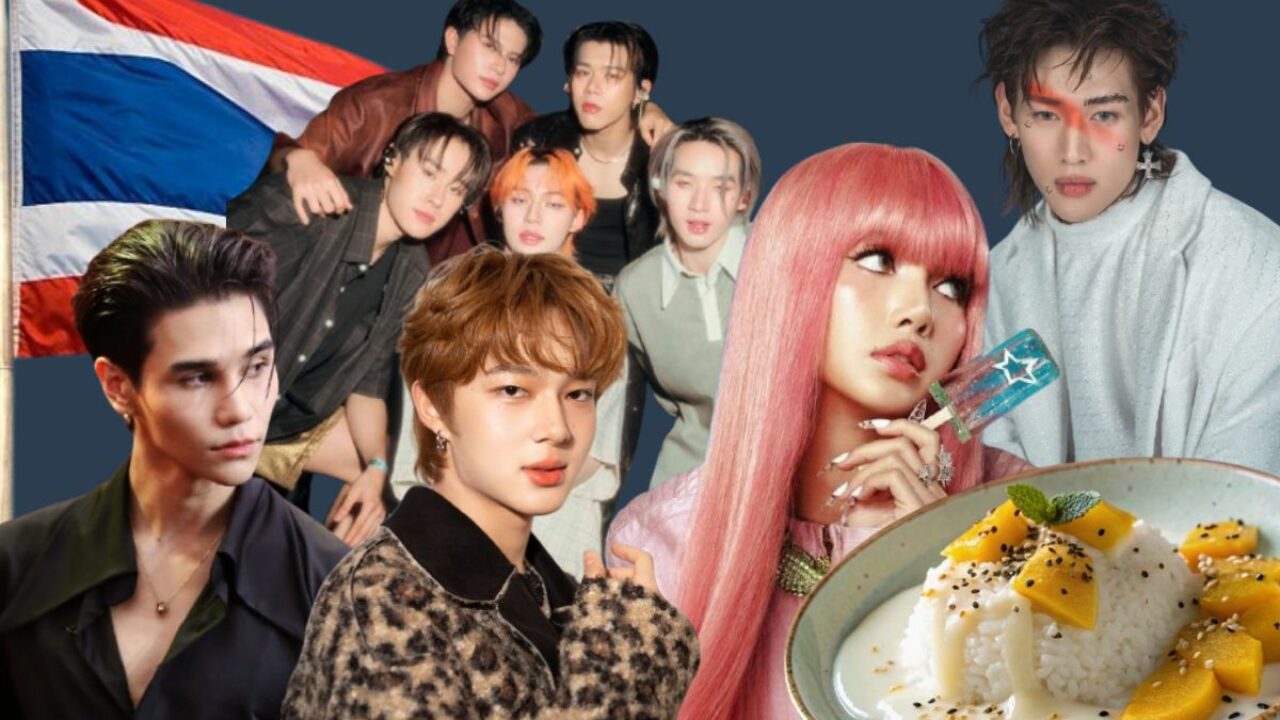
To move on from passive reception to active cultural tourism, Thailand must approach entertainment as a field not as a sideline but a column of national engagement.
To move on from passive reception to active cultural tourism, Thailand must approach entertainment as a field not as a sideline but a column of national engagement.
By Mehmet Enes Beşer
Glamorous Thai television dramas, music, and pop idols have in recent years moved in quietly to emerge as an expanding cultural phenomenon in Asia. The impact has largely been experienced in East and Southeast Asia. Thai BL (boys’ love) dramas like 2gether, their stars Bright Vachirawit and Win Metawin, and spiritually or romantically oriented movies have all acquired enormous fan bases on sites like Weibo and Bilibili in China. This new soft power presence—some ad-hoc marketed as the “T-Wave”—is following in Korea’s earlier footsteps of “K-Wave,” or Hallyu, which was able to translate cultural popularity into both economic returns and tourism surges. But despite the popularity of Thai pop culture among Chinese, the T-Wave has yet to lead to any meaningful return of Chinese tourists to Thailand. The divergence is pivotal in posing the necessary questions on the dynamics of cultural soft power and its limits.
At face value, ingredients of Thailand’s T-Wave seem well-set for a regional audience. While Korea’s state-directed cultural export policy has been more organized, Thailand’s entertainment growth has been decentralized, organic, and genre-aware—particularly with the explosion of LGBTQ+ friendly content targeting young, liberal viewers. Thai dramas prefer to show contemporary urban life, emotional complexity, and distinctive aesthetics that pierce a crowded Asian media landscape. The transboundary fan economy, especially in China, has driven online activity, virtual festivals, and merchandising sales.
But cultural excitement has not yet found a corresponding boost in Chinese tourist numbers. While there have been a few die-hard fanatics who have traveled to Bangkok or Chiang Mai to visit shooting locations or see fan gatherings, the larger Chinese market has been slower to bounce back. In contrast to the Korean experience—where a surge in drama and K-pop fandom during the early 2000s provided fuel for waves of Chinese tourists to Seoul, Busan, and Jeju—Thailand’s entertainment boom has yet to have the same catalytic impact.
There are several reasons why this gap exists.
Political and structural factors have been at the top of the list. The overseas travel of Chinese has yet to recover from the pandemic because of both domestic economic uncertainties and travel restrictions, which took longer than in other countries. Additionally, the perception that Thailand is politically unsteady and insecure—especially in connection with high-profile crimes targeting Chinese nationals—has eroded tourist confidence. This is not an issue that Thai pop culture alone can rectify.
Second, Thailand has yet to bring its cultural diplomacy in step with tourism marketing, unlike successful public-private policy of South Korea. Korean government tourism authorities long made use of cultural content by offering drama-themed travel packages linked to sites of dramas, meetups with fans, and shopping trails. Branded alliances, language accessibility, and visa ease also cost Korea Inc. money. In Thailand, while there are efforts to create “drama tourism,” the efforts are fragmented, under-funded, and lacking strategic coordination among agencies. The T-Wave can be organically powerful, but it lacks institutional support to make its impact on tourism greater.
Third, audience engagement is heterogeneous in shape and intention. For the majority of Chinese viewers of Thai content, the attraction is one of digital consumption as opposed to bodily migration. Thai content—especially BL dramas—remains in a niche that exists in online fan communities, in which audiences relish subbed videos, fan edits, and online engagement. This is a departure from the K-Wave, which was reliant on group performances, concert culture, and beauty-tourism connectivity enabling in-body interaction.
Additionally, the T-Wave crowd skews youth, students, or recent graduates, who are without the kind of financial capabilities or travel agency support infrastructure in place for past Chinese tour groups. The drawing power of Thailand as a product of mass tourism—once derived from low fares and package tour promotion—must now adapt in the face of a more fractured, independent traveler environment.
But this does not render the T-Wave obsolete. Rather, Thailand’s growing status in regional popular culture offers a powerful vehicle for sustained brand development. Cultural affinity fosters familiarity, affinity, and openness to deeper engagement. Over time, if nurtured well, this can create images of Thailand as a modern, innovative, and open society—traits that can set its tourism appeal apart from beaches and temples.
To capitalize on this potential, Thailand must make several changes. These involve investing in coordinated “drama tourism” campaigns, improving Chinese visitor visa and language facilities, helping local producers create internationally sellable content, and creating tourism tie-ins with leading media brands. Thailand must also collaborate more closely with streaming platforms, influencers, and tour operators to build experiences that convert fandom into traffic.
Conclusion
The T-Wave is a thrilling evolution of Thailand’s soft power, particularly in China. The cultural wave has yet to raise tourism boats as the K-Wave did for South Korea’s tourism boats. This gap illustrates the potential and limitations of cultural attraction without a strategic catalyst.
To move on from passive reception to active cultural tourism, Thailand must approach entertainment as a field not as a sideline but a column of national engagement. Now, when the region is all about soft power as a novel instrument of economic diplomacy, it would be shortsighted not to take this direction. But with clear vision and coordination, the T-Wave can be more than a fad—it can be a wave that sweeps with it tourism, identity, and influence.