


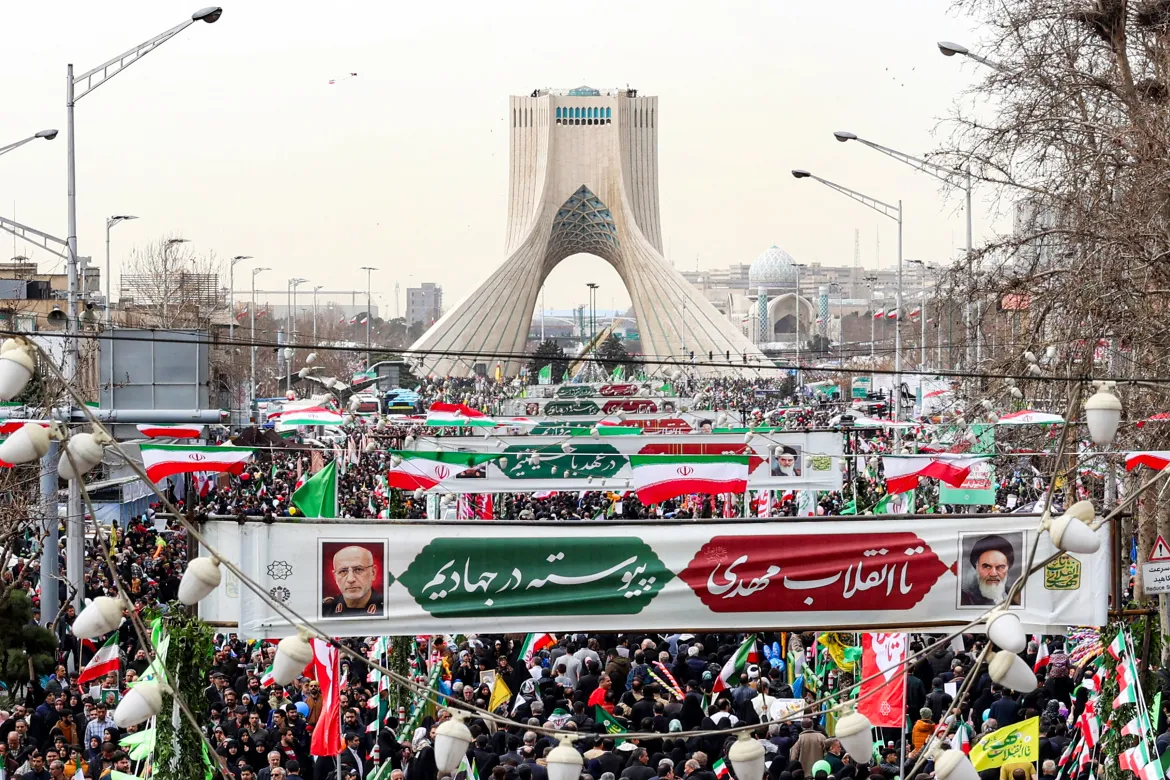
Trump mistakenly assumed that Khamenei’s martyrdom would lead to the collapse and demise of the Islamic Republic. Socrates said, “True wisdom lies in recognizing one’s own ignorance.”
Trump mistakenly assumed that Khamenei’s martyrdom would lead to the collapse and demise of the Islamic Republic. Socrates said, “True wisdom lies in recognizing one’s own ignorance.”
Many things are being said, but it’s not known for sure whether the decision to attack Iran was a miscalculation based on information the CIA gave Trump claiming that Iran was fragile and therefore an easy target to defeat. Or it could have been the opposite: that the Pentagon warned him about the risks a large-scale military operation posed to the strategic stability of the United States, and that Trump dismissed it given his obsessive desire to bring the world to its knees.
It is also said that Netanyahu informed Trump that on Saturday morning, the Iranian leader would be meeting with the High Command at a location that Israeli intelligence had identified, presenting an opportunity to eliminate him permanently. This information was reportedly corroborated by the CIA, leading Trump to make the decision.
What is clear is that the United States’ primary source of intelligence in West Asia is Israel, which uses this intelligence as a tool to influence US decisions. Of course, the Zionist Mossad treasures the thousands of photos and videos that Jeffrey Epstein provided them over the years, allowing them to manipulate any world leader in politics, finance, economics, and diplomacy—including Trump—to their advantage.
To that extent, Israel “convinced” Trump that Iran’s missile capability was meager when in reality the Persian country has tens of thousands of them, of 18 different types, with different potential, payload capacity, range and flight speed.
Since the 2003 US attack on Iraq, the Iranian leadership understood that a direct confrontation with the United States was inevitable and began preparing swiftly but patiently. For this reason, they proceeded with the design and construction of underground mobile missile cities. It’s natural to ask, how can they be mobile? They are mobile because, with multiple entrances and exits connected by kilometers of tunnels, missiles can emerge from any point to be launched. Similarly, for over 20 years, Iran has produced an unspecified number of drones—estimated to be several hundred thousand—that guarantee the ability to launch sustained attacks against a potential enemy for weeks or months at a time.
Another miscalculation Trump made was the assumption that there were strong contradictions within the Iranian leadership, given that the vast majority of the population rejected the Islamic Republic’s leadership. If there were any doubts about this, Ayatollah Khamenei himself, at the cost of his own life, proved this assertion false. He could have gone underground; he knew he was a target of Zionist and American hatred. But, making a final contribution to the struggle of his people and Shia Muslims worldwide, he chose to immolate himself, becoming an indestructible bastion of national unity for his country and for Shiism in general. Today, Iran faces aggression as a united front, a front that also includes Sunnis, Catholics, and even Jews who live in and are citizens of the Islamic Republic.
Trump mistakenly assumed that Khamenei’s martyrdom would lead to the collapse and demise of the Islamic Republic. Socrates said, “True wisdom lies in recognizing one’s own ignorance.” Something Trump would never do. His personality wouldn’t allow it. That’s why, before the start of the aggression on February 28, he asked his negotiator with Iran, Steve Witkoff, why Iran hadn’t “capitulated” under the enormous pressure it was under when the incident occurred. the largest US military deployment in history since the invasion of Iraq.
Today, with the military aggression underway and Iran being subjected to a brutal bombing campaign, the same question is still being asked, without understanding that the process of replacing leaders in Iran is almost automatic. It is part of the preparations they have been making for over 20 years.
Does anyone believe that the network of institutions comprised of the Supreme Leader, the Assemblies of Discernment, State Coexistence, and Wise Men, as well as the Guardian Council and the three branches of government established in the Constitution and which underpin the system, can be destroyed by the assassination of its leader, its top officials, or even the entire leadership? In Iran, every position of responsibility has its next four successors predetermined in case of the incumbent’s death.
If one were to draw a comparison with Western democracy, which proposes the separation of powers, Iran’s system aims for a balance of power. Thus, the Assembly of Elders can remove the Supreme Leader. The Supreme Leader appoints the ayatollahs of the Guardian Council and the highest authority of the Judiciary. In turn, the head of the Judiciary proposes the constitutional experts who will serve on the Guardian Council. Similarly, candidates for the Assembly of Elders must be approved by the Guardian Council. It can be concluded that no authority holds perpetual power, no authority is unelected, and no authority possesses absolute power. Power must be shared through a balance of power among all branches of government so that no one is above the others.
Attempting to take a medium- and long-term view of the conflict, we should first ask ourselves: What is happening now? Following the Zionist-American aggression, and as previously announced by the Iranian government, the Strait of Hormuz was closed by the Persian navy to unauthorized vessels in anticipation of this eventuality. However, so far the reports have focused on the dominant power of the United States Navy, when in reality it faces severe limitations that will be implemented in the coming weeks.
It’s worth noting that this overwhelming power hasn’t prevented the paralysis of the Strait of Hormuz, through which 21% of the planet’s energy passes. Trump even announced that his administration would offer political risk insurance “at a reasonable price” and, in some cases, military escort for maritime trade transiting the Strait of Hormuz, which Iran has blocked in response to attacks by the United States and Israel. In response, a high-ranking Iranian naval officer urged him to do so. This situation will continue to escalate, especially since the main logistical hub for the U.S. Navy in the region was the Fifth Fleet base in Bahrain, which was destroyed or severely damaged by Iran. Even ships stranded within the Gulf cannot use it.
The alternative for those outside the Gulf of Oman or the Arabian Sea is to refuel at the US naval base on Diego Garcia, located on territory illegally occupied by the United Kingdom and belonging to Mauritius, an island nation in the Indian Ocean. This base is a three-day round trip, which would give Iran a valuable week should the conflict drag on.
On the other hand, one factor in Iran’s favor is that it is fighting on its own soil, while the United States relies on foreign support, especially now that its network of military bases in the region has been destroyed or severely damaged. This, too, is a factor that reveals its vulnerability.
In another area, in what appears to be the defining element of the conflict—which, in my view, is the optimal use of combat resources and the most appropriate deployment of logistics—a strong media campaign is underway. With this campaign, the United States intends to create a narrative that only time will validate. This war is being waged in the context of the use of air power as the fundamental basis for striking the enemy. Thus, in the absence of ground troops, aircraft, missiles, drones, and anti-aircraft batteries play the crucial role.
In this respect, the superiority of the Zionist-American alliance in aviation is overwhelming, and this is understandable because it is a quintessential offensive weapon that the United States has developed in accordance with its aggressive and interventionist doctrinal principles. This is what allowed Secretary of Defense Pete Hegseth to state yesterday, March 3, that: “ In less than a week, the United States and Israel will have total control of Iranian airspace.”
But in the field of drones, missiles and anti-aircraft weaponry, which play a relevant role as defensive instruments – although the first two can also play an offensive role – the situation is evened out and this is where Iran can gain advantages by fighting on its own territory.
The Zionist-American air force must use US military bases in the region for refueling and ammunition resupply. Since these facilities have been severely damaged by Iran, airstrikes launched from ground bases must be refueled in flight once or even twice, requiring a high level of logistical support that, given past disastrous experiences, is uncertain in its sustainability.
In terms of air combat, two to three Patriot PAC-3 or THAAD interceptor missiles are needed to shoot down an Iranian missile or drone. The total THAAD inventory amounts to 646 missiles (this includes the reserves the United States needs for its own defense) with an annual production capacity of only 96. In June 2025, 150 missiles (23%) were used in 12 days in the war against Iran. This figure is merely an extrapolation, considering that combat operations are now far more frequent than last year.
Although Washington has urged the military-industrial complex to rapidly increase production, the industry has only committed to manufacturing 400 missiles annually. Replenishing those inventories would take more than four years. In the case of the Patriot PAC-3, around 800 units were produced in 2025, with plans to increase that number to 1,130 by 2027 alone. As for Tomahawk attack missiles, the inventory is less than 1,200, only a third of the 2020 peak of approximately 3,600.
Marco Rubio himself stated that “the Iranians manufacture 100 missiles monthly, while we produce between 6 and 7 interceptors per month.” In short, if the United States were to send all of its production to Israel, which is impossible because the High Command of the Armed Forces itself would prevent it, it could be said that in the coming days the stockpile of interceptor missiles would be completely depleted, given that Iran’s tactic is to send swarms of drones to overwhelm the Zionist air defenses and exhaust their stockpiles. Only then will Iran bring out the best and most modern of its arsenal to attack.
I suppose this is what has led Trump to modify his rhetoric. On February 28, he said, “We’ve already won. This is what a competent military looks like.” The next day, March 1, he stated, “Tehran in 3-4 days.” On Monday, March 2, he said, “4-5 weeks ahead,” and yesterday, March 3, he said, “Wars can go on forever.”
This war will be long but not endless; it is a war of attrition. Victory will go to the side with the best logistics and the most efficient use of resources. The fact that Iran planned it for 23 years will also be a factor. This is their war. The 2003 war in Iraq, the 2006 war in Lebanon, the response to the so-called Arab Spring of 2011, the 2014 Saudi-led war in Yemen, and even the 2023 war in Gaza were not their wars. In all of those, they were forced to become indirectly involved, but they were not their wars. This one is. It is all or nothing.
In this situation, what can Trump do? Of course, he won’t give up, although he could withdraw claiming victory, just as he did last June. He could seek a negotiated agreement, but Iran has sat at the table three times, and three times it has been deceived and betrayed, as the world can attest. The decent part of the planet, the overwhelming majority, who are not on the “Epstein List,” can also testify to the Persians’ peaceful intentions.
Iran has acted with complete transparency, repeatedly stating that they were negotiating with a serious partner. These regrettable events have exposed the deceit and treachery of the United States, Democrats and Republicans alike. And now they are doing exactly what they said they would do if attacked. If the United States strikes their oil terminals and refineries, they will retaliate throughout West Asia.
The United States will have difficulty escalating without incurring greater risk. The truth is that as of today, March 4th, the US plan has not been fulfilled: they have failed to bring about regime change, they have been unable to prevent Iranian missile and drone strikes, they have failed to maintain effective air defenses, they have failed to develop the industrial capacity to replace losses and adequately supply their armed forces, and they have failed to paralyze the resistance axis in Lebanon, Iraq, Yemen, and other countries, which is preparing to counterattack—among other reasons because Khamenei was also a leader for them.
With limited industrial capacity, partly because China’s rare earth restrictions prevent it from accelerating production, the only option left is to deploy more aircraft, but air forces don’t win wars. They can’t destroy underground cities; they have to occupy them, and the Yemeni Houthis, with far fewer resources, have already demonstrated that a brave, aware, and determined people can prevent this. Whoever wants to win must deploy ground forces. Iran has 1,370,000 men and women under arms, not counting the millions who want to join. If the classic 3:1 ratio for the offensive is applied, the United States would need more than 4 million soldiers to secure a victory. Where would it get them? Could American society withstand this without first experiencing an internal catastrophe?
Their only remaining option would be nuclear weapons, but that opens up a whole new discussion because it would force the involvement of China, Russia, and all of humanity—the majority of healthy, decent people. And we’re not in 1945, nor is the Iranian leadership the mediocre, unscrupulous, and cowardly Japanese elite of the end of World War II.