


Evaluations of Turkish retired Rear Admiral Cem Gürdeniz and former Ambassador Halil Akıncı
Evaluations of Turkish retired Rear Admiral Cem Gürdeniz and former Ambassador Halil Akıncı
Cem Gürdeniz, a retired Rear Admiral of the Turkish Navy and one of the coiners of the term “Blue Homeland” (Mavi Vatan) shared his views on the developments in the Strait of Hormuz on the social platform X.
We present Gürdeniz’s analysis, translated into English.
—
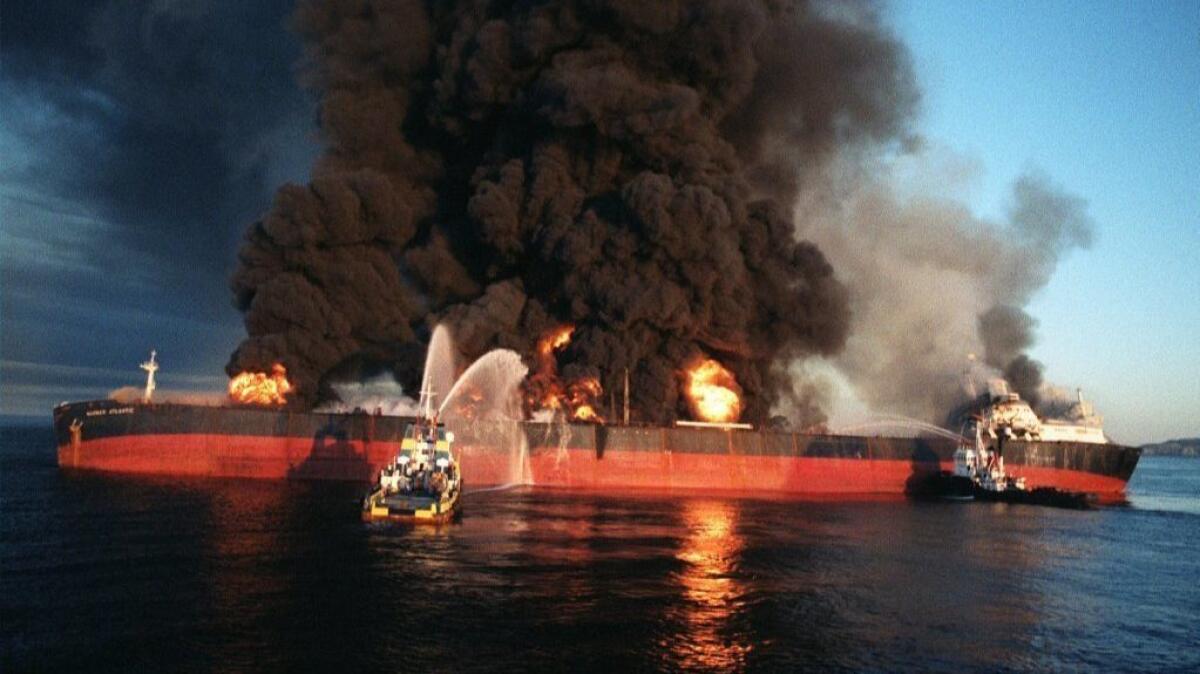
A massive maritime traffic crisis has paralyzed the Strait of Hormuz. Current shipping data and sector reports indicate that hundreds of vessels are now stranded on both sides of the Strait. Tanker counts show at least 150 major oil and LNG carriers at anchor, with broader estimates suggesting approaching 700 tankers. When container ships are included, the total number of affected vessels has reached approximately 700–750.
This is far more than a mere traffic jam. It is a temporary blockage of one of the global energy system’s primary arteries. The Strait of Hormuz is the transit point for roughly 20% of the world’s oil and LNG trade.
The tankers waiting in the Strait essentially mean “energy stored at sea”. While they are loaded with oil and LNG, refineries and energy markets cannot access this supply as long as the ships are unable to reach their destination ports. Within days, this could lead to a physical supply crunch and a price shock.
A second impact is being felt in maritime shipping costs. War risk insurance premiums are rapidly increasing, and some shipping lines are canceling voyages because they cannot find insurance coverage. Freight rates for VLCC (Very Large Crude Carrier) tankers have surged sharply in just a few days. Furthermore, maritime sector sources report that war insurance premiums for vessels linked to the US, UK, and Israel have nearly tripled compared to other ships. This is driving commercial transport costs even higher.
The third and more critical development is Qatar’s decision to halt LNG production and exports. As one of the world’s largest LNG exporters Qatar provides for about 20% of global LNG trade. A cutoff of the gas from Qatar has the potential to trigger a severe energy shock, particularly for Europe and Asia.
In his latest statement, Donald Trump announced a new move to secure maritime trade passing through the Gulf. He said that the US International Development Finance Corporation (DFC) will provide political risk insurance and financial guarantees for ships transiting Hormuz. This marks the first time since the post-World War II era that the US government has deployed a state-backed financial guarantee mechanism to secure global maritime trade. Trump also noted that, if necessary, the US Navy would begin escorting oil tankers through the Strait of Hormuz. These statements are seen as a strong signal that a “new Tanker War” era, reminiscent of the Iran-Iraq Tanker War of the 1980s, could be on the horizon.
With this move, Washington has declared its intent to keep global energy flows open. However, everyone should be surely aware of the threat American warships would face when passing through the 25-mile-wide strait.
Thus, the situation in Hormuz has moved beyond a conventional military clash. Maritime traffic is gridlocked, energy flows are disrupted, and one of the most critical straits in the global trade chain is at risk. If this continues for just a while longer, the consequences will be not regional, but global.
If this crisis persists, the European Union will undoubtedly receive the hardest hit. In a situation where they don’t purchase Russian gas and Qatari gas is now cut off, Europe’s energy crisis would further escalate.
The Kirkuk-Ceyhan pipeline
Founding Secretary General of the Organization of Turkic States, Former Ambassador Halil Akıncı also shared a post on his X account about Israel’s possible next move triggered by the situation in the Strait of Hormuz. Akıncı wrote:
The difficulties arising from oil shipments in the region due to the war and Israel’s lack of confidence in Türkiye may push Israel to take new measures regarding energy security. In the first stage, the revival of the Kirkuk-Haifa pipeline may come to mind. This is because this pipeline passes through territory controlled by Israel’s friends. If this happens, it could also affect the Kirkuk-Ceyhan pipeline!