


By Adem Kılıç, Political Scientist
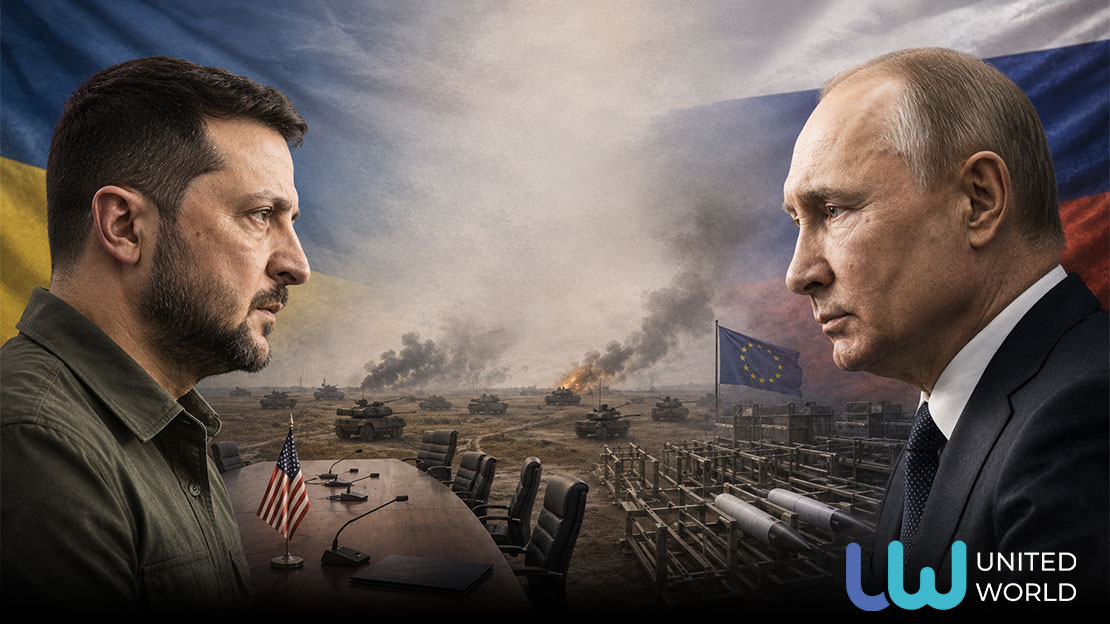
As the Russia-Ukraine war prepares to enter its fifth year, the conflict has moved beyond the classic attrition battle along the front lines that emerged after the first six months and has entered a new phase marked by the rapid expansion of mutual strategic offensives.
The most striking feature of the war is no longer limited to the Russian military’s intense missile and drone attacks on Ukrainian cities or ground operations along the Donbas front.
Ukraine, too, is now seeking to shift the cost of the war to Russia’s interior regions by directly targeting energy facilities, logistics networks, industrial infrastructure, and military production capacity—and it appears to be succeeding to a large extent.
For this reason, an expansion of mutual attacks, as well as the geographical scope and intensity of the fighting, is almost inevitable in the coming days and weeks.
Although actors such as Türkiye are seeking to reinvigorate diplomacy, military preparations on the ground clearly indicate that the parties are preparing not to make concessions at the negotiating table, but to sit down in a position of greater strength.
Mutual attacks are entering a new phase
As someone closely following all recent developments, it is evident that Russia has significantly intensified its attacks aimed at eroding Ukraine’s air defense capabilities in recent times.
In particular, Russia appears to be preparing the front lines for a new major wave of attacks with a barrage of drones, cruise missiles, and ballistic missiles.
In response, Ukraine is pursuing a strategy to prevent the war from remaining a “distant front-line conflict” from Russia’s perspective; to this end, it is carrying out long-range drone attacks on critical targets in Russia, such as energy facilities and oil refineries.
And these realities are significantly altering the nature of the war.
While Russia is trying to keep Ukraine under pressure with its air power and missile capabilities, Ukraine is attempting to erode Russia’s economic and military depth using drones that are lower-cost but have broad geographic reach.
Consequently, the emerging picture shows that attacks and counterattacks are entering an increasingly rapid cycle—one that could escalate even further in the coming days.
A war of attrition on the front lines, a strategic struggle in the rear
Compared to the past five years or so, although these attacks have not led to a rapid and decisive breakthrough on the front lines, this cycle of reciprocal attacks offers clear indications of the war’s future.
It appears that on the fronts now described as “frozen,” Russia will seek to create a new reality by leveraging its superiority in manpower and ammunition.
Ukraine, meanwhile, will seek to make Russian advances as costly as possible while maintaining its defensive lines and to reduce Russia’s war-fighting capacity.
For all these reasons, the current war has now transformed into a struggle—not merely for territorial gains in the classical sense—but to exhaust the opposing side’s military and economic resilience.
The U.S. Wants to Return to the Negotiating Table
As tensions on the ground escalate, it is noteworthy that the U.S. is attempting to re-engage more directly in the diplomatic process.
CIA Director John Ratcliffe’s recent visit to Russia—during which he raised the proposal for a trilateral summit between Trump, Vladimir Putin, and Zelenskyy—indicates that the U.S. seeks to open a new diplomatic channel to prevent the war from escalating uncontrollably.
Ratcliffe’s meetings with high-ranking officials from Russian intelligence agencies also indicate that the process is not being conducted solely through traditional diplomatic channels.
However, the key point to note here is that the U.S. resuming diplomatic efforts does not mean the parties are ready to end the war.
In fact, quite the opposite: based on the data I have presented, it shows that the U.S. is acting out of concern that the current military activity will escalate the war.
After all, the U.S.’s concern is not limited to Ukraine alone.
And the U.S. is taking precautions against the escalation of the war, broader security implications that could spread to Europe, increased tensions between NATO and Russia, and a serious depletion of Europe’s defense stockpiles—all of which could necessitate direct U.S. İntervention.
Another aspect of the CIA director’s engagement with Russia is the message that the war should not be limited solely to the Ukrainian front. A new crisis that could lead to direct conflict between Russia and NATO could upend the entire balance of the current war; therefore, the U.S. is working, on the one hand, to exert diplomatic pressure on Russia and, on the other, to prevent the war in Ukraine from spilling over to NATO’s borders.
Europe’s dwindling stockpile crisis is escalating
From Europe’s perspective, one of the war’s most significant challenges is that the support provided to Ukraine now requires such a vast amount of military resources that it can no longer be sustained by political will alone.
In particular, intelligence reports published in recent days by the Wall Street Journal and the Washington Post reveal that, following the heavy depletion of U.S. stockpiles of air defense missiles and high-precision munitions throughout the war, levels in Europe have fallen below critical thresholds.
Although Europe has begun to increase its defense industry investments at this stage, it is clear that production capacity cannot keep up with the war’s rate of consumption.
Consequently, the problem facing Europe is less one of budget and more one of production time and industrial capacity.
Türkiye’s Role and Strategic Impact
At this stage of the Russia-Ukraine war, Türkiye stands out not only as an actor on NATO’s Black Sea flank but also as virtually the only strategic actor capable of limiting the risk of the war’s expansion.
Türkiye’s most significant advantage lies not only in its ability to maintain communication channels with both Ukraine and Russia throughout the war but also in its unique approach—one that perhaps no one else on the global stage has been able to articulate.
In particular, Türkiye’s policy, which has prevented the war in the Black Sea from escalating into a broader naval conflict, continues to serve as a crucial balancing factor, and recent statements from the Kremlin confirm this reality.
Possible Scenarios for the Coming Weeks
Current developments point less toward preparations for a ceasefire and more toward a period of intensified pressure.
In my view, we should expect Russia to expand its airstrikes and target energy infrastructure more intensively, while Ukraine, in response, is likely to increase its long-range drone attacks on Russia’s energy and logistics networks.
Russia’s strategy of wearing down Ukraine on the battlefield while putting Europe under economic, psychological, and security pressure may become more apparent. The rise in hybrid threats and concerns about sabotage in Europe demonstrates that the war on the Ukrainian front can no longer be assessed independently of the continent’s overall security environment.
Conclusion
In light of all this data, the most significant reality emerging from the Russia-Ukraine war is that the conflict has not yet reached a stage where a mature military and political solution is in sight.
However, in conclusion, the coming days and weeks point to a paradoxical period in which the likelihood of negotiations in the Russia-Ukraine war increases while, at the same time, the war intensifies.