


By Mehmet Enes Beşer
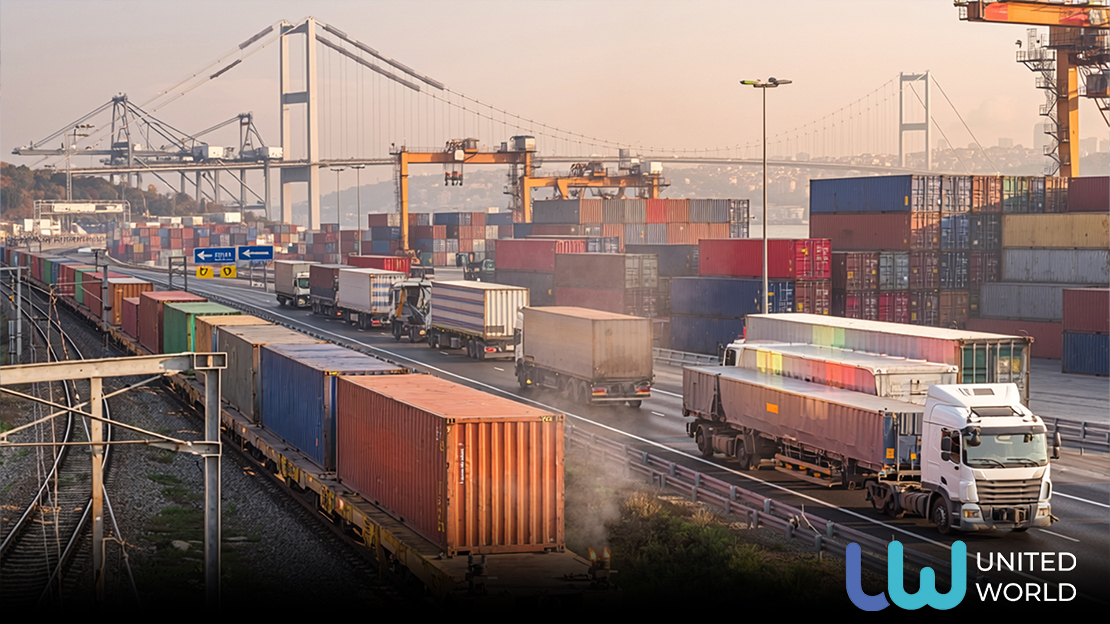
Every time the “New Silk Road” comes up, the conversation always drifts toward trains, ports, highways, and cables. Everyone seems to think it’s just a giant construction project. But honestly, that misses what’s really going on. The real question is who’s in charge—who sets the rules, who gets the upper hand, and who finds themselves dependent as these networks take shape. Sure, the building part is fascinating. But this is really about power quietly changing hands while most people are too busy looking at the cranes and concrete.
So, what’s really happening isn’t just a new map of connections. It’s a battle over logistics sovereignty.
That means, who gets to decide how things move—goods, data, energy—and under what rules? Who can change or reroute trade when things get tense? Who sets the standards? Who collects the fees and controls the choke points? And who’s at risk of having someone else pull the strings when the routes close? In a world full of sanctions, tariffs, and big policy moves to lower risk, having this kind of control isn’t just a technical footnote anymore. It’s straight-up power.
Türkiye sits at the center of this question. Not because of rhetoric about “bridges between continents,” but because of hard geography: the junction where Europe meets Asia and the Middle East, where Black Sea and Mediterranean networks collide, where overland routes meet maritime routes, and where energy and trade corridors cross paths. Türkiye’s position gives it an unusual advantage in the new corridor era. But it also carries a risk: becoming a transit territory rather than a value-adding logistics power.
That distinction matters more than many policymakers admit. Transit territory is useful, but it is also replaceable. Value-adding logistics power is harder to bypass.
This is the strategic shift Türkiye has to internalize: logistics is no longer neutral infrastructure policy. It is a battlefield of economic geography. It shapes where factories are built, which markets become accessible, which standards become “normal,” and which states gain leverage when crises disrupt supply chains.
You can see this clearly in the behavior of today’s major players.
People usually talk about China’s Belt and Road Initiative as just a debt trap or some big campaign about connecting the world. But honestly, the real idea behind it is about controlling how things move. China’s building routes to avoid bottlenecks, pushing its own standards through its projects, and getting its companies woven into the infrastructure and rules of global trade. India sees this too—its own corridor projects show it understands that you need connections, not just military muscle, to have real influence. Over in the Gulf, when they invest in big connectivity projects, it’s more than just a backup plan for life after oil. They’re trying to make themselves central players in trade and finance between Europe and Asia. Take Europe—it’s gone from trusting in open markets to treating supply chains as a battleground. Now it’s all about having backups and control, not just efficiency.
All of this adds up, and you see a new world taking shape. These corridors aren’t just lines on a map for shipping goods. They’re channels for moving power.
Now, for Türkiye, the big question isn’t, “Can we get in on this?” Of course, it can. It already does. The real question is whether Türkiye can influence these corridors—have a say in the game. That’s what “logistics sovereignty” is about. It’s not just letting the routes cross your territory, it’s about shaping the rules—deciding how things operate, where value gets created, which companies get stronger, and how the country can use its position in the long run.
But you look at Türkiye’s debates about infrastructure, and they’re still pretty limited. It’s all about numbers: How many kilometers of railway? How much port capacity? How many new roads? Sure, those things matter. They’re just not enough. The bigger question is: What kind of logistics country does Türkiye actually want to be?
A smart strategy starts at the ports. Ports aren’t just openings for goods—they’re cards to play. The countries that run maritime logistics don’t just ship things—they set the standards, control the connections, determine prices, and decide which routes matter. For Türkiye, building up its ports isn’t just about moving more stuff; it’s about gaining leverage in a region where the Mediterranean, the Black Sea, and the Red Sea are getting more and more politicized.
And then, of course, rail. Rail is key to those big Eurasian corridors because it gives countries another option besides crowded sea routes, and for some cargo, it’s just faster. Türkiye’s position on these rails could be huge—but only if those rails fit into a bigger plan for industry. If a railway’s just passing through, it doesn’t help you much. But if it anchors new factories, logistics parks, suppliers—then you’re actually making things happen. If connections just run through you, you’re a hallway. If they build up your own clusters, you’re a workshop. And that’s the difference Türkiye has to think about.
Customs modernization is even more decisive, because in the corridor era, time is power. A country can have world-class infrastructure and still be uncompetitive if goods get stuck in administrative friction. Logistics sovereignty is partly about reducing dependency on others’ standards and processes; that requires building credibility at the border—digitized procedures, predictable inspection regimes, interoperable documentation, and faster clearance. The goal isn’t speed for its own sake. It’s to become the route that firms trust under pressure.
But logistics sovereignty is not achieved by hardware alone. It requires industrial clustering around transport networks—deliberate planning to create value at nodes. Logistics becomes strategic when it brings factories, services, and technology with it. Türkiye’s advantage is that it already has manufacturing depth: automotive, machinery, textiles, chemicals, white goods, food processing. The task is to tie these sectors more systematically to corridor infrastructure so that Türkiye captures more of the value chain rather than merely renting out geography.
This is where “value-adding logistics power” becomes concrete. It means building specialized zones around ports and rail hubs with reliable energy, workforce training, and supplier development. It means becoming attractive not only for moving goods, but for assembling, packaging, testing, processing, and servicing them. This is really about turning Türkiye into a place where supply chains can shift fast when the world throws a curveball. These days, supply chains are all over the place, and being able to adapt quickly sets you apart from the rest.
But it’s not just about economics. Diplomacy plays a big role, because this whole corridor race isn’t just about building things or moving goods. It’s about negotiation. Projects from all directions—China, the Gulf, India, Europe, and plans weaving through Central Asia and the Caucasus—are all crowding in and crossing paths. That’s not going to change anytime soon. Türkiye needs diplomatic intelligence to read these projects not as abstract geopolitics but as circulation politics. Where do routes compete? Where do they complement? Which standards are being exported? Which financing terms create dependency? Which projects will be prioritized in a crisis?
A logistics sovereignty strategy demands that Türkiye build the internal capacity to answer these questions quickly and professionally. This isn’t only the job of transport ministries. It requires coordination across finance, trade, foreign policy, industry, and security institutions. It requires working with the private sector, because logistics power is ultimately operational—built by companies that move goods and manage networks.
There is also a trap Türkiye must avoid: mistaking corridor participation for autonomy. A corridor can increase sovereignty if it diversifies options. But it can reduce sovereignty if it locks a country into one route, one financier, one standard ecosystem. The point of logistics sovereignty is to build optionality—multiple routes, multiple partners, multiple governance channels—so that no single actor can treat Türkiye’s connectivity as a tool of leverage.
This is why the concept matters. It helps explain why infrastructure decisions have broader national consequences. A port contract is not just a contract. It shapes future bargaining power. A customs rule is not just a rule. It determines whether Türkiye becomes a trusted node or a risky detour. A rail investment is not just a rail investment. It defines which regions industrialize, which firms upgrade, and which networks Türkiye becomes dependent on.
The New Silk Road era will reward states that understand this. The states that control circulation—routes, standards, and the governance of logistics—will shape the future economic geography of Eurasia. They will also gain political leverage in moments of crisis, when supply chains become weapons and chokepoints become negotiation tables.
Türkiye’s position gives it unusual opportunities. But those opportunities will not convert themselves into power. Türkiye has a real shot at becoming a key logistics hub, but that only happens if the country stops seeing logistics as just another engineering problem. It needs to turn logistics into a core national strategy. That means investing in ways that actually boost local industries, turning borders into assets—not just checkpoints—using diplomacy that supports smarter trade routes, and always keeping an eye on creating value, not simply moving things from point A to B. In the next ten years, it’s not about who puts down the most asphalt.
The real race is about who uses logistics to gain the biggest strategic edge. It will be over who governs the movement those roads make possible. That is the politics of logistics sovereignty. And Türkiye—if it chooses—can be one of the states that shapes it rather than being shaped by it.