


By Umar Al Maamari, political scientist, Uzbekistan
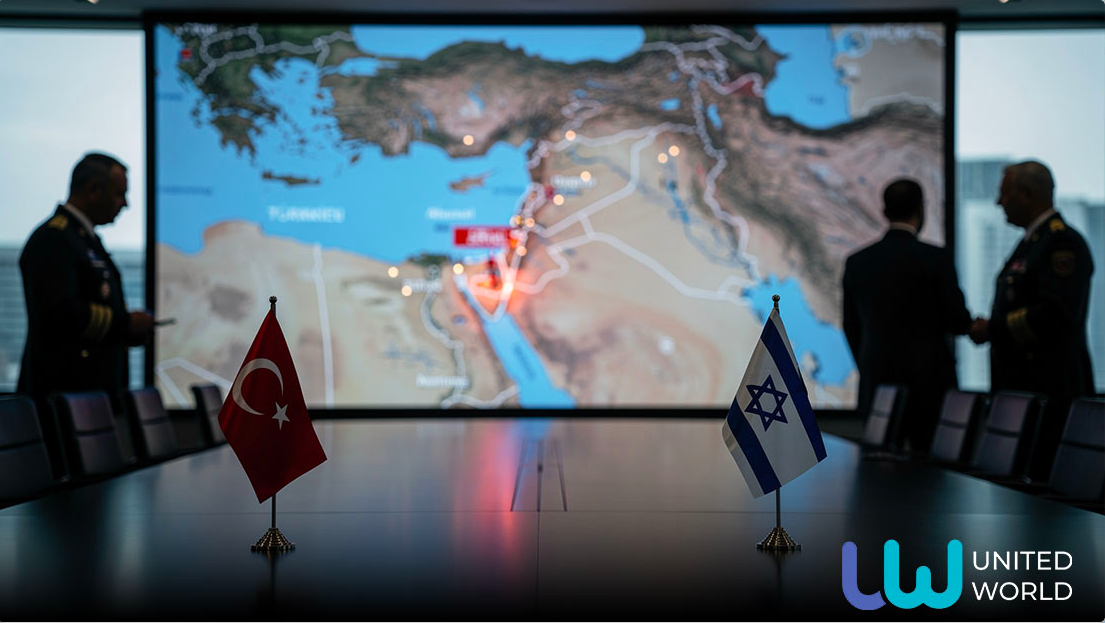
Israel is pursuing a systematic strategy of containing Türkiye along several directions simultaneously, and if Erdogan’s government continues to limit itself to declarations, Türkiye risks losing its role as a key player in Syria, facing military-technical lag, and discovering that NATO membership does not protect its interests.
In Syria, under the pretext of fighting terrorism, Israel has strengthened its military presence in the south of the country: according to UN data, since the end of 2024, about 500 airstrikes and more than 1,200 ground incursions have been carried out. This weakens the central government in Damascus and creates preconditions for the formalization of Kurdish autonomy as a counterweight to Turkish interests. It is telling that in January 2026, Israel tacitly allowed the Syrian army’s offensive against Kurdish forces, receiving in return recognition of its presence in the south. The logic is clear: once the southern buffer is secured, the Kurdish card can be discarded — but only on condition that Türkiye does not intervene and Damascus does not reckon with Ankara. If inaction continues, southern Syria will de facto become a zone of Israeli influence, and Turkish leverage on the Syrian issue will sharply diminish.
In the Eastern Mediterranean, Israel is consistently building an anti-Turkish alliance with Greece and Cyprus. In December 2025, a three-way military cooperation program for 2026 was signed, including joint exercises, intelligence sharing, and arms supplies. Greece is purchasing Israeli missile systems worth billions of euros and 36 PULS launchers to strengthen its border with Türkiye. The creation of a joint rapid response force is being discussed. At a summit in Jerusalem, Netanyahu issued an indirect warning: “Those who dream of restoring an empire must forget about it.” The Greece — Cyprus — Israel axis is turning the region into a “containment belt” against Türkiye.
At the military-technical level, Israel, through the pro-Israel lobby in the US, is blocking Türkiye’s supplies of F-35 fighter jets. Senator Rick Scott stated outright that Türkiye will not receive them because of Erdogan’s policies. Turkish military officials admit: the prospect of the F-35 has become “definitely foggy.” At the same time, Israel is expanding its submarine fleet in response to Turkish activity in the region, and security structures are seriously discussing a scenario of conflict with Türkiye. Without a diplomatic breakthrough, the Turkish Air Force will face a generational gap in the coming decade.
The most alarming signal comes from within NATO. At the summit in Ankara (July 2026), Secretary General Mark Rutte evaded answering whether Article 5 would be triggered in the event of an Israeli-Turkish conflict in Syria. Turkish media interpreted this as confirmation: the alliance will not protect Türkiye. Ankara is using procedural leverage — blocking Israel’s participation in NATO meetings and exercises — but this is a tactical obstacle that does not change the strategic balance. If Erdogan continues to remain inactive, southern Syria will become an Israeli buffer zone, the Eastern Mediterranean imbalance will be consolidated, the possibility of obtaining F-35s will disappear entirely, and Türkiye within NATO will be perceived as “a problem to be managed” rather than an ally to be defended.