


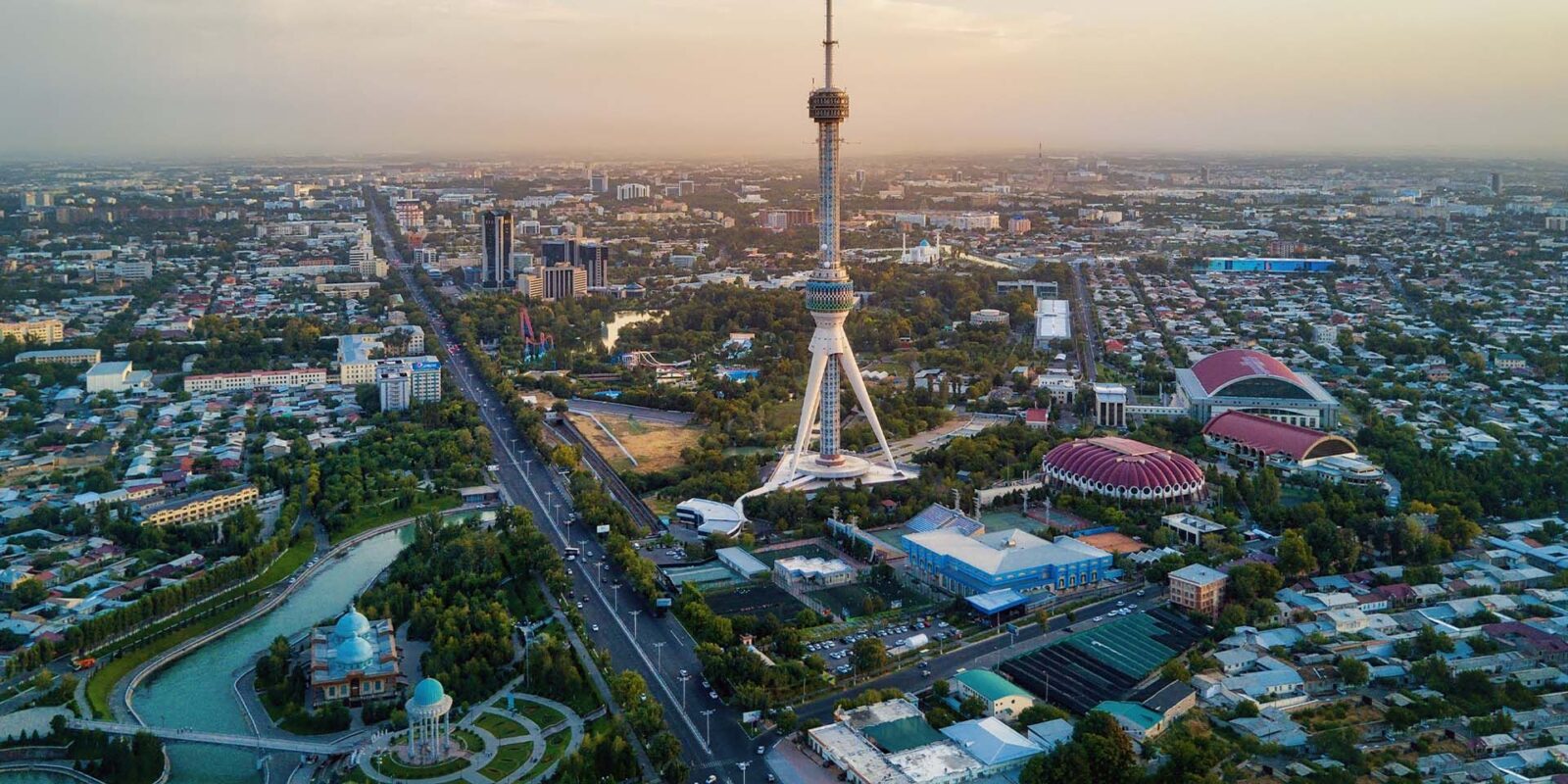
Impressions from a visit to Uzbekistan.
Impressions from a visit to Uzbekistan.
For much of the past three decades, Central Asia has been viewed through the prism of geopolitical competition, with major powers seeking influence over a region strategically located at the crossroads of Europe, Asia, and the Middle East. Yet amid this contest for access, markets, resources, and transport corridors, Uzbekistan has increasingly positioned itself not as a battleground for rival interests, but as a bridge connecting regions and economies. The atmosphere inside the Tashkent International Investment Forum reflected a region undergoing a profound transformation. More than a showcase for investment opportunities, the gathering highlighted Uzbekistan’s growing ambition to link Central Asia with the Gulf, turning geography into an asset and regional connectivity into a driver of economic cooperation, shared prosperity, and long-term stability.
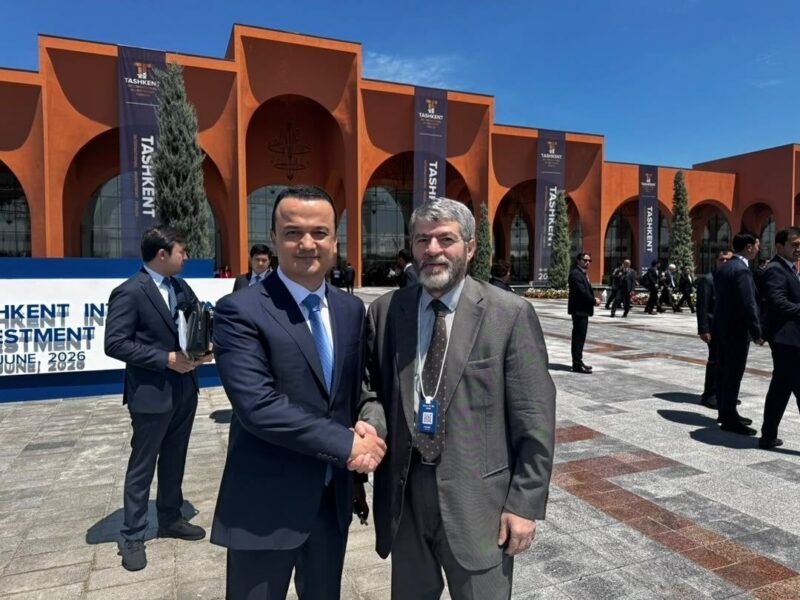
A series of conversations with senior government officials, including leaders responsible for investment, trade, culture, tourism, and urban development, offered deeper insight into how Tashkent views its evolving regional role.
Discussions with ministers and senior policymakers—including officials overseeing investment, the creative economy, cultural diplomacy, and construction and housing—revealed a common vision that extends well beyond economic growth.
From modern infrastructure and new urban centers to cultural outreach, tourism development, and cross-border investment, Uzbekistan is pursuing a comprehensive strategy aimed at transforming the country into a gateway between Central Asia and the Gulf.
Their perspectives underscored a broader national ambition: to position Uzbekistan not as an arena for geopolitical competition, but as a platform for connectivity, dialogue, and mutually beneficial partnerships. The message emerging from these conversations was clear—Uzbekistan seeks to convert its strategic location, reform agenda, and growing international engagement into a foundation for regional cooperation and long-term prosperity.
A Larger Story
Government ministers, business leaders, investors, and development officials moved between packed conference halls discussing projects worth billions of dollars, while exhibition spaces showcased everything from renewable energy and artificial intelligence to industrial manufacturing and transport infrastructure.
On the surface, the gathering appeared to be another international investment event. Yet behind the announcements, memoranda, and investment pledges, a larger story was taking shape. Central Asia, long regarded as a remote corner of the former Soviet space and a supplier of raw materials, is increasingly emerging as one of the world’s most strategically significant economic regions. The strong presence of American, Russian, Chinese, Gulf, European, and Asian delegations in Tashkent underscored a growing reality: a region once viewed as peripheral is becoming increasingly central to discussions about trade, investment, energy security, and global supply chains.
The Image is Rapidly Changing
Only a few years ago, Central Asia was commonly described as a region struggling to overcome the legacy of Soviet rule while relying heavily on the export of commodities and natural resources.
Today, that image is rapidly changing. The growing importance of Central Asia stems from its unique position at the crossroads of trade and energy routes linking Asia, Europe, and the Middle East, as well as its vast natural resources and expanding consumer markets. China sees the region as a critical pillar of its Belt and Road Initiative. Russia continues to regard it as an area of strategic importance and longstanding influence. The United States and Europe increasingly view it as an important partner for diversifying supply chains, securing access to critical resources, and promoting economic resilience. Meanwhile, Gulf countries have significantly expanded investments in infrastructure, renewable energy, logistics, and real estate across the region. As a result, Central Asia has become both a platform for economic cooperation and an arena where major powers seek to expand their influence.
Mirziyoyev’s message
At the center of this transformation stands Uzbekistan. President Shavkat Mirziyoyev used his opening address at the forum to present an ambitious vision for his country and the wider region. He argued that Central Asia should no longer be viewed merely as a transit corridor connecting East and West, but rather as a dynamic economic space capable of generating growth, attracting investment, and shaping regional development. Mirziyoyev’s remarks reflected growing confidence that Uzbekistan can position itself as one of the leading economic hubs of Central Asia and as a bridge connecting the economies of Asia, the Middle East, and Europe. His message resonated with many participants who see the region entering a new phase of development driven by economic reforms, expanding regional cooperation, and rising international interest.
The significance of Mirziyoyev’s message became even clearer when viewed alongside the geopolitical signals emerging throughout the forum. It was impossible to ignore the fact that Central Asia has become a point of interest, if not outright competition, among the world’s leading powers. Russian Prime Minister Mikhail Mishustin used his participation in the forum to emphasize the strength of the economic and strategic partnership between Russia and Uzbekistan. He highlighted growing cooperation in trade, energy, industry, and infrastructure while stressing that bilateral relations continue to expand despite international challenges. Moscow’s message was clear: Russia remains committed to maintaining a central role in the economic future of Central Asia and regards its relationship with Uzbekistan as a cornerstone of regional stability and development.
Yet the Russian message was only one part of the story unfolding in Tashkent. Just hours before Mirziyoyev’s speech, the 2026 Uzbekistan–United States Annual Business Forum brought together American officials and business leaders seeking to strengthen Washington’s economic presence in the region. Among the most prominent participants was John Jovanovic, president and chairman of the Export-Import Bank of the United States. His remarks revealed a growing American determination to deepen engagement with Central Asia. Jovanovic argued that cooperation between Washington and Tashkent could help transform Central Asia into a more independent economic region while emphasizing the importance of secure supply chains and the opportunities created by a market approaching 100 million people. He observed that Central Asia had been neglected for years but was now receiving serious attention from American policymakers and businesses alike. The large number of American companies participating in the forum reflected that renewed interest.
“Price” and “Value”
One of Jovanovic’s most striking comments concerned what he described as the difference between “price” and “value.” While the remark was delivered in economic terms, many participants interpreted it as an indirect comparison between American and Chinese approaches to international investment. Yet reactions among local business leaders highlighted the complexity of the regional landscape. One Uzbek businessman quietly remarked that while American officials were discussing opportunities, Chinese companies had spent years investing in infrastructure, building transport networks, and establishing a tangible economic presence throughout Central Asia. His observation reflected a broader reality. China’s influence remains deeply embedded in the region through investments connected to the Belt and Road Initiative and a growing network of commercial partnerships that continue to shape economic development across Central Asia.
Despite these competing influences, Uzbekistan appears determined to maintain a strategy of diversification rather than dependence. During the Uzbek-American Business Forum, Uzbekistan’s Minister of Investment, Industry, and Trade, Laziz Kudratov, delivered a series of messages designed to attract greater American participation. He announced the signing of an economic platform intended to facilitate financing for major projects and proposed the establishment of a special economic zone dedicated to American companies. More importantly, he presented the United States with an opportunity to become what he described as a strategic industrial partner. Kudratov identified four key sectors for potential cooperation: rare earth minerals, textiles, fertilizers, and pharmaceuticals. These industries have become increasingly important as countries seek to secure supply chains and expand manufacturing capabilities in strategic sectors. The proposals reflected Uzbekistan’s broader effort to position itself as an industrial and investment hub rather than simply an exporter of raw materials.
The role of Central Asia
What became increasingly clear throughout the forum was that Uzbekistan is attempting to redefine not only its own economic future but also the role of Central Asia in the international economy. Discussions no longer focused exclusively on transit routes, commodity exports, or geopolitical rivalries. Instead, participants spoke about industrial production, advanced manufacturing, renewable energy, logistics networks, technological innovation, and regional integration. The recurring theme was that Central Asia is seeking to move beyond its traditional role as a bridge between larger economies and establish itself as an economic destination in its own right. This ambition was reflected repeatedly in Mirziyoyev’s remarks and in the presentations delivered by ministers, investors, and international companies. The language of the forum suggested a region increasingly confident in its ability to generate growth rather than simply facilitate it.
The economic figures presented by the Uzbek president reflected the scale of these ambitions. Mirziyoyev noted that Uzbekistan attracted approximately $35 billion in investments during the past year while exports reached around $27 billion. Looking ahead, he reaffirmed the government’s goal of doubling the size of the economy and increasing gross domestic product to nearly $200 billion by 2030 through continued reforms, industrial modernization, and private-sector development. He also highlighted the importance of expanding partnerships with major international economic actors, particularly China and Saudi Arabia. China remains one of Uzbekistan’s largest trading and investment partners, especially in infrastructure, manufacturing, logistics, and technology. Saudi Arabia has emerged as a major contributor to Uzbekistan’s economic transformation through investments in renewable energy, infrastructure, finance, and sustainable development projects. These partnerships, Mirziyoyev argued, demonstrate how international cooperation can support long-term growth while strengthening regional connectivity.
Role of the Gulf
The growing role of Gulf countries was visible throughout the forum. Delegations and investors from across the Arab world participated actively in discussions, reflecting increasing economic links between Central Asia and the Middle East. Among the most prominent investors is Saudi Arabia’s ACWA Power, which has become one of the leading foreign investors in Uzbekistan’s renewable energy sector. John Zaidi, head of ACWA Power’s Uzbekistan branch, described the country as a long-term strategic partner rather than simply an investment destination. He noted that the company’s investments, estimated at approximately $20 billion, reflect strong confidence in Uzbekistan’s future and its ability to become a regional leader in clean energy development. According to Zaidi, Uzbekistan has successfully combined economic reforms with an ambitious expansion of renewable energy projects, creating a model that continues to attract international investors.
Hormuz disruptions
Yet alongside the optimism, discussions in Tashkent revealed growing concern about developments beyond Central Asia’s borders. Participants repeatedly pointed to tensions in the Middle East as a reminder that economic opportunities and geopolitical risks often travel together. Oybeck N. Khalilov, president of the American Chamber of Commerce in Uzbekistan, noted that uncertainty surrounding tensions involving Iran, Israel, and the United States had already affected regional calculations. He pointed to rising insurance costs and growing concerns about shipping through the Strait of Hormuz, arguing that disruptions affecting one of the world’s most important maritime corridors inevitably influence investors and businesses throughout Central Asia. His remarks reflected a broader reality: as Central Asia becomes more integrated into global markets, it also becomes increasingly exposed to global shocks. The region’s growing connection to the Middle East and Gulf economies creates new opportunities, but it also increases vulnerability to instability elsewhere.
Another notable feature of the forum was the strong representation from neighboring Central Asian states. The presence of senior leaders and officials from Kazakhstan, Kyrgyzstan, Tajikistan, and Turkmenistan reflected a growing recognition that regional cooperation may be one of the keys to future prosperity. While there is often discussion about competition between Uzbekistan and Kazakhstan, the region’s two largest economies, many participants argued that such competition is increasingly becoming a source of collective strength rather than division. Kazakhstan continues to benefit from its vast natural resources and strategic location, while Uzbekistan has focused on economic reforms, industrial diversification, tourism, and investment attraction. Together, they are emerging as complementary centers of growth whose success is helping to drive broader regional development and integration.
Strategic Balance
The question raised repeatedly during the forum was whether Central Asia can sustain this momentum while navigating an increasingly complex international environment. The region’s future will depend not only on investment flows and economic reforms but also on its ability to maintain strategic balance amid growing competition among major powers. Uzbekistan’s leadership appears convinced that the opportunities outweigh the risks. By cultivating partnerships with Russia, China, the United States, Saudi Arabia, and its Central Asian neighbors simultaneously, the country is pursuing a strategy designed to maximize economic opportunities while preserving strategic flexibility. Whether that approach succeeds will help determine not only Uzbekistan’s future but also the future trajectory of Central Asia itself. For the first time in decades, the region is no longer merely a crossroads through which global forces pass. It is increasingly becoming a destination in its own right and a region whose choices may shape wider economic and geopolitical developments across Eurasia.