


Exclusive Analysis from Experts of Both Countries
Exclusive Analysis from Experts of Both Countries
By Tehran Tapdigov, from Baku / Azerbaijan
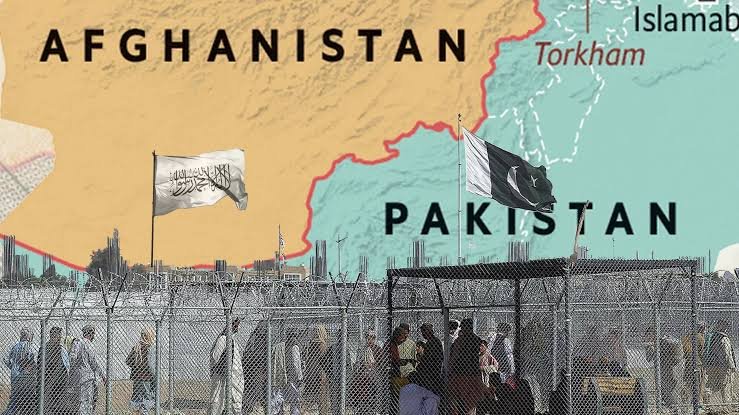
On June 28, the Pakistani military carried out air strikes and cross-border operations in Afghanistan’s eastern provinces of Paktia, Paktika, and Kunar. Islamabad stated that the operations targeted hideouts of Tehreek-e-Taliban Pakistan (TTP) and affiliated groups responsible for carrying out terrorist attacks inside Pakistan. Kabul, however, announced that dozens of civilians had been killed as a result of the strikes. The United Nations also confirmed civilian casualties.
On June 29–30, the Taliban administration described Pakistan’s air strikes as “an act of aggression against sovereignty” and declared that a response would follow. Diplomatic tensions between the two countries escalated further. On June 30, according to the Pakistani military, the Taliban launched four unmanned aerial vehicles (UAVs) across the border toward Balochistan. Pakistan stated that its air defense system successfully shot down all four drones. Islamabad viewed the incident as further evidence of the Taliban’s continued support for terrorist groups.
The Inter-Services Public Relations (ISPR), the media wing of the Pakistan Armed Forces, issued a strong statement emphasizing that Pakistan prefers peace but that any attack or provocation originating from across the border would be met with a “swift, decisive, and overwhelming response” under “Operation Ghazab-lil-Haq.”
Speaking to uwidata.com, Pakistani political analyst and founder of the Young Diplomacy Forum, Musawar Hameed Tanoli, and Afghan political scientist based in France, Naim Asas, shared their assessments of the situation.
Naim Asas noted that the confrontation between Afghanistan and Pakistan has entered a new and more dangerous phase, transforming a longstanding bilateral dispute into a serious regional security crisis.
“Since late February 2026, repeated military exchanges, including Pakistani air strikes and Taliban retaliatory measures, have demonstrated that the conflict is no longer confined to diplomatic disagreements. The humanitarian consequences have also been severe. According to the United Nations, more than 370 Afghan civilians were killed during the first quarter of 2026.”
At the center of the crisis are Pakistan’s accusations that Tehreek-e-Taliban Pakistan (TTP) continues to use Afghan territory as a base for attacks against Pakistani security forces. The Taliban authorities categorically reject these allegations and maintain that Afghan territory is not being used to threaten neighboring states.
“Instead, Kabul accuses Pakistan of violating Afghanistan’s sovereignty through cross-border military operations and thereby further undermining regional stability. However, the current confrontation cannot be explained solely by the TTP issue. Its roots lie in deeper historical factors. The unresolved dispute over the Durand Line has remained one of South Asia’s most contentious geopolitical issues for more than a century. This historical disagreement has been reinforced by decades of strategic mistrust, competing security doctrines, and divergent national interests.”
According to Asas, Afghanistan’s expanding regional engagement, particularly its growing contacts with India, has further complicated Islamabad’s strategic calculations. These structural realities help explain why ceasefire initiatives promoted by China, Qatar, and Türkiye have so far resulted only in temporary reductions in violence. Without addressing the political foundations of the dispute, diplomatic agreements are unlikely to produce long-term stability.
“Whether the Afghan authorities will take decisive steps toward peace remains uncertain. It is important to recognize that external pressure often strengthens domestic political cohesion rather than encouraging concessions. At the same time, Pakistan continues to view TTP activities as an unacceptable threat to its national security, which limits its willingness to compromise.”
For his part, Musawar Hameed Tanoli stated that Pakistan remains committed to maintaining peace and stability in the region. However, peace cannot be achieved as long as terrorist groups continue to receive sanctuary and support across the border.
“On June 30, the Afghan Taliban regime launched four rudimentary drones across the border into Balochistan as part of its patronage and support for terrorist organizations operating from territories under its control. The hostile aerial platforms were immediately detected by Pakistan’s robust air defense system. Demonstrating high operational readiness, Pakistan’s security forces successfully neutralized all four incoming drones using advanced countermeasures. As a result, the malicious attempt was completely thwarted.”
According to Tanoli, such actions by the Afghan Taliban regime are intended to divert attention from the hardships endured by the Afghan people under its repressive rule.
“Rather than resorting to provocative actions and baseless statements, the Afghan Taliban should abandon its support for terrorism and adhere to the principles of peaceful coexistence. Pakistan has repeatedly stated that it prefers dialogue and peaceful cooperation in its relations with Afghanistan. However, any act of aggression or cross-border provocation will be met with an appropriate response. Should the Afghan Taliban continue such hostile actions, it will receive a befitting response and bear full responsibility for all ensuing consequences. The Pakistan Armed Forces remain fully vigilant and capable of defending every inch of the homeland. Any threat or provocation against our sovereignty and the safety of our people will continue to be met with a swift, decisive, and overwhelming response under Operation Ghazab-lil-Haq.”