


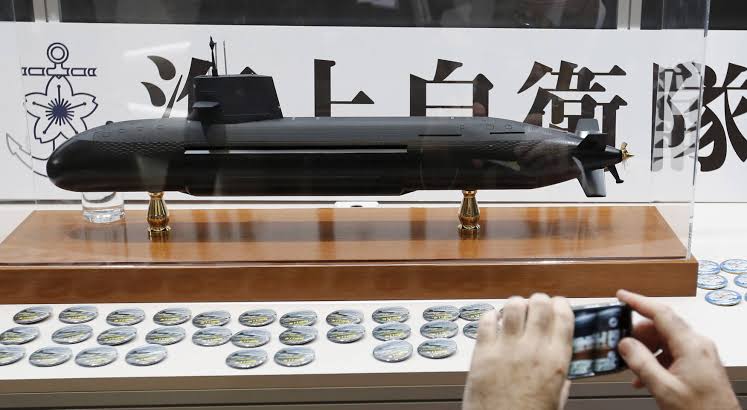
Tearing off the façade of a “peaceful nation” and making the “defense industry” a pillar of growth strategy
Tearing off the façade of a “peaceful nation” and making the “defense industry” a pillar of growth strategy
By Hiroshi Yoshizawa
Ban on export of lethal weapons also lifted
On April 21, 2026, the Japanese government revised the “Three Principles on Transfer of Defense Equipment and Technology” and their “Operational Guidelines” through a Cabinet decision and the National Security Council (NSC). The revised “Three Principles” now explicitly state that “increasing the number of like‑minded countries that operate common equipment, and maintaining and expanding a robust defense industry, is significant in securing domestic production capacity to support the sustained combat capability necessary in times of emergency,” thereby aiming to strengthen the defense industry on the premise of Japan’s participation in war.
Based on this revision, the previous five‑category restriction in the Operational Guidelines—limiting export purposes to “rescue, transport, vigilance, surveillance, and minesweeping”—was removed, making the export of lethal weapons possible in principle.
The Takaichi Sanae administration has thus easily cast aside the constraints of Article 9, Paragraph 2 of the Japanese Constitution—constraints that had barely functioned even under the Abe Shinzo administration, despite its earlier relaxation of the “Three Principles on Arms Exports,” a superficial foreign policy intended to present postwar Japan as a “peaceful nation.” That earlier relaxation had been achieved by rephrasing “weapons” as “defense equipment” and “exports” as “transfers.”
Despite the fundamental nature of this policy shift, the only justification offered is the “increasingly severe security environment,” a phrase repeated since 2013. Yet, as before, there is absolutely no concrete explanation of how the security environment has become “increasingly severe.” Moreover, because the revision is not a law, there was no debate in the Diet, and in practice the Diet had no involvement whatsoever. After the decision was made by the four core ministers of the NSC (Prime Minister, Chief Cabinet Secretary, Minister of Foreign Affairs, and Minister of Defense), the Diet was only “notified” retrospectively in writing to all members. Even when it was pointed out that in the United States, arms exports exceeding a certain amount require notification to Congress and review, Takaichi brushed the criticism aside, stating, “Such notification and review have never been conducted before.”
Ostensibly, arms‑export destinations are limited to countries with which Japan has signed a “Defense Equipment and Technology Transfer Agreement” (currently 17 countries, with more expected to be added). However, exports to third countries are permitted through these agreement partners. Furthermore, while exports to “countries where war is taking place” are prohibited in principle, an exception is allowed if deemed to fall under “special circumstances.” In short, this amounts to a complete lifting of the ban, enabling Japan to sell domestically-produced weapons anywhere in the world. The explicit use of the word “weapons” in this context symbolizes the Takaichi administration’s brazenness in tearing off the façade of Japan as a “peaceful nation” and discarding the remaining constraints of Article 9 of the Japanese Constitution.
Defense companies’ sales surge dramatically
On the day after April 21, the stock prices of Terra Drone and ACSL—companies developing drones—surged. Meanwhile, according to a report on 2024 sales figures of global defense companies published by the Stockholm International Peace Research Institute (SIPRI), total sales of the world’s top 100 defense‑related companies rose 5.9% year‑on‑year to a record $679 billion (approximately 106 trillion yen). However, the combined sales of the four Japanese companies included in the top 100 (Mitsubishi Heavy Industries, Kawasaki Heavy Industries, Fujitsu, and Mitsubishi Electric) increased by a staggering 40% year‑on‑year to $13.3 billion (approximately 2 trillion yen). Mitsubishi Heavy Industries, the largest among them, now has a market capitalization of 15 trillion yen—13 times what it was five years ago.
The poorly planned increase in military spending—43 trillion yen over five years—decided according to predetermined figures following the 2022 revision of the “Three Security Documents,” is enriching the military industry. The complete lifting of the arms‑export ban will only accelerate this trend.
Transformation into a “growth industry”
Japan’s military industry has, from the outset, lacked international competitiveness. Because its only customer was the Self‑Defense Forces, companies could not achieve economies of scale, resulting in low profit margins. Moreover, the assumption of “no war” meant that specifications were too lax and not internationally competitive. As a result, the military industry was inevitably regarded as a “declining industry,” and companies withdrew one after another. However, a transformation is now underway.
Last November, at the first meeting of the “Japan Growth Strategy Headquarters,” headed by Takaichi and composed of all cabinet ministers, the government designated 17 sectors as targets for “crisis‑management investment” and “growth investment.” These sectors are the focus of the “responsible and proactive fiscal policy” and the “push, push, push, push, push the growth switch” slogan emphasized in her policy speech on February 20, 2026, following the landslide general‑election victory. The “defense industry” is positioned squarely within this framework.
Shift to a “wartime economy”
Of course, this trend is not unique to Japan. A typical example is the Federal Republic of Germany, which, like Japan, is a “defeated empire” in WWII and has cultivated an even more elaborate superficial diplomacy as a “peaceful nation.” Its military budget this year is an astonishing 17 trillion yen (€108 billion), and it has publicly stated that it is even considering the full reinstatement of conscription in the future to strengthen its federal army. Furthermore, in March of this year, the EU announced a plan to secure up to 800 billion euros (approximately 147 trillion yen) to strengthen security, and as part of this, established “Security Action for Europe (SAFE),” a loan program of up to 150 billion euros to support local industries.
Prior to this, in November 2024, Japan and the EU formed a security and defense partnership in the Indo‑Pacific region. While Japan can participate in jointly developed products with the EU as long as the proportion of Japanese‑made components remains within 35%, Japan is now moving toward full participation in the aforementioned SAFE program—along with Canada, the UK, South Korea, and Turkey—in order to increase that proportion and receive financing. On April 17 of this year, the EU and Japan held their first “Defense Industry Dialogue” in Brussels to strengthen cooperation in the defense sector, clearly outlining a policy to reinforce the industrial base through coordination in the development and production of defense equipment.
The so‑called “Western” countries are shifting significantly toward a false “wartime economy,” with Russia and China as potential adversaries. Japanese conservative forces and business circles undoubtedly see this as a once‑in‑a‑lifetime opportunity for a fundamental transformation of Japan’s social order and for constitutional revision. We must not overlook the fact that this institutional reform is a crucial steppingstone toward that goal.
Published in Shiso-Undo – June 2026, No. 187b