


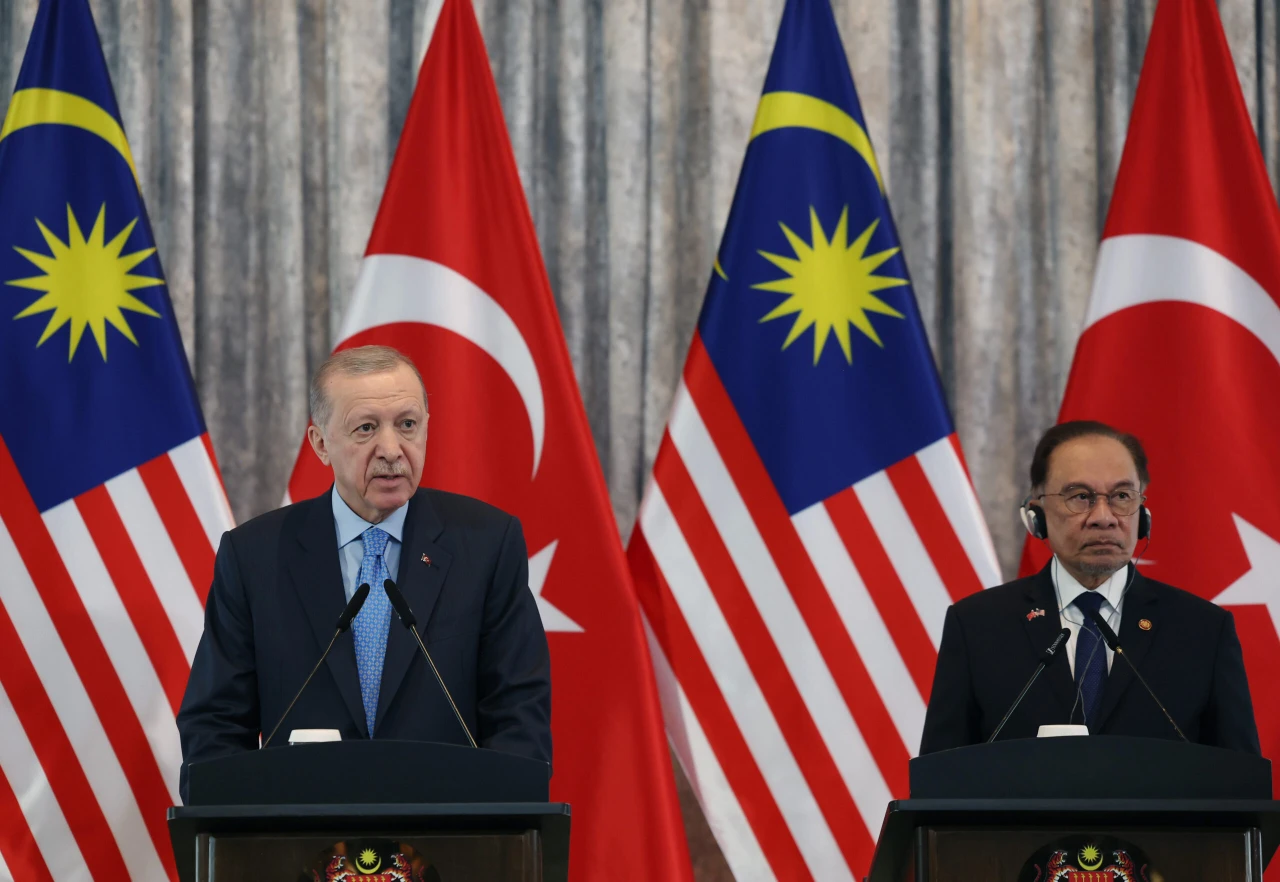
In the multipolar age, power belongs to countries that can organize complexity—financial channels, standards, skills, supply chains, and diplomacy—into something durable. Türkiye and Malaysia can do that together, but only if they stop treating cooperation as symbolism and start treating it as production.
In the multipolar age, power belongs to countries that can organize complexity—financial channels, standards, skills, supply chains, and diplomacy—into something durable. Türkiye and Malaysia can do that together, but only if they stop treating cooperation as symbolism and start treating it as production.
By Mehmet Enes Beşer
Ten years back, it was simple to sum up Türkiye–Malaysia relations with diplomatic niceties. Things were warm, everyone acted respectfully, and sometimes there was a real spark. But honestly, the connection just didn’t have much structure. Leaders would meet up, issue a few statements, toss around some trade numbers, and then things would settle back into the usual: friendly, sure, but not very deep.
What’s changed is not sentiment. It’s the global operating environment.
As BRICS and the wider ecosystem of “BRICS-adjacent” platforms gain relevance, the world economy is becoming more openly political. Tariffs are used as bargaining chips, industrial policy is back in fashion, sanctions and financial de-risking shape investment flows, and even payment systems are treated as strategic infrastructure. For middle powers that want autonomy, the new question is no longer “Who is our ally?” but “How do we diversify the systems we rely on without isolating ourselves from global markets?”
This is where Türkiye and Malaysia stop looking like distant acquaintances and start making sense as a team—each has what the other needs, just waiting for a real structure to bring things together.
Malaysia comes with solid experience in export-driven growth, has built up a strong Islamic finance sector, and knows how to plug into Southeast Asia’s production networks. Türkiye, on the other hand, offers serious manufacturing power, a growing defense industry, and sits right at a crossroads—Europe, the Black Sea, the Middle East, Central Asia are all in reach. Both countries know—sometimes painfully well—that relying on just one market, one currency system, or one trade corridor is risky and expensive.
Looking through a BRICS-era lens isn’t about choosing sides or turning this partnership into an ideological statement. It’s about using one-on-one cooperation to reduce risks and get more options. Not anti-Western slogans, just practical thinking.
But first, there’s a need to be honest about why things haven’t gone further. It’s not about a lack of goodwill or cultural ties. The real problem is, there’s never been a real system underneath it all—no regular institutions, no clear targets for specific industries, no ongoing projects that keep going no matter who’s in power or what’s making news. Without that structure, even the best intentions drift in and out like good weather—nice when it’s here, but you can’t count on it.
A BRICS-era perspective can change this because it pushes both countries toward a more functional question: what can we build together that reduces vulnerability and increases bargaining power?
Start with trade settlement, because money is where multipolarity becomes real or remains theoretical. Türkiye and Malaysia don’t need to “replace” global currencies. They need options—especially for strategically important trade flows. The pragmatic goal is not a grand monetary revolution; it’s a set of predictable corridors: local-currency settlement mechanisms for selected sectors, swap arrangements that reduce friction during liquidity shocks, and banking partnerships that make trade finance easier for SMEs, not only for conglomerates.
This is where Malaysia’s Islamic finance capacity is not a niche advantage but a strategic instrument. People usually talk about Islamic finance in terms of identity, but it works better as infrastructure. If Türkiye and Malaysia actually team up to build Shariah-compliant trade finance tools, guarantee each other’s projects, and launch investment funds for real industries, their partnership could look completely different. Instead of just talking or sending delegations back and forth, they’d end up funding things like factories, logistics centers, food processing, and digital systems that power real growth.
Food security should be next on their agenda, and let’s be honest—they haven’t done nearly enough, at least not together. Both countries rely heavily on food imports, and both feel the pressure when climate shifts or prices jump overnight. When food costs soar, things can spin out of control politically. So, their efforts can’t just rest on good intentions; they’ve got to go big and get practical. That means investing together in solid supply chains, agreeing on storage and cold chain standards, locking in procurement deals, and making sure their plans for fertilizers, animal feed, and other essentials actually line up. That’s how you build resilience that lasts.
And then there’s halal standards—honestly, this is tailor-made for the “BRICS era.” It mixes economics, regulations, and reputation all in one. People love to talk about the size of the halal market, but few actually put in the hard work to build a system that’s trustworthy and export-ready, not just a label. Türkiye and Malaysia are in a great spot to push this forward—not just as a stamp on a box, but as a whole value chain: tracking, logistics, testing labs, packaging rules, and frameworks for recognizing each other’s standards so companies aren’t drowning in paperwork.
If Türkiye wants to get into Southeast Asian markets and Malaysia is eyeing closer ties to Eurasia and the Middle East, a jointly developed halal standards system is a smart, quiet way to do it. No drama, no picking fights. All it takes is real institutional know-how—the kind that turns a partnership into leverage everyone sees.
As for higher education, it shouldn’t just be something they wave around for show—it should power this whole partnership for years. In this BRICS era, countries that can quickly turn out talent in engineering, data governance, logistics, advanced manufacturing, cybersecurity, and climate tech have the upper hand. Türkiye and Malaysia could pull their brainpower to build focused research centers—tackling specific industrial needs instead of drifting around with generic academic deals. Think: semiconductor packaging and testing, battery supply chain management, halal biotech and food research, smoothing out maritime logistics, or tightening digital payment security. That’s how you build a real engine for growth.
Student exchanges are nice. Joint applied labs that feed directly into industry are transformative.
Digital infrastructure is another area where a “Global South coordination” mindset pays off. ASEAN is becoming a digital economy battleground; Türkiye is building its own digital platforms while navigating a fragmenting regulatory world. Cooperation here should target interoperability and resilience: data center investments, secure cross-border payment standards, fintech regulation dialogue, and joint work on cybersecurity—especially for critical infrastructure.
The point isn’t to create an alternative internet. The point is to build trusted nodes and rules that lower exposure to single-point failures—whether those failures are technical, geopolitical, or regulatory.
Defense industry cooperation will always be sensitive, but that doesn’t mean it should be avoided. It should be structured. Türkiye’s defense ecosystem has become one of its most globally visible industrial assets; Malaysia has real maritime and air security needs in a region where strategic pressure is intensifying. Don’t turn defense ties into a political football. The smart move is to focus on practical goals and solid governance. Think about maintenance deals, hands-on training, building stuff together where it doesn’t stir up the neighbors, gear for watching the seas, drones for keeping an eye out or jumping in after a disaster, and making sure communications stay safe. Do it right and Malaysia steps up its operational game, while Türkiye gets a real foothold in Southeast Asia—without making the partnership a flashy PR stunt.
This is where the BRICS-era mindset kicks in. The world’s gotten pickier with access and rules, so defense and dual-use tech are now part of broader fights over supply chains and tech independence. Türkiye and Malaysia can team up to toughen up their industries—making their own components and materials, sorting out certifications—while keeping their eyes open for real market opportunities.
None of this just happens on its own. The real snag? Letting the relationship drift around, always talking about the “potential” and never delivering. The answer is to set up real structure.
A serious Türkiye–Malaysia partnership needs more than warm words. Set up an annual council at a high level to steer things, but what matters are working groups that actually get stuff done: think trade and finance, halal standards and food processing, digital tech and cyber, education and innovation, logistics and connectivity, and some handpicked defense projects. Every team needs to hit two targets each year: one policy win (like drafting standards or new agreements) and one deal that counts—maybe a joint project, a pilot corridor, or a new venture.
That all sounds kind of managerial. It is. Real development is about getting the details right.
And don’t forget geography. Malaysia connects Southeast Asia, Türkiye links up huge regions. Instead of seeing distance as a hassle, use it. Türkiye can open doors for Malaysian companies looking at the Middle East, Central Asia, or even Europe. Malaysia can pull Turkish firms deeper into ASEAN networks. This isn’t about grand blueprints or flashy maps. It means figuring out which sectors—electronics, processed foods, halal products, building materials, mid-range machinery—really gain from cheaper, faster, more reliable supply routes, and then making those routes work.
And yes, this should be framed as “Global South coordination,” but carefully. Global South coordination should not mean nostalgia or slogans about resisting the West. It should mean building redundancy: more options in finance, more partners in technology, more routes in trade, and more institutional tools to absorb shocks.
That is why a BRICS-era perspective is useful. It encourages both Türkiye and Malaysia to see bilateralism not as an isolated friendship, but as a piece of a wider architecture—one that reduces overexposure to Western-centered channels without requiring withdrawal from them. You don’t have to burn bridges to build other bridges. You just have to stop treating diversification as an insult.
A final point: this partnership will fail if it is built only by governments. It needs private sector and society-level buy-in—chambers of commerce, industry associations, universities, logistics operators, and municipal networks. Malaysia’s development success is not only state policy; it is state capacity working with export-oriented business ecosystems. Türkiye’s manufacturing depth is not only state ambition; it is the product of firm networks, supplier cultures, and industrial regions that know how to produce.
A BRICS-era partnership that actually matters will connect these ecosystems—not just the foreign ministries.
In the multipolar age, power belongs to countries that can organize complexity—financial channels, standards, skills, supply chains, and diplomacy—into something durable. Türkiye and Malaysia can do that together, but only if they stop treating cooperation as symbolism and start treating it as production.
If they succeed, the reward is bigger than bilateral trade numbers. It is strategic room for maneuver: the ability to say “no” when pressured, “yes” when beneficial, and “we have options” when the world tries to turn choice into dependency.