


By Mehmet Enes Beşer
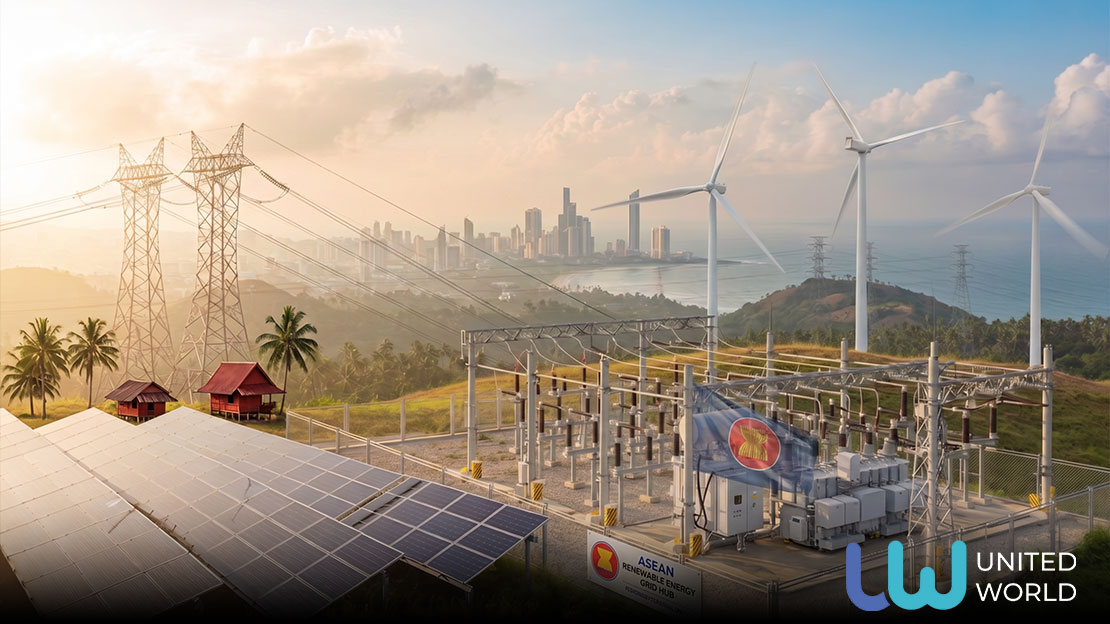
The search for an integrated ASEAN electricity market reflects the quest for creating a regional power system that would satisfy increasing electricity demands, protect the region from exposure to fossil fuels, and speed up renewable energy deployment. As electricity demand in the ASEAN region is expected to grow by about 60 percent by 2040 due to industrialization, urbanization, and rising income levels, it is crucial to understand how to promote renewable energy and harmonize cross-border policies. Indeed, an adaptive and competitive power market will rely not only on investments and infrastructure but also on stable policy regimes that will foster energy deployment and cross-border renewable energy flows.
ASEAN has already made great strides in building regional energy integration. In the mid-1990s, ASEAN Power Grid (APG) project was launched to build an enabling framework for multilateral electricity exchange through a series of interconnections between member countries. Though electricity exchanges continue to happen in a bilateral fashion for the most part, the existence of LTMS-PIP (Lao PDR–Thailand–Malaysia–Singapore Power Integration Project) proves that multilateral electricity trading is possible and increases the pressure for moving toward integration. This growing infrastructure combined with coordinated policy actions would help significantly increase the share of renewables in the electricity mix within member countries.
Each member state of ASEAN has its own plans regarding renewable energy. Vietnam, Thailand, and the Philippines have been experiencing strong solar and wind capacity growth, while Malaysia and Indonesia are trying to diversify their energy mix but are still heavily dependent on fossil fuels. Laos and Myanmar, which are strongly relying on hydropower but have enormous renewable energy potential, need serious investments in grid infrastructures. However, this heterogeneity of electricity mixes may contribute to regional energy integration because policy harmonization could enable specialization and cross-border renewable energy export based on comparative advantage.
The first step to building a renewable-oriented ASEAN electricity market includes addressing several challenges. First, there are diverse power sector structures in ASEAN, ranging from monopoly-based to partly liberalized. Though there are member countries that have unbundled their generation and distribution infrastructure and established independent electricity regulators, there are still members that have vertically integrated monopolies that limit the entry of renewable energy companies into their markets. The lack of a uniform policy baseline creates barriers to efficient electricity trading between countries.
Second, there is heterogeneity of renewable energy tariffs, subsidies, and procurement policies in ASEAN member countries. Using feed-in-tariffs, auctions, and tax credits can mislead investors by providing incorrect information. The creation of an ASEAN-wide carbon pricing system or framework would help renewable energy become competitive in the regional electricity market with efficiency and emissions.
Third, to integrate cross-border renewable energy into the system, it is necessary to create a set of common technical standards. For example, the European Union, thanks to its internal electricity market, created a set of harmonized grid codes, capacity mechanisms, and market-coupling procedures. This would help integrate renewable energy to a great extent. ASEAN has the potential to achieve a similar result. Establishing a regional energy regulator or coordinator would provide an additional opportunity to govern cross-border renewable energy markets.
In addition, it is vital to innovate in the area of renewable energy storage and balancing of electricity loads. As renewable energy starts playing a greater role in the ASEAN power sector structure, its intermittency becomes a problem that needs to be solved through coordination of investments in new balancing sources. Creating an integrated market could allow generating surplus electricity in one country to compensate for a shortage in another by using flexible transmission grids and electricity trading systems. Investments in hydropower storage facilities, demand management programs, and electricity storage technologies would solve the problem.
Finally, the cost of establishing cross-border energy integration will be high. Interconnection and strengthening of national grid infrastructures, along with installation of smart technologies, require a lot of money to be invested. Regional green investment funds and public-private-partnerships (PPP) can bring the necessary funding to support such an important transformation. Regional multilateral organizations such as the Asian Development Bank (ADB) and the ASEAN Infrastructure Fund (AIF) will have to play a leading role in promoting renewable energy corridor investments.
Another important component of a sustainable energy plan is the support of innovations in energy. Increasing R&D collaborations between ASEAN universities, governments, and the energy industry will stimulate innovations in renewable energy efficiency, grid-management systems, and renewable fuels such as green hydrogen. Joint centers of excellence in renewable energy research, policy-making, and engineering will be an excellent way to develop innovations in the field.
Energy equity should be considered when developing an integrated energy market. As ASEAN tries to build its common electricity market, the policymakers will need to make sure that smaller and less-developed member countries are protected and get access to all benefits brought about by energy trading. Developing institutional mechanisms for compensation and revenue-sharing will be crucial in this process. Moreover, social implications of such a transition, including protecting fossil fuel workers and supporting renewable energy investments at local communities, need to be taken care of.
In conclusion, establishing an ASEAN electricity market powered by renewable energy will help promote regional energy integration, improve energy security, and show global leadership. It will lead to reduced emissions in the region, price stabilization, and resilience to outside supply disruptions. To materialize this vision, ASEAN policymakers need to realize that the energy future in the region is inherently linked and move towards shared goals and principles.