



By Mehmet Enes Beşer
Kazakhstan is increasingly viewed as a crucial player in the international lithium market due to its sizable untapped reserves of this resource. According to recent geological research, Kazakhstan ranks among the top five countries in terms of lithium resources, having some 8.6 million tons. Primary deposits of the resource are located in the south and west of Kazakhstan. Specifically, the following territories are identified as those having promising potential regarding lithium exploration: the Aktau, Zhambyl, Mangystau, and Atyrau Provinces. As reported in March 2024 by the Korea Institute of Geoscience and Mineral Resources (KIGAM), there is a high-grade lithium deposit found in east Kazakhstan with an average grade of 5.3%. Its estimated value amounts to approximately $15.7 billion.
The Kazakh government has made every effort to attract foreign investments aimed at the exploration and development of lithium and other minerals. To that end, strategic agreements were signed between Kazakhstan and organizations based in Europe, the UK, South Korea, Japan, and China, which implied exploration and exploitation activities associated with these resources. Among the companies that invest in Kazakhstan’s lithium deposits are such German enterprises as HMS Bergbau AG, which is responsible for conducting geological exploration of the Akhmetkino deposit with the estimated investment of $8 million and up to $500 million after verification of reserves. Besides, there is an agreement with Canada-based Condor Energies Inc., granting them a license for extraction of solid minerals from the Kolkuduk field with the total area of 6,800 hectares. It was found during preliminary exploration of the field that its lithium content amounts to 130 milligrams per liter of brine. Overall, these initiatives imply great potential of Kazakhstan as a player in the global lithium market.
In order to attract additional investments to lithium production, Kazakhstan simplified exploration licensing processes resulting in a significant rise in their number. Some of the major international mining companies such as BHP, Rio Tinto, First Quantum Minerals, Fortescue, and Teck Resources conduct active exploratory activities in Kazakhstan. The combination of international interests in the lithium resource implies that Kazakhstan can become a crucial contributor to the global lithium market because of the growing demand associated with the expansion of electric vehicles and technologies aimed at producing renewable energy.
South Korea’s Strategic Approaches
As a response to the threat posed by the shortage of lithium and related minerals that are crucial to its economic development and the growth of high technology industries, South Korea is implementing a wide range of strategic initiatives aimed at securing lithium resources from different sources around the world. These initiatives involve a mixture of international partnerships, domestic policy changes, and technological advancements associated with lithium mining.
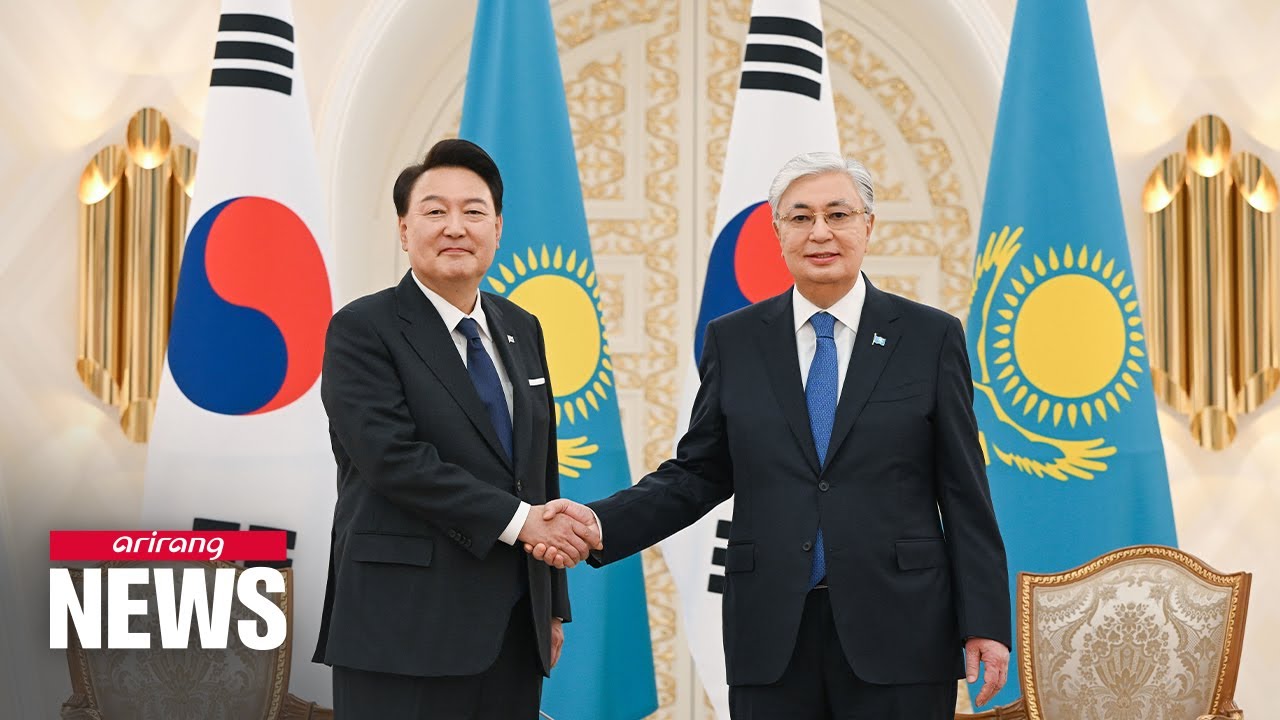
First, South Korea intends to establish international collaborations focused on the joint exploration and exploitation of lithium reserves in different countries around the world. In particular, in June 2024, South Korea and Kazakhstan concluded relevant agreements on exploration and exploitation of deposits of lithium and related minerals. The involvement of the Korea Institute of Geoscience and Mineral Resources (KIGAM) and SK Ecoplant Co. into these processes testifies to the significance of these partnerships for South Korea. At the same time, South Korea will establish similar collaboration with Chile as another key lithium-producing country. Such initiatives are likely to make a contribution to the growth of South Korea’s influence in the global lithium market.
Second, there is a set of domestic policies associated with the creation of additional stockpiles of minerals vital to the economy of South Korea and the enhancement of its competitive advantages in this respect. Specifically, the government declared its intention to create state-owned inventories of lithium and other crucial minerals as part of its efforts to diversify supplies. One of the goals that South Korea seeks to achieve is the reduction of reliance on imports from several countries. In particular, according to the current projections, South Korea plans to decrease its dependency on imports to the minimum value of 50%. This initiative is expected to help the country address its vulnerabilities and diversify its supply sources.
Finally, South Korean firms make significant investments in technological innovations that are important for increasing competitiveness in the global market. In particular, SK On secured locally-produced lithium hydroxide. In addition to that, efforts to introduce diversity in the sources of lithium supply aim at boosting its procurement process, while the focus of South Korean firms on innovative batteries is associated with the introduction of new technologies such as high-nickel cathode.
Challenges and Issues
There is a variety of challenges that South Korea will be likely to encounter when implementing its strategic initiatives aimed at ensuring adequate lithium supply to its high-tech industry. An evident issue associated with these initiatives relates to South Korea’s reliance on China, which accounts for about 84% of its lithium oxide imports in 2023. This circumstance imposes certain constraints on the country that makes every effort to ensure the stability of lithium supply from various countries, including Kazakhstan and Chile.
However, in this case, there are some risks associated with international investments in the Kazakh mining sector because of the weak legal and regulatory framework that negatively influences foreign investors’ confidence. Thus, these issues impose significant challenges to the successful implementation of international initiatives in question.
Besides, South Korea is likely to encounter certain obstacles while attempting to establish its sources of lithium supply within the global market that has become more competitive due to rising demand for it and, thus, the shortage of this mineral. Finally, South Korea’s strategic initiatives will be challenged by the phenomenon called friendshoring. As the country is planning to move its supply chain out of China because of its geopolitical position, it faces the task of establishing supply chains within allied countries. This objective implies a considerable amount of policy efforts in order to be achieved.
Conclusion
Overall, South Korea’s initiatives to secure stable lithium supply are motivated by its desire to sustain the development of high technology industry. The country has taken a series of steps that imply international collaboration with Kazakhstan and Chile, the increase of inventories of lithium in South Korea, and significant investments into technological innovations related to lithium. Still, these initiatives can be implemented successfully only in case when these challenges are adequately addressed.