


Is Türkiye prepared to risk its relations with Russia for the supply of carbon fiber for Ukrainian UAVs?
Is Türkiye prepared to risk its relations with Russia for the supply of carbon fiber for Ukrainian UAVs?
By Feyyaz Erkin Eşli
On April 15, 2026, Russia’s Ministry of Defense released a significant statement regarding the continuation of the armed conflict between Russia and Ukraine.
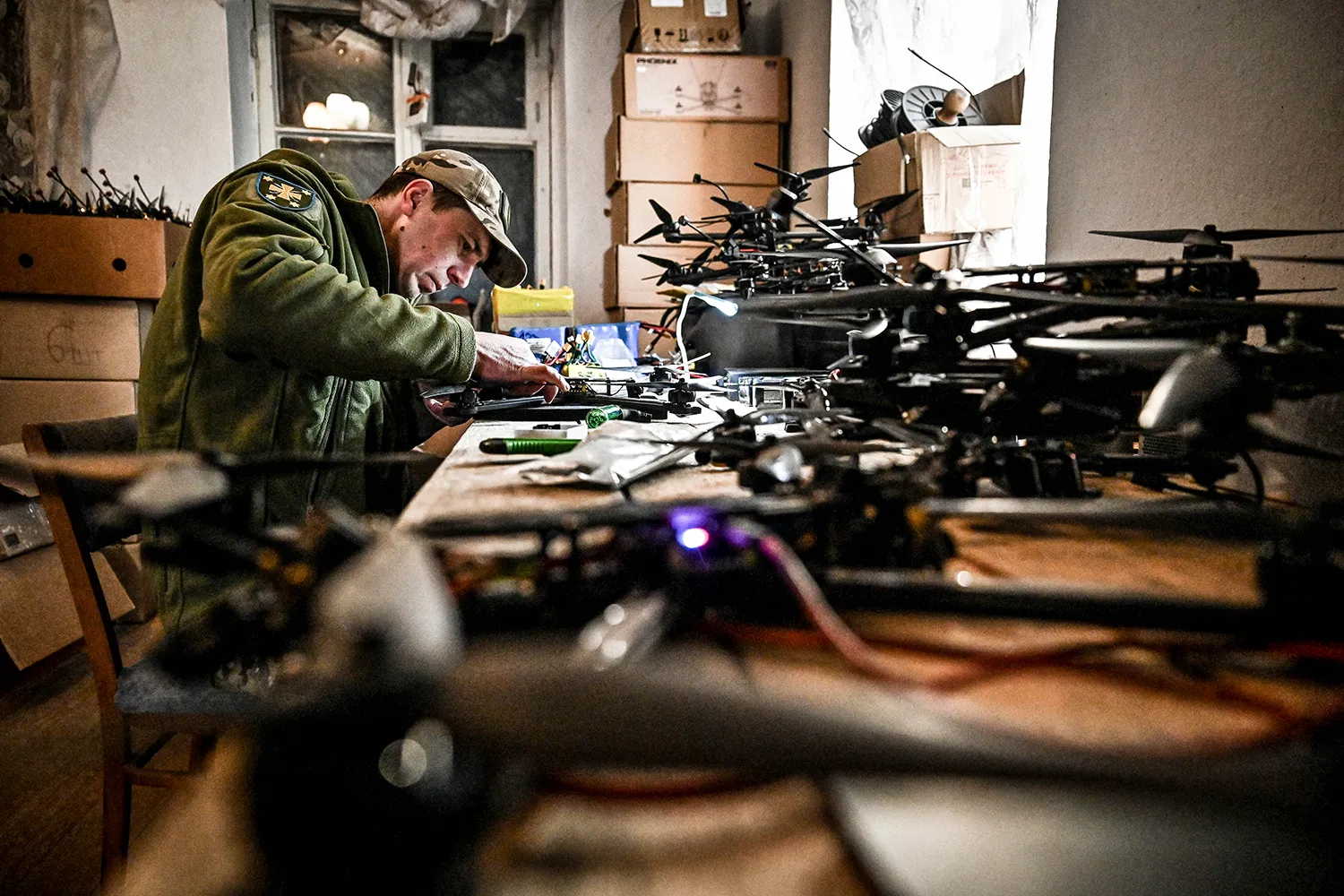
It was reported that on March 26, 2026, a number of European countries decided to increase the supply of military drones to the AFU (Armed Forces of Ukraine), indicating that European states have chosen a path of escalation rather than peaceful resolution. In addition, a list of 21 enterprises involved in the production of military UAVs or their components was made public. It was revealed that two of them are located within the Republic of Türkiye: in Ankara and Yalova.
In this context, the statement takes on added significance, particularly given the broader geopolitical environment in which it was issued.
Assessing the Weight and Implications of the Statement
It is important to note that this statement was accompanied by a post from Dmitry Medvedev, former president and current member of Russia’s Security Council. Writing on his X account, he stated that enterprises included in the list are, in effect, potential targets for the Russian armed forces.
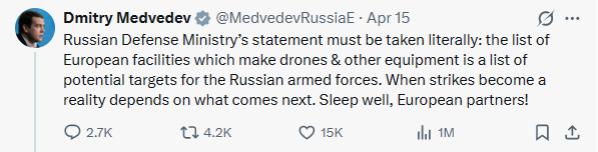
Such statements from Russia, especially those directly tied to its security concerns, carry considerable weight. A notable precedent can be found in Russia’s appeals to NATO and the United States in December 2021, when it requested security guarantees and outlined its “red lines.” At the time, NATO countries did not consider it necessary to accommodate these concerns, which was soon followed by the start of the “Special Military Operation in Ukraine.”
Why Has Türkiye Remained Silent?
Following the publication of the statement, a wave of concern spread across European countries. The German government took a decisive diplomatic step by summoning Russia’s ambassador to Berlin, Sergey Nechaev, to the Ministry of Foreign Affairs. Meanwhile, the British publication International Business Times released an article offering a list of “safe places” “if WW3 starts.”
Against this backdrop, the reaction—or lack thereof—by Türkiye appears particularly notable. Despite the inclusion of two Türkiye’s enterprises in the published list, official authorities in Türkiye have refrained from making strong public statements. This may reflect the high level of bilateral relations between Russia and Türkiye, which allows for a degree of mutual confidence.
Moreover, shortly after the statement’s publication, the foreign ministers of Russia and Türkiye met as part of the Antalya Diplomacy Forum, reaffirming their commitment to constructive cooperation in resolving crises.
However, especially considering President Erdoğan’s mediating position regarding the Russia–Ukraine conflict, a logical question arises: is Türkiye prepared to risk its relations with Russia for the supply of carbon fiber for Ukrainian UAVs?
A Former Ambassador to Moscow’s Perspective
Former Türkiye’s ambassador to Moscow Ümit Yardım, in comments to the Cumhuriyet, assessed the situation as follows:
“These are not routine statements. Russia does not issue such remarks arbitrarily. It makes such radical statements only when it deems it necessary.”
In addition, Yardım commented on the speech delivered by Russia’s Foreign Minister Sergey Lavrov at the Antalya Diplomacy Forum:
“I am sure that even Lavrov, known for his eloquence, reflected carefully before stating that Russia’s ‘patience is running out.’”
Europe’s Escalatory Path and Strategic Risks
European countries that continue to undermine peace initiatives in the Ukrainian conflict are taking significant risks. Russia has made it clear that it will not tolerate the production of UAVs and their components if they pose a threat to its security.
At the same time, developments in the Persian Gulf have demonstrated to Russia that NATO mechanisms do not function as intended. This, in turn, highlights a deeper strategic dilemma facing the alliance. Donald Trump has repeatedly stated his intention to impose consequences on NATO, at one point referring to the organization as a “paper tiger.” Furthermore, since the beginning of his current term, President Trump has taken steps toward rapprochement and the restoration of relations with Russia.
NATO is currently facing possibly its deepest crisis since its founding, and a potential withdrawal of the United States from the alliance could mark a point of no return. Against this backdrop, two key questions remain open. First, is Türkiye prepared to remain within a NATO framework that may be unable to provide real support? Second, are European countries willing to continue engaging with the prospect of prolonged conflict while relying indefinitely on NATO’s protection?