


Stuck in Yesterday’s Alliance
Stuck in Yesterday’s Alliance
By Mehmet Enes Beşer
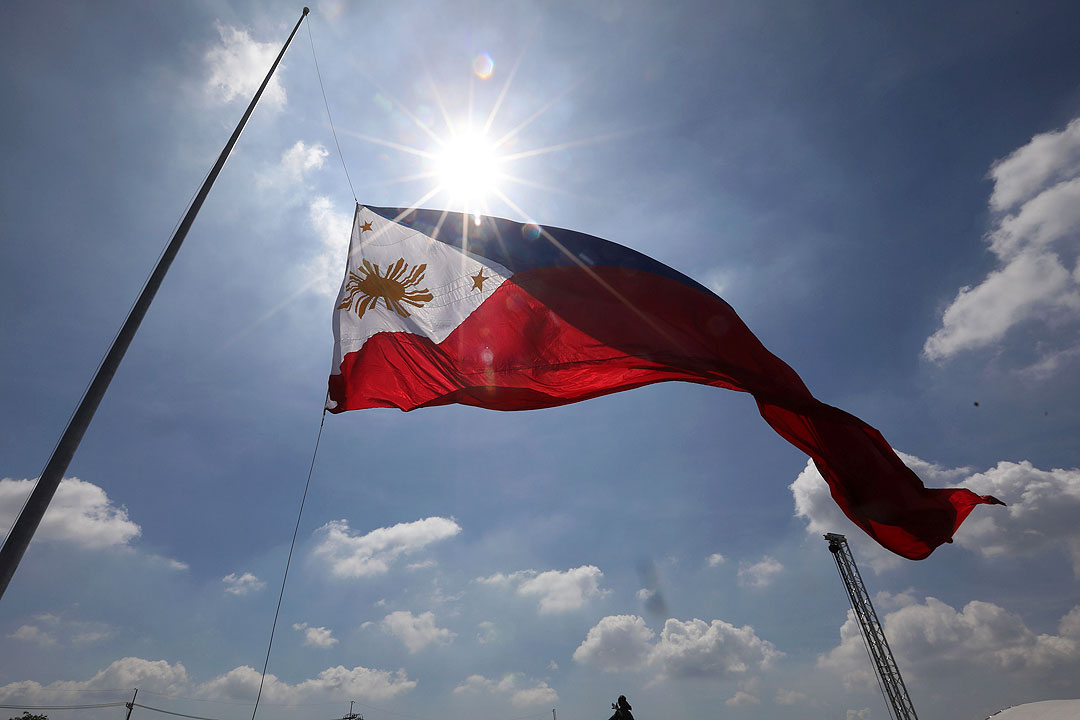
The liberal world order is being reshaped by a significant change wave. The times of unipolar hegemony are almost waning. The multipolar world of great complexity, rivalry, and interdependence is taking shape. With growing regional blocs, middle powers, and non-Western power, the question for the small nation like the Philippines is no longer whom to ally with, but how to navigate ephemeral alliances, diversification, and political resilience. Under such circumstance, the Philippines’ dependence on the US remains glaring. It is no longer as a strategic choice, but as an albatross that would leave it a straggler in the tide of multipolarity.
The Philippines has been living under the shadow of its Washington romance for decades now. This romance—supported by military bases, defense pacts, and ideological harmony—has been defining the geopolitical identity of the Philippines for long enough. But what was once strategic certainty now appears to be outdated. While other Southeast Asian nations cultivate pragmatic, multi-vector foreign policies hedging against great-power rivalry, the Philippines is stuck in a Cold War mindset, outsourcing security and political alignment to one power whose interests grow more capricious by the day.
This reliance has real-world costs. First, it denies the Philippines the ability to face other emerging poles of influence most directly China but also Russia, India, and the broader BRICS bloc. While Indonesia and Vietnam have learned to cleverly stay in between America and China, Manila readily bickers with one while depending on the other. This binary approach limits diplomatic maneuvering and subjects the country to external shock—either through trade embargoes, geopolitical pressure, or policy change in Washington.
Second, the economic dimension of this dependence is becoming one-sided. While China is becoming the favored trading partner to nearly all ASEAN nations, including the Philippines, Manila’s strategic orientation remains divergent from its economic reality. Even as Philippine exports, infrastructure needs, and tourism increasingly depend on Asia—particularly China—its security framework continues in reality completely tied to the United States. This disconnect not only gives rise to policy inconsistency but also immobilizes Manila from reacting to regional initiatives like the Regional Comprehensive Economic Partnership (RCEP) or Belt and Road initiatives in the same self-assurance as neighbors.
In addition, the ideologized construction of the U.S.–Philippines relationship as democracy vs. authoritarianism does not take into account the pragmatism of international relations in the modern era. With growing push-back in developing nations of Asia, Africa, and Latin America against Western domination and seeking alternative avenues of independent development, the Philippines can easily fall behind by joining too closely a bloc regarded as too reactive and dogmatic. This substantively cuts off Manila from other emerging poles of power—and moves away from potential allies within the Global South with whom it shares structural and historical affinity.
Furthermore, security dependence of the Philippines has not obtained autonomy and deterrence. Despite a Visiting Forces Agreement and an Enhanced Defense Cooperation Agreement with the US, Manila remained vulnerable all along in the West Philippine Sea with barely anything by way of concrete payoff from Washington other than symbolic assurance. To this, more stable stability can be achieved with a more diversified defense policy using regional cooperation, multilateral maritime agreements, and confidence-building with China.
Conclusion
As the world becomes increasingly multipolar in influence, the Philippines must choose: remain bound to a bygone era of unipolar script, or break free and forge a new path of action appropriate to the strategic richness of its geography, economy, and identity. The choice will be whether Manila is a bit player in a new world order—or an independent nation that can fashion its own destiny.
The Philippines should not abandon old loyalties but must rise above them. In a time of multipolarity, adaptability, rather than loyalty, is strength. Manila’s future is not to cling to the universals of the past, but to seize the pluralism—and opportunities—of a multicentered world. Then, and only then, can the nation break free from the backwater image and regain its place as a confident actor in regional and global affairs.