


Ultimately, the most significant danger lies in the gradual weakening of the principle of national self-determination.
Ultimately, the most significant danger lies in the gradual weakening of the principle of national self-determination.
By Mohammad Reza Moradi, General Director of Mehr News Agency’s Foreign Languages and International News Department, from Tehran / Iran
In theories of international relations, one of the most fundamental transformations in the history of global politics was the transition from imperial orders to the system of nation-states. This transformation, which began in the seventeenth century following the Peace of Westphalia, introduced a foundational principle into the structure of world politics: the sovereignty of states and the right of nations to self-determination. According to this principle, no external power has the right to determine the political structure or leadership of another country. This rule was later institutionalized in the Charter of the United Nations as one of the pillars of the international order established after the Second World War. Nevertheless, history has repeatedly shown that during moments of crisis some great powers demonstrate a tendency to return to pre-Westphalian patterns—patterns in which power replaces law and intervention in the political destiny of other nations becomes normalized.
Following the joint military attack by the United States and Israel on Iran, the leader of Iran was killed, and subsequently, within the framework of the country’s internal institutional mechanisms, a new leader was selected. However, Donald Trump, the President of the United States, declared that he should determine the future leader or president of Iran. Such a position, although it may appear on the surface as part of a political strategy, reflects at the theoretical level a return to imperial logic—a logic in which great powers assume the right to shape the political structures of other societies.
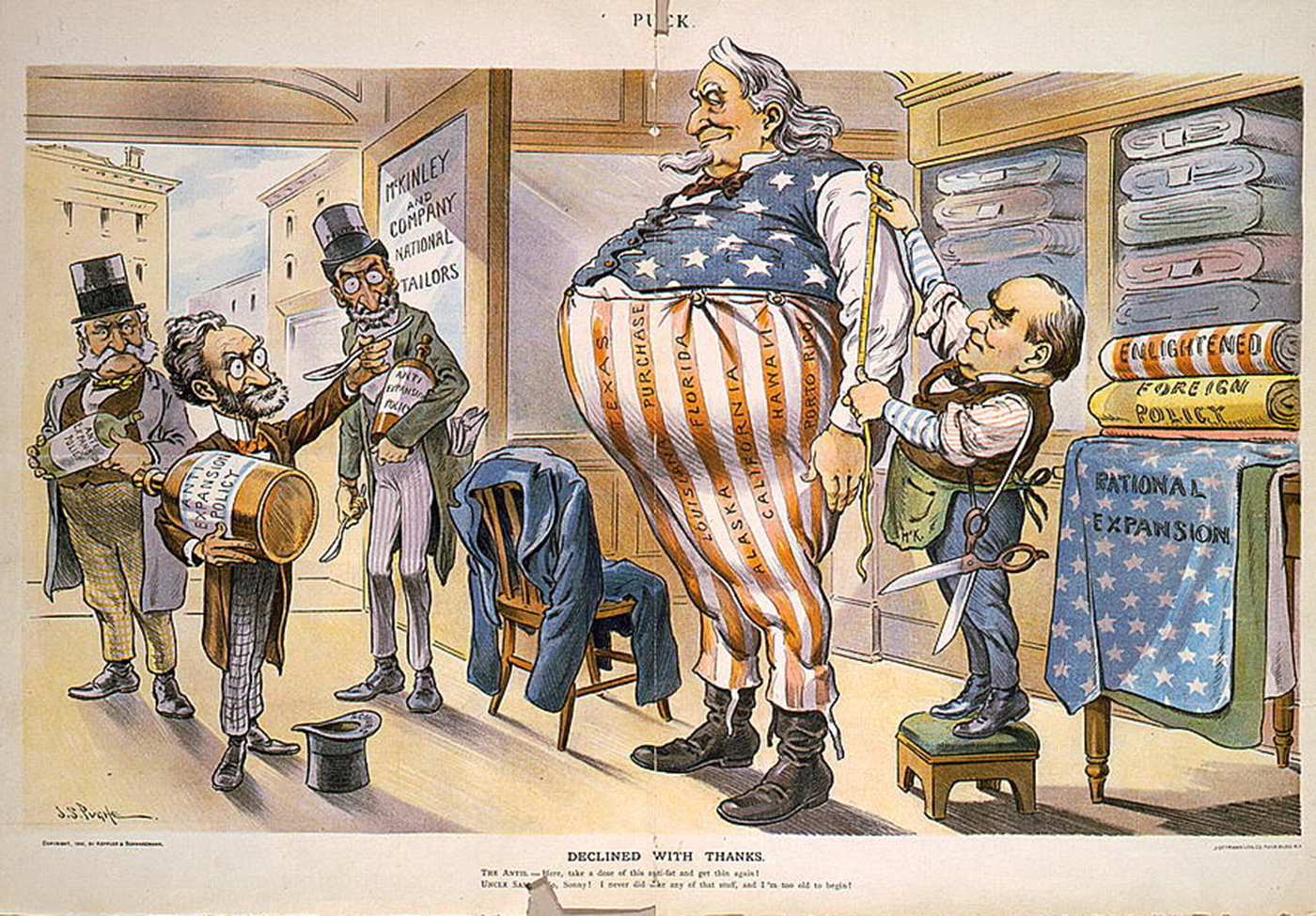
From an analytical perspective, this approach can be interpreted through the concept of “interventionist hegemony.” In the literature of international relations, hegemony refers to a condition in which a dominant power is capable of shaping the rules of the international system. Yet even classical theories of hegemony assume that such power operates through international institutions and shared rules. When a state openly claims the authority to determine the leadership of another country, it effectively moves beyond the framework of institutional order and enters the logic of empire.
Such patterns were common in the nineteenth century. Powers such as Britain and France appointed local rulers or supported preferred leaders in many parts of the world, from the Middle East to Africa and South Asia. Historical experience, however, demonstrated that these policies rarely produced stability. On the contrary, they frequently generated chronic crises and resistance movements. For this reason, after the Second World War the international community sought to limit such practices through the creation of institutions such as the United Nations and through the development of new legal norms.
Within this framework, the idea that a foreign power should determine the leader of a sovereign state can be understood as a “return to the pre-institutional order.” Such a return not only contradicts the principles of international law but also signals, from a theoretical standpoint, the erosion of a rules-based international order.
Structural Consequences for the Security of the Middle East
To understand the implications of such an approach, it is necessary to examine the security structure of the Middle East. The region represents one of the most complex security systems in the world—one in which geopolitical rivalries, ideological divisions, and historical conflicts operate simultaneously. In the literature of international relations, the Middle East is often described as a “regional security complex,” a concept developed by theorists such as Barry Buzan. According to this framework, the security of states within the region is deeply interconnected, meaning that any major transformation in one country can affect the entire regional security structure.
Within such a context, the idea that the United States should determine Iran’s leadership could generate consequences that extend far beyond Iran’s borders. The first consequence would be the weakening of the principle of national sovereignty in the region. Many Middle Eastern countries possess profound historical experiences with external intervention. From territorial arrangements following the First World War to coups and political interventions during the Cold War, the memory of foreign interference remains deeply embedded in the political consciousness of the region.
If an external power were able to determine the leadership of one of the region’s most influential states, this could establish a dangerous precedent. Under such circumstances, other regional governments might also perceive their political sovereignty as vulnerable to pressure from great powers. This perception could increase distrust among states and intensify regional security competition.
From the perspective of realist theory in international relations, such developments would likely exacerbate the “security dilemma.” The security dilemma describes a situation in which a state’s efforts to increase its own security unintentionally generate insecurity for others. If regional states come to believe that they might be targets of similar interventions, they may attempt to expand their military capabilities or form new strategic alliances. Such dynamics could trigger arms races and heighten regional tensions.
Moreover, such policies could generate broad social and political repercussions. In many Middle Eastern societies, political legitimacy is closely tied to the concept of national independence. Any perception that leadership has been imposed by an external power could undermine the domestic legitimacy of the resulting political structure. Consequently, even if such intervention were to produce short-term political change, it would likely increase the probability of long-term internal instability.
The Erosion of International Order and the Return of Power Politics
The consequences of such an approach would not be confined to the Middle East. At the broader level of the international system, the claim that great powers possess the authority to determine the leadership of other countries could signal a profound transformation in the nature of global order. After the Second World War, many scholars of international relations argued that the world was gradually moving toward a rules-based order grounded in institutions and norms. This perspective was widely articulated in the theory of “liberal institutionalism,” developed by scholars such as Robert Keohane.
According to this theory, even great powers require cooperation within institutional frameworks to sustain global stability. However, when a major power openly declares that it can determine the political structure of another country, it sends a clear message that shared rules are no longer binding.
Such a development could have far-reaching consequences. First, trust in the international order would decline. If rules are observed only when they coincide with the interests of powerful states, other countries will have little incentive to respect them. As a result, the likelihood of a return to a form of “competitive anarchy” in the international system would increase—a condition in which each state relies primarily on hard power to ensure its own security.
Second, such dynamics could intensify rivalry among major powers. In a world where intervention in the political structures of other states becomes a normalized instrument of policy, other great powers may attempt to pursue similar strategies within their own spheres of influence. This process could lead to new geopolitical competitions and potentially to international crises.
Ultimately, the most significant danger lies in the gradual weakening of the principle of national self-determination. This principle constitutes one of the foundational pillars of modern political order, and its erosion could produce far-reaching consequences for global stability. If the international community allows great powers once again to determine the political destinies of nations, the world may begin to resemble the imperial structures of the nineteenth century.
For this reason, debates surrounding such scenarios are not merely theoretical or regional concerns. They raise a fundamental question about the future of global order: will the international system continue to operate on the basis of shared rules and respect for state sovereignty, or will the world return to an era in which power replaces law and the fate of nations is decided in distant centers of power? The answer to this question will be decisive not only for Iran or the Middle East, but for the entire international community.