


Here are the balances in the strait on the brink of catastrophe and the possible military scenarios.
Here are the balances in the strait on the brink of catastrophe and the possible military scenarios.
By Adem Kılıç, Political Scientist
As two weeks of the conflict between the U.S./Israel and Iran have passed, it has become clear that the Strait of Hormuz is not merely a regional transit point, but the lifeblood of the global energy system.
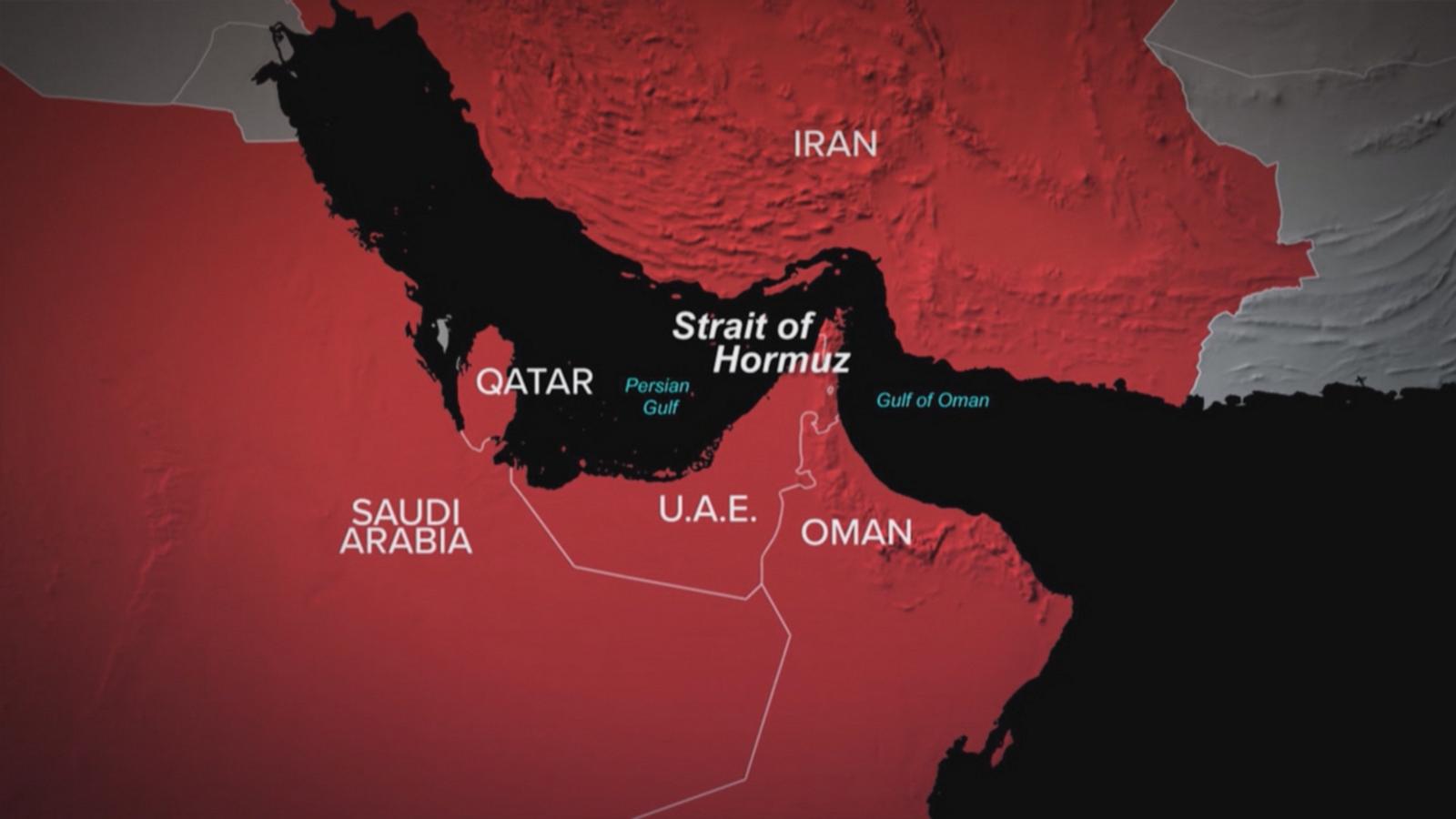
This narrow passage, which connects the Persian Gulf to the Gulf of Oman and the Arabian Sea, has become the focal point of the ongoing conflict between the U.S./Israel and Iran, has become a pivotal point in the ongoing conflict between the U.S./Israel and Iran due to its position as the sole maritime route through which all oil and natural gas produced in the Gulf reaches global markets.
However, this reality demonstrates that a closure of the strait could directly impact not only oil prices but also global supply chains—and this is where the real issue begins.
After all, a significant portion of the energy flow from the Gulf is directed toward Asia’s manufacturing economies—such as China, India, Japan, and South Korea—rather than Europe, and for this reason, a crisis in the Strait of Hormuz carries the potential for a domino effect capable of shaking not only energy markets but the entire global trade system.
So, how might a military confrontation unfold in such a strategically vital strait?
Large fleets in a narrow strait
While the narrowest point of the Strait of Hormuz is approximately 33 kilometers wide, the actual shipping lanes used by tankers are only a few kilometers wide in each direction. This geographical feature would transform the Strait of Hormuz into a battlefield for asymmetric naval strategies rather than classic naval warfare in the event of a potential military conflict.
Indeed, Iran’s military doctrine has been shaped precisely by this geography. The tools Tehran could employ in the Strait of Hormuz are quite clear: sea mines, anti-ship missiles launched from the coast, unmanned aerial vehicles, and small, fast naval units operating in swarm tactics. All of these systems could render large warships vulnerable in narrow sea passages.
The U.S.’s potential move, however, is not actually new. After all, the U.S. gained experience in escorting tankers in convoys accompanied by warships during the Iran-Iraq War of 1980–1988.
If the U.S. were to attempt this again, it would first have to target Iran’s coastal naval bases and missile batteries.
However, this scenario would carry significant risks for the U.S. compared to its previous experience. Given the changes in warfare strategies and the major advancements in drones and missiles since then, it is inevitable that the U.S. Navy would become a target.
Aware of this reality, Trump is therefore appealing to regional countries, stating, “All nations sourcing oil and natural gas from this region must take the initiative.”
The Possibility of a Ground Operation and the Reality of the Geography
As these risks of a naval conflict are considered, discussions have inevitably turned to alternative options. One of these is the possibility of a limited ground operation.
However, Iran’s geography presents a far more challenging military environment than that of Iraq or Afghanistan. This is because the Zagros Mountains in the west and the Alborz Mountains in the north make a ground operation from the Iraqi border virtually impossible. This could lead to a large-scale ground operation becoming a dead end, both logistically and due to the experience of the Iranian Revolutionary Guards in this region.
For this reason, if the U.S. is seeking a military success story, it should attempt this not through an invasion operation penetrating deep into Iran, but by targeting limited objectives around the Strait of Hormuz.
At this point, two critical targets stand out: Bandar Abbas and Harg Island.
Bandar Abbas: The Key to the Strait
Bandar Abbas is Iran’s most important strategic port in the Strait of Hormuz. Key elements of the Iranian navy are stationed here, and from Iran’s perspective, this is the central hub for control over the strait.
It is no coincidence, then, that this region has become the target of intense airstrikes in recent weeks. From the U.S. perspective, securing this point could provide both psychological and military superiority regarding the strait’s security.
Washington’s rhetoric regarding tanker insurance, naval escorts, and safe passage can also be interpreted as signs of an effort to establish a security architecture in the Strait of Hormuz.
Harg Island: The Heart of Iran’s Oil Industry
Harg Island, however, stands out as perhaps an even more critical point for Iran. Approximately 90 percent of Iran’s crude oil exports are shipped through this island.
This is because the shallow waters of the Gulf make it difficult for large tankers to dock near the shore, making Harg Island—with its deep-water port—an indispensable terminal for Iran.
Today, many Western think tanks describe Harg Island as the “jewel of Iran’s oil industry,” while Israeli policy openly identifies this target, arguing that the path to weakening the Iranian regime lies in destroying the energy infrastructure on Harg.
Indeed, Trump’s specific order to attack Harg Island and his announcement that they had struck all military sites on the island support this reality.
However, a landing operation here would also be extremely risky. For one thing, the island is viewed by the Iranian Revolutionary Guards as a fortress that must be defended, and its location just 25 km from the Iranian mainland could turn the island into a veritable Vietnam for any U.S. troops attempting to land there.
Conclusion: The Strait on the Brink of Catastrophe
In light of all these realities, the Strait of Hormuz is no longer merely an energy corridor; it has become one of the most dangerous flashpoints in the competition among great powers.
At this juncture, Iran has turned the Strait of Hormuz into the epicenter of an apocalyptic scenario with global implications—not only by attacking U.S. bases in the Gulf states but also by leveraging the strategic advantages of this narrow geography.
In summary: while the knot of war is now locked onto the Strait of Hormuz, the options available to the U.S. to craft a “victory narrative” here carry significant risks.
And if the U.S. and Israel continue to make miscalculations, the Strait of Hormuz becoming the actual site of an apocalypse is by no means a remote possibility.