


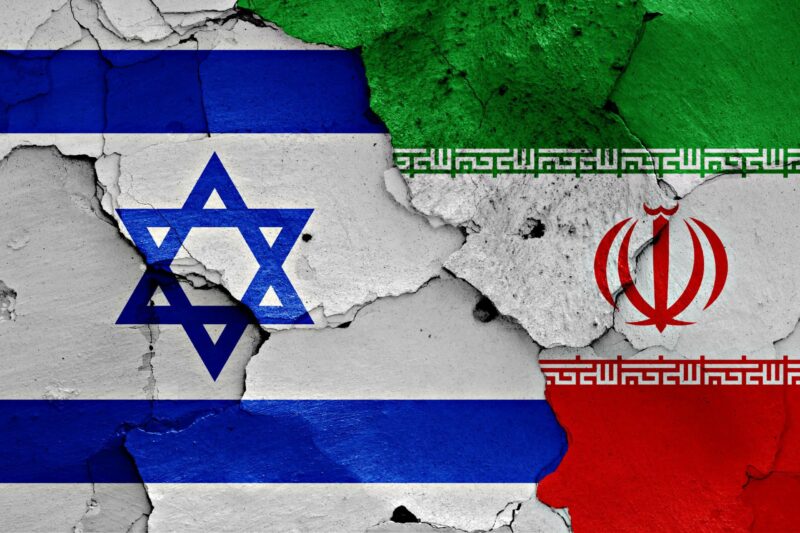
How has the rapid transformation of the global order gained a new dimension with the Iran war?
How has the rapid transformation of the global order gained a new dimension with the Iran war?
By Adem Kılıç, Political Scientist / Writer
According to many experts, February 28 will take its place in the near future as the starting date of World War III. However, I have repeatedly stated in my World Of Türkiye analyses that World War III has in fact been ongoing for quite some time.
Indeed, while the world has already experienced numerous conflict processes in a very short period of time—from Sudan to Ukraine, from Gaza to Karabakh and Syria—almost all the problems that were frozen by the Western-centered system established after World War II are now being reshaped.
The processes that ended the colonization agreements of Western powers, especially France, following 13 coups in Africa in just the last four years—five of which were successful—the resolution of the Karabakh issue that had remained unresolved for 40 years, the transformation of the US–Russia–China rivalry stretching from South America to Central Asia from a purely economic dimension into conflicts even if through proxy forces, the beginning of a new phase in Syria after 13 years of civil war in a country that had become an arena of competition for global powers, the complete loss of functionality of international institutions such as the UN and the International Criminal Court, and the emergence of a new era in which “might makes right” all clearly prove my thesis that World War III has already begun.
The new biggest link in the process: Iran
The Iran–Israel tension, which for decades has turned into clashes at various times—such as the 12-day war—after years of mutual threats, has in the last ten days caused a military storm that has fundamentally shaken the balance of power in the Middle East.
The operation launched by the United States and Israel under the code name “Epic Fury” largely succeeded in paralyzing Iran’s leadership and command structure in the very first minutes of the war, pushing the regional balance to a point of no return.
Iran responded to these attacks by striking the Gulf countries hosting US military bases from the very first minutes of the war.
However, while this situation increased regional backlash against Iran, it also signaled that Iran would not bear alone the costs of the war that it considers existential for itself.
Combined with military losses, the Hormuz deadlock, and retaliatory attacks on oil refineries, the skies over the Middle East have been filled not only with smoke but also with great uncertainty.
The micro-nationalism project and the strategy to divide Iran
However, it must be seen that all these reciprocal moves are not limited to missiles alone; the real operation is being conducted through Iran’s heterogeneous social structure.
The US–Israel–centered strategy aims to turn Iran into a laboratory of “ethnic fault lines” by taking advantage of the weakening of central authority.
Attempts to detach the Arab population in the oil-rich Ahvaz region from Tehran through economic promises, the instability belt being engineered along the Sistan-Baluchistan line, and identity politics conducted through the Azerbaijani Turks in the north and Kurdish groups in the west are being implemented as the most dangerous phase of the Greater Middle East Project.
The goal is to create not a unified regional power with nuclear capacity, but rather a collection of micro-nationalist provinces that conflict with one another and remain permanently open to external intervention.
Regardless of the outcome of the war from this point onward, Iran will become both an arena where Israel’s Periphery Doctrine and the United States’ micro-nationalism approach are implemented through a project of weakening the country by fragmenting it into smaller states, and a field where other global powers will struggle for influence through proxy forces.
In the midst of this massive fire, Türkiye is emerging as the region’s sole anchor of stability with both its historical experience and its rational foreign policy.
Türkiye’s quiet yet deep-moving strategy focuses on preventing the emergence of a “black hole” in the neighboring geography, while simultaneously adopting a global power reflex aimed at minimizing both its own risks and the regional repercussions.
For the Turkish state mind, regional stability and the territorial integrity of neighboring countries such as Iran are not merely foreign policy preferences but direct security matters.
Knowing that any governance vacuum in Tehran would create new operational spaces for the PKK/YPG terrorist organization and its affiliates, Türkiye prefers a central state structure that can be engaged with—even if it is a rival—over a geography consumed by chaos.
In this direction, while strengthening its borderlines, Türkiye continues to protect its interests rationally through this strategy.
Conclusion and strategic projection
In light of all these developments and strategies, Iran has now evolved—regardless of the outcome of the war—into a long-term arena of attrition where global powers will wear each other down for years.
In other words, the strategy of destruction pursued by the United States and especially Israel does not aim, as they claim, to bring peace to the region, but rather to institutionalize a civil war that could last for decades.
Türkiye, if it continues its current strategy, will emerge from this process—just as it did during the Ukraine War and the Syrian civil war—as the country that successfully implements the formula of “minimum damage, maximum security,” balancing both its alliance relations with the Western bloc and the principles of regional neighborhood diplomacy.