


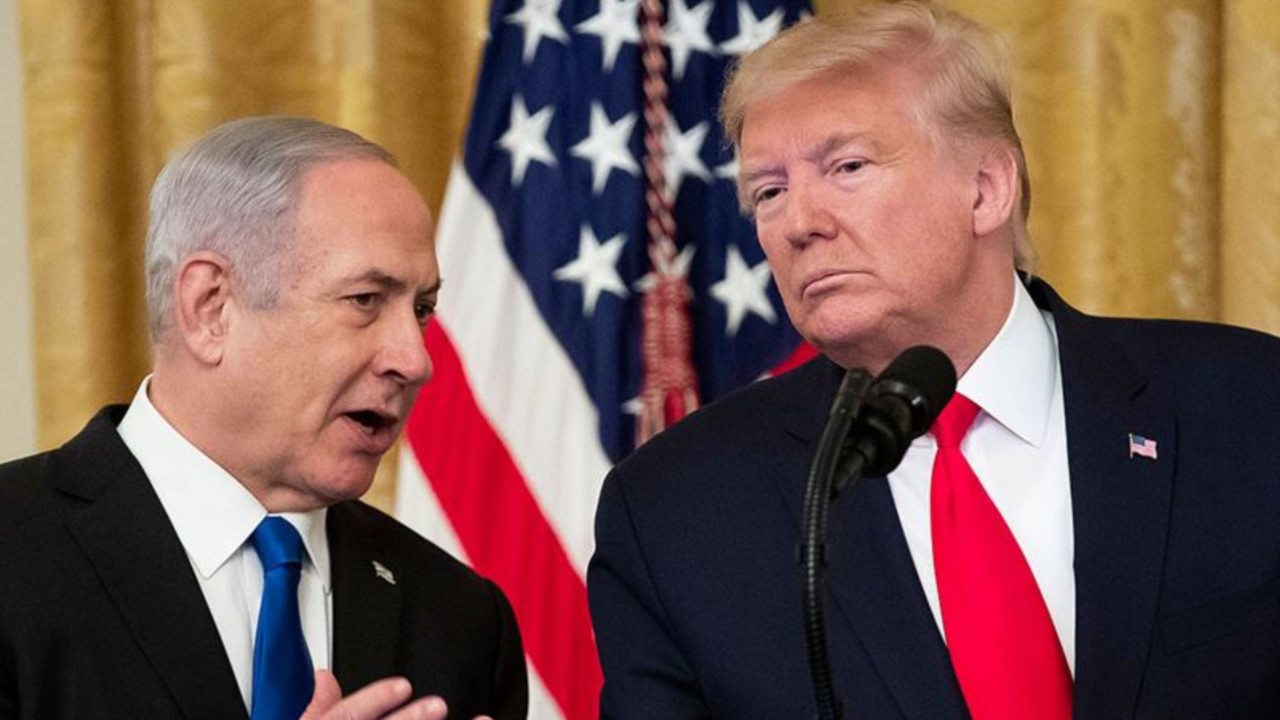
How will Trump and Netanyahu’s gamble in Iran shift the balance?
How will Trump and Netanyahu’s gamble in Iran shift the balance?
By Adem Kılıç, Political Scientist
The US and Israel—or more accurately, Trump and Netanyahu—have launched a long-anticipated war against Iran, shifting the Middle East environment from a “deterrence” equation to an “existential” one.
Following the first wave aimed at paralyzing the decision-making mechanisms of the regime in Tehran, the death of Ayatollah Ali Khamenei showed that the boundaries of this war are not only drawn by military installations, but also that the doctrine of “regime change,” which had been shelved in the Middle East since the Arab Spring, has returned to the field.
On the other hand, Trump’s populist approach, which destroyed his image as the “president who ends wars,” and Netanyahu’s efforts to legitimize this process for theological and political reasons, revealed that this war is not only pursuing a strategic goal but is also an ideological “gamble” that both leaders have resorted to in order to overcome their domestic political predicaments.
The question of why Trump, who marketed the bombing of Iran’s nuclear facilities in the 12-day war months earlier as a “definite victory,” now needs a renewed and more violent attack, also exposed the methodological inconsistency in American foreign policy and that the reason for the war is not nuclear.
Strategic blindness and cost
While the US and Israel are in this situation, Iran’s response to these attacks shows that Tehran’s decades-long deterrence approach and its classic asymmetric warfare doctrine have changed dramatically.
This is because Iran’s attacks, which spread to the territories of countries hosting US military bases, proved that it viewed this war as existential, while also revealing its desire to act with a strategy of globalizing the cost of the war.
This situation has shattered the US dream of “regime change through surgical operations,” as seen in the case of Venezuela, despite the killing of Khamenei and senior Iranian officials.
This is where we are now: the war, which the US initially planned to last 15 days and then 4 weeks, now carries the risk of turning into a war of attrition that could last for years and paralyze global dynamics.
Israel’s radical alignment with regional engagements, which Trump said he would avoid by putting “America first,” in line with its alleged security concerns and expansionist priorities, now clearly holds a potential that even the two leaders did not expect.
On the other hand, this attack, which came while diplomatic contacts were ongoing, revealed that diplomacy was not a search for a solution but a tactical smokescreen to buy time for military preparations, dealing a heavy blow to the US’s decades-long propaganda of being a “mediating diplomatic country” in the world.
This process, which lacks legitimacy both in the US Congress and at the UN and which, on its very first day, resulted in the bombing of a school and the deaths of dozens of girls, has once again destroyed the credibility of the West’s promises of “liberation” in the eyes of the people of the region.
Türkiye and strategic balance
For Türkiye, this new war is not just a fire in a neighboring country; it is a development that could directly shake regional balances and the national security architecture, making it a much more critical issue.
Considering how the nearly 12-year civil war in Syria has affected Türkiye, the weakening or complete collapse of central authority in Iran could lead Türkiye to face an even greater and much more difficult test than Syria.
Furthermore, despite competing on numerous fronts, Türkiye’s deep economic, cultural, and energy ties with Iran could once again test its resilience against new turbulence.
At this juncture, it may be crucial for Türkiye to expand the “neutrality policy” it successfully demonstrated in the Russia-Ukraine war.
Conclusion: The regional future in light of historical memory
Ultimately, this new chapter unfolding in the Middle East confirms that the West has not learned from its experiences in Iraq, Afghanistan, and Syria; rather, its ideological ambitions have taken precedence over strategic rationality.
If this process, initiated by Trump and Netanyahu solely for their own interests, does not yield results as quickly as they planned, it will lead to a reality where the US and its allies are bogged down, and a global power balance tilted in Russia and China’s favor.
Türkiye’s greatest success in this process will be to elevate its neutrality strategy to a higher level and demonstrate diplomatic leadership that minimizes the humanitarian and political costs of the crisis.
For Iran’s fragmentation through civil war or prolonged foreign intervention could irreparably damage not only the region’s borders but also its sociological and political fabric for decades to come.
Because ultimately, the real question is no longer who will win this war, but how stability will be restored in the region after these developments.