

The experts Alptekşn Dursunoğlu and Cevat Gök evaluate the nomination of Nouri Al-Maliki as candidate for Prime Minister.
The experts Alptekşn Dursunoğlu and Cevat Gök evaluate the nomination of Nouri Al-Maliki as candidate for Prime Minister.
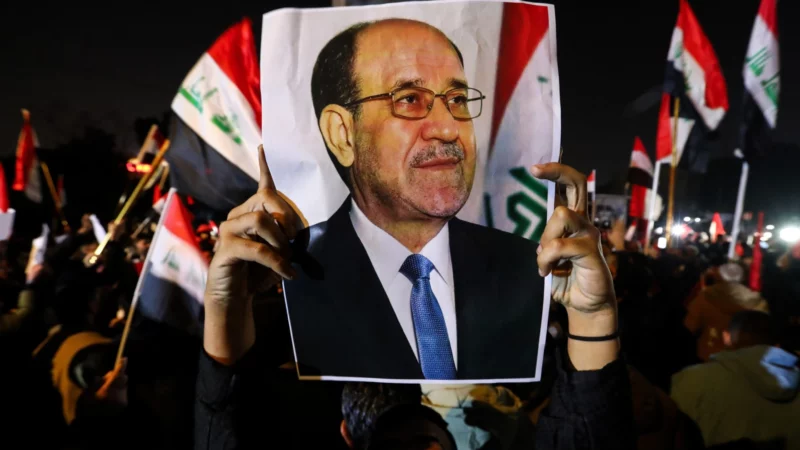
While US threats against Iran continue, the Islamic Republic may achieve a political victory in its neighbor, Iraq. The reason: The ruling parliamentary coalition in that country has nominated Nouri al-Maliki as its candidate for prime minister.
In the country fractured by ethnic and sectarian groups after the US invasion in 2003, which left behind a balkanized political system, the parliamentary elections of November 2025 presented a striking result, says Alptekin Dursunoğlu , Editor-in-Chief of Middle East News.
“Resistance groups previously held between 18 and 20 seats in parliament; now they hold 90. They cannot determine the prime minister on their own, but they do have more influence than before.”
In Iraq’s power-sharing system, the presidency is held by a Kurd, the prime minister is Shia, and the speaker of parliament is Sunni. Shia parties are organized within the Shia Coordination Framework, which nominated Nouri al-Maliki for the position of prime minister.
For Cevat Gök, an expert on international relations in the Middle East and Shiite movements, this is a response to US policies.
“When the United States increased its pressure against Iran, Iraqi Shiites voted more for pro-Iranian parties. This is very obvious. And now they say that a leader is needed who can manage the balance well between the United States and Iran, someone strong and experienced.”
Al Maliki was already prime minister between 2006 and 2014. His political career was ended by the Daesh offensive in Iraq.
“At that time, Maliki had already secured a majority for a third term, while the United States supported his opponent. And suddenly appeared Daesh. The province of Mosul was literally handed over to the organization. Everyone blamed al-Maliki for it”, says Dursunoğlu.
Both experts agree that, amid US threats, Maliki is the most favorable politician for Iran.
For Dursunoğlu, Tehran’s demands are clear: “Iran is asking that, in the event of a conflict, Iraq not sides with the United States and is not opening its airspace to them. Secondly, Washington is demanding, as in the cases of Hamas and Hezbollah, the disarmament of Iraqi resistance organizations, which would leave the country defenseless against the United States and Israel. Protecting them would be a significant factor.”
Washington reacted to the nomination. President Donald Trump, Secretary of State Marco Rubio, and the special envoy for Syria rejected it and threatened to end cooperation with Iraq.
They have a strong leverage, emphasizes Gök. “All Iraqi revenue from oil sales goes to the US central bank. From there, they transfer funds to Iraq’s budget. Every Iraqi ministry has a US representative who controls all spending.”
And the danger of Daesh returns, whose detained members the United States is transferring from Syria to Iraq. According to CENTCOM, up to 8000 members will be transferred to Iraqi prisons. Simultaneously, some Iraqi Sunni groups have declared their allegiance to Syria’s interim president, Ahmad al-Sharaa. Sharaa had escaped from an Iraqi prison, where an arrest warrant still exists for him.
But the Shiite coalition rejected the US statements and insists on the candidacy of al-Maliki. These days, the president must be elected, who will then task the designated prime minister with forming a government.
“A major obstacle has been overcome, reaching an agreement, a consensus on a candidate. Now we’ll have to see if the coalition can withstand US pressure.”, says Dursunoğlu.
Negotiations are continuing between the Kurdish parties to agree on a candidate for the presidency. Cevat Gök expects a negotiated outcome for the government building.
“I think the coalition will make certain promises to the Americans, such as removing Maliki in certain cases. And we must remember that the previous prime minister, Al-Sudani, had gotten too under American control.”
There is a politician that is definitely out of the game: Mark Savaya, Trump’s special envoy for Iraq. Tom Barrack, the envoy for Syria and ambassador for Türkiye, replaced him. By focusing on Iran, Washington has, for now, lost control of the process in Iraq.