


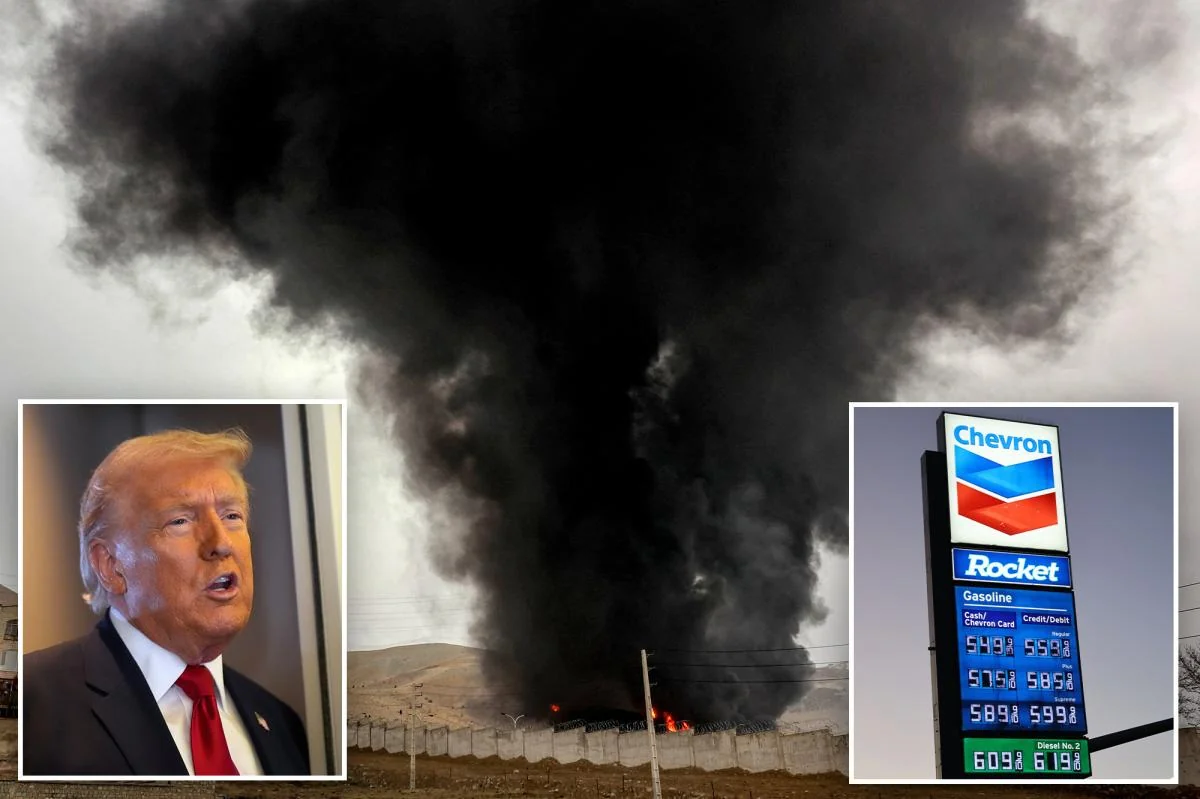

Panic in Washington and Tel Aviv
We are witnessing that the US and Israel have failed to achieve the objectives they had initially set at the beginning of this war. This setback has also generated a palpable sense of panic both in Washington and Tel Aviv. In many ways, this is understandable, because while they launched this war seeking “regime change” in Iran, they are now themselves on the brink of being dethroned.
Enormous expenditures, low return
One of the principal reasons behind this is the closure of the Strait of Hormuz and the ripple effects it has triggered across the global economy. This is damaging the economies of the US and Israel.
Secondly, the resources and financial outlays that Washington and Tel Aviv have committed to this war are enormous, and they can’t get what they have been expecting with these expenditures. On the contrary, they are incurring substantial losses. Moreover, beyond the casualties and damages officially acknowledged by these two countries, one should assume that there are more losses that they want to keep away from the public eye.
The US was already grappling with a serious economic crisis. Israel, meanwhile, couldn’t recover from the wounds of the 12-Day War with Iran. Now they are burdened even heavier. In Washington, the current course of the war has set off alarm bells, also since senatorial elections are approaching.
Trump breaks his promises
For Donald Trump, the political implications of this could be significant. During his election campaign he made a series of promises, yet the actual policies stand in stark contrast to them. He had repeatedly declared that “We will end endless wars”, “The US will focus on its own domestic issues”, “Instead of imposing order abroad, we will prioritize fixing problems at home”, etc. Now Trump is heading into the next election having broken those promises. Indeed, many within the MAGA movement have already begun to criticize him openly.
Taken together, these developments suggest a conclusion: In pursuing the goal of “regime change” in Iran, the US dug a pit for itself.
Strategic thinking and calculated tactical maneuvering of Iran
Looking to the other side of the war, Iran is putting up a remarkable resistance. It is very resilient. Its response is not limited to missiles or military hardware, it is also being carried out through strategic thinking and calculated tactical maneuvering. While defending its own territory, Tehran is simultaneously pursuing a strategy of striking American targets across the region.
Another factor contributing to Iran’s success has been its carefully calibrated diplomatic stance toward neighboring countries like Türkiye and Azerbaijan. Iran deliberately avoided any action against American or enemy bases located within these countries, and repeatedly declared that policy.
Ali Khamenei’s martyrdom
Beyond its struggle against the US-Israel, we witness that Iran has reinforced its domestic front. Ali Khamenei’s martyrdom demonstrated something profound to the Iranian people: a leader who shares the fate of his citizens, soldiers and officers, and is deeply connected to them. His martyrdom has ignited a spirit of unity, courage and resistance against the US-Israel.
Provocations in Türkiye, Azerbaijan, Lebanon and Syria
In the end, the US-Israel is in trouble. So much so that they resorted to provocations to incite friction or conflict between Türkiye and Iran, and Azerbaijan and Iran. They are attempting to weaken Iran by provoking clashes between Lebanon and Syria through various provocations. But they are also failing in these provocations, false-flag operations. They are failing so much that even the British authorities were compelled to state that the attack on their base in Southern Cyprus had not been carried out by Iran. In a sense, the UK implied that Israel was responsible for this.
Looking ahead, I can say this: The US and Israel are entering a period in which they will face significant challenges, both in the context of the war with Iran and in terms of their own domestic affairs. In contrast, as Iran gains success, it will continue to consolidate its domestic front and win over more international allies to its side; indecisive or neutral forces will also move closer to Iran, while those aligned with the US-Israel will distance themselves from them.
Lessons for “allies” of the US-Israel
If the US and Israel ultimately lose this war, this would mean the disappearance of what remains of their influence in West Asia. Governments and political forces in the region that have long-lived on the assumption that the US-Israel would stand firmly behind them will inevitably begin drawing lessons from this outcome, indeed, many already have.
A telling example is this: The US-Israel attempted to mobilize the PKK and other Kurdish ethnically based groups, and Kurdish groups in northern Iraq, against Iran. So far, however, these groups have largely declined to cooperate.
Iran’s resistance is Türkiye’s resistance
As for Türkiye, the first thing to understand is Iran’s resistance today is inseparable from Türkiye’s. The currently intensifying military build-up in the Eastern Mediterranean by the US, Israel, Britain, France, and others, is not directed solely at Iran, but also at Türkiye.
Of course, for these threats to be neutralized, the US and Israel must be defeated in Iran. Such a defeat could weaken their overall power, erode their alliances, and ultimately lead to the emergence of a broader international alignment against them. Today, Iran’s resistance helps make this possible. The more successful Iran becomes, the more secure will Türkiye be in the Eastern Mediterranean, Syria, Thrace, the Black Sea, and the Caucasus.
Trump’s “peace”
There are also important lessons here for the Turkish government. Unfortunately, Ankara chose to align itself with “Trump’s peace” in Palestine, “Trump initiative” in Syria, and “Trump route” in the South Caucasus. Have we now seen what Trump’s “peace” looks like in Iran?
Trump’s “peace”, “initiative” and “route” won’t yield prosperity, stability, or development to the region, instead it will complicate matters for Türkiye and strain its relations with its friends and neighbors. Türkiye should take a clear stand against these projects of Trump.
In the context of one of these projects of Trump, his “initiative” and Tom Barracks’ efforts in Syria, there are currently provocations in Lebanon. There are attempts to drag the Damascus government into these provocations. Statements by the Damascus government reveal an anti-Iranian, anti-Hezbollah stance. Türkiye shouldn’t fall into these traps
No one can bring Türkiye and Iran into military confrontation. No matter how many provocations are engineered, you can’t manage that. At most, you can push Türkiye into missteps such as the recent deployment of Patriot missile systems. However, if Syria and Lebanon or Syria and Hezbollah were drawn into conflict, the situation could indirectly drag Türkiye and Iran into a conflict and sabotage Turkish-Iranian relations.
In this regard, Damascus’s statements, policies and actions against Hezbollah are very dangerous. The Turkish government should use its power and influence to prevent this. If the Turkish government is also involved in these, it must abandon them as soon as possible.
Furthermore, bases used by the US and NATO in Türkiye, Incirlik and Kürecik bases which are hostile towards Türkiye’s neighbors, must be closed. Taking these steps is not merely support for Iran, but also directly linked to Türkiye’s own vital interests.